
Light
Filtered Sun
Filtered or bright indirect light; shield from harsh afternoon sun.
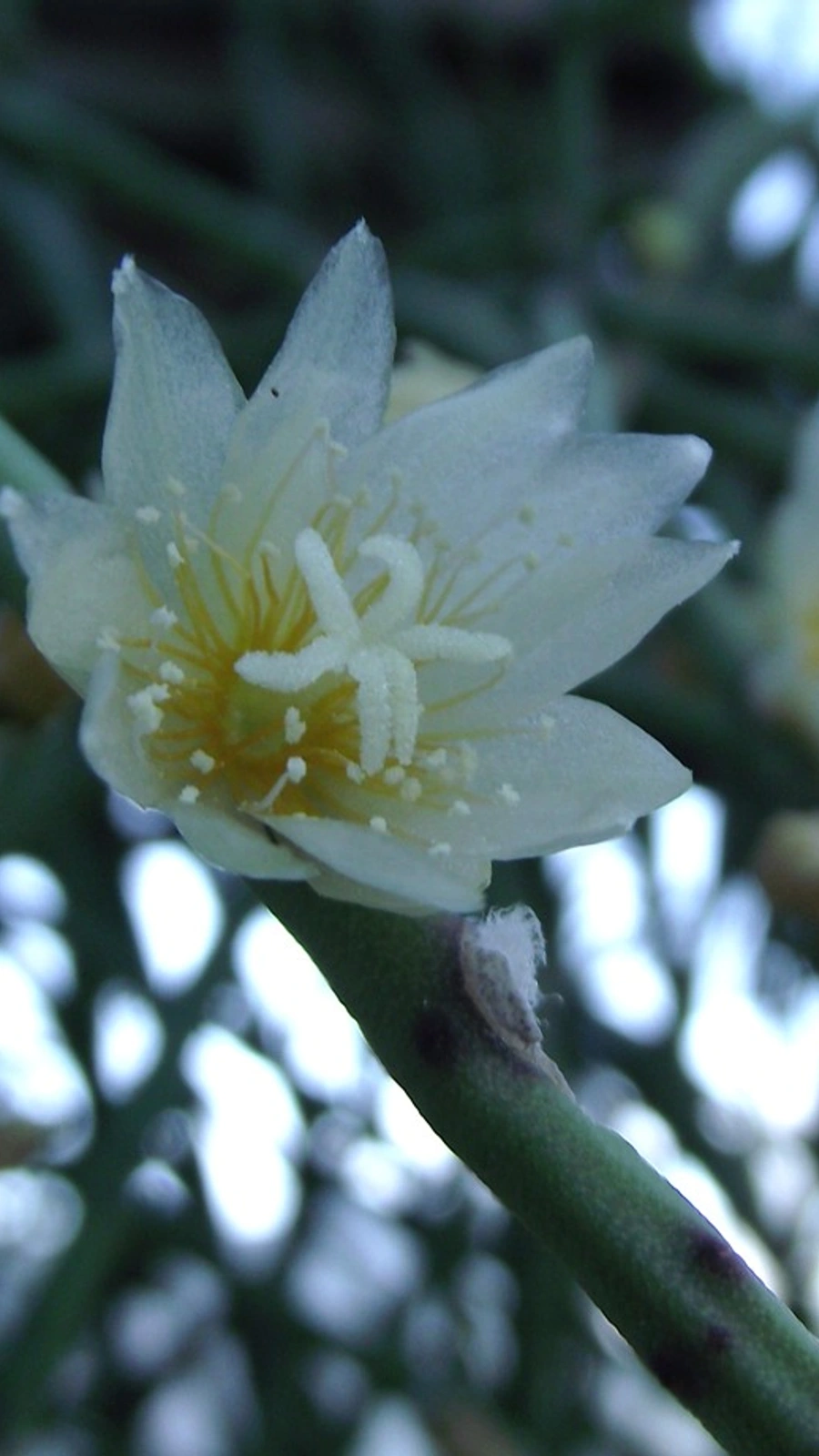
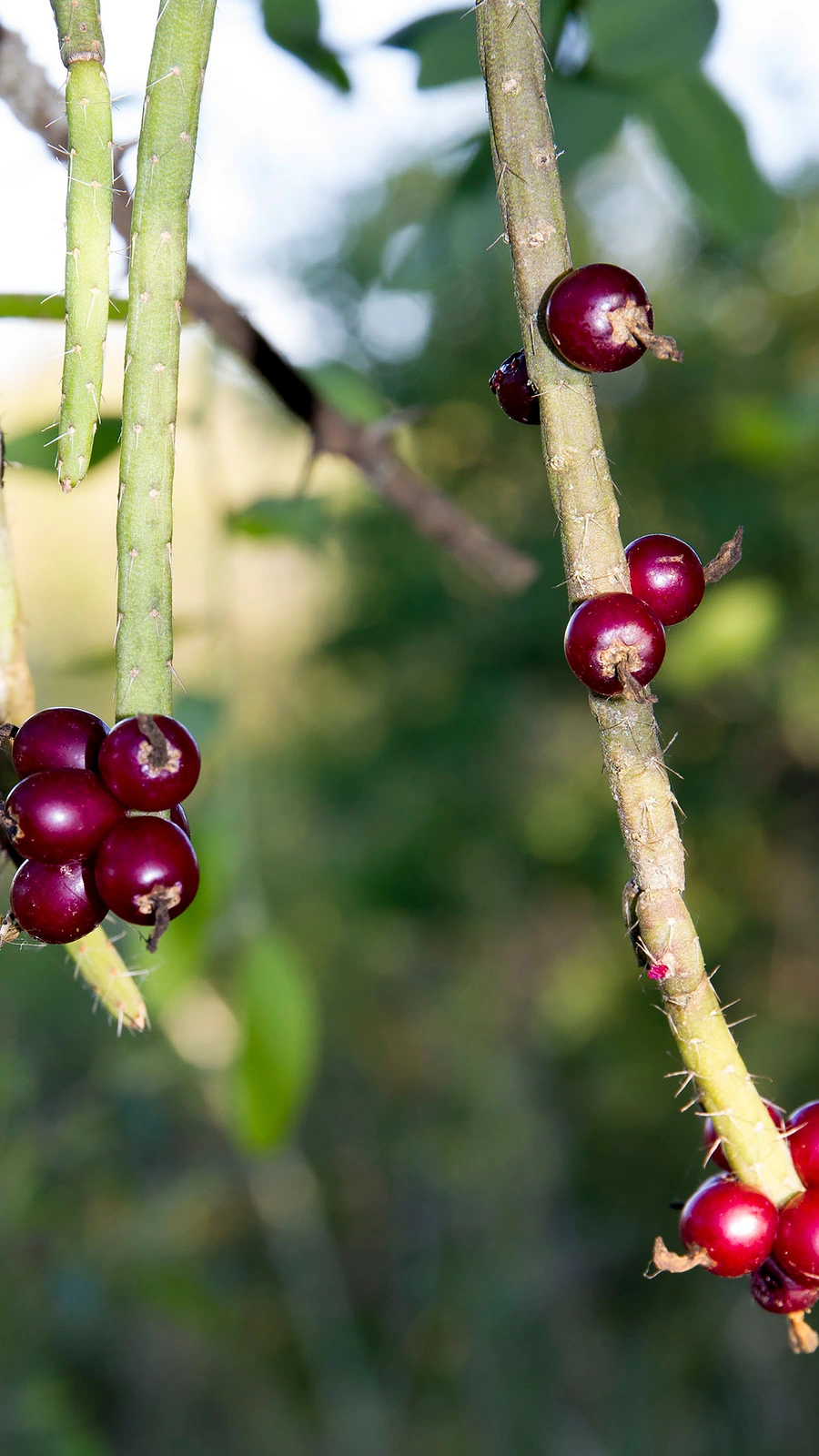
Worm Cactus
Lepismium lumbricoides, commonly known as the Worm Cactus, is a pendulous, epiphytic or lithophytic cactus species belonging to the family Cactaceae. Exhibiting a cascading growth habit, it is highly valued as an ornamental hanging basket plant due to its unique, slender, worm-like cylindrical stems 1.
This species was originally described in 1839 as Cereus lumbricoides. Modern phylogenetic assessments subsequently placed it under the genus Lepismium 2. The specific epithet lumbricoides derives from Latin, translating to "worm-shaped," which directly describes the slender, round, and highly branched morphology of the stems.
Lepismium lumbricoides is native to central and southern South America, with a range spanning Brazil, northern Argentina, Paraguay, Uruguay, and Bolivia 1. It typically inhabits seasonally dry tropical forests, where it thrives as an epiphyte on tree branches or as a lithophyte in moist, shaded rock crevices, often near watercourses.
The plant produces cylindrical, green to grayish-green segmented stems that can grow up to 1 meter in length, with a diameter of about 4-8 mm. Areoles are set with tiny, hair-like, non-pungent spines. During spring and summer, it produces small, creamy-white to pale yellow, bell-shaped flowers along the stem margins, followed by small, globose purple-pink fruits 2.
Unlike desert cacti, L. lumbricoides requires filtered or indirect bright light. It must be potted in a highly porous, organic-rich epiphytic substrate containing orchid bark, perlite, and peat to ensure excellent root aeration. Water the plant thoroughly once the top layer of soil has dried out, and reduce watering in winter.
Using standard, heavy potting soil is a frequent mistake that quickly leads to root rot. Overwatering and leaving standing water in the saucer will also decay the roots. Direct, harsh sunlight causes sun scorch and discolors the foliage.
Filtered or bright indirect light; shield from harsh afternoon sun.
Water once the top soil dries out; reduce watering frequency in winter.
Airtight, porous epiphytic mix with orchid bark, peat, and perlite.
Non-toxic and safe for dogs and cats.
Moderate; ideal for growers experienced with jungle/epiphytic cacti.
Native to the seasonally dry tropical forests of South America, growing as an epiphyte on trees and in rock crevices, often in shaded, humid microclimates near rivers.
