Let us introduce you to your new plant.
Meet our special plant collection grown in greenhouses under the Çukurova sun.
Choose what you are looking for
You do not need to know every plant name. Start with a group that matches your needs and browse from there.
Get to know the plants better
Learn the world of species with our botanical dictionary, and keep them thriving for generations with our care guides. Use the plant dictionary to read more about origin, growth habit, and care needs.
- ✓ See taxonomy, origin, and scientific naming in one place.
- ✓ Read light, watering, soil, and difficulty notes together.
- ✓ Explore plants in botanical context with care notes.
Dictionary Entry
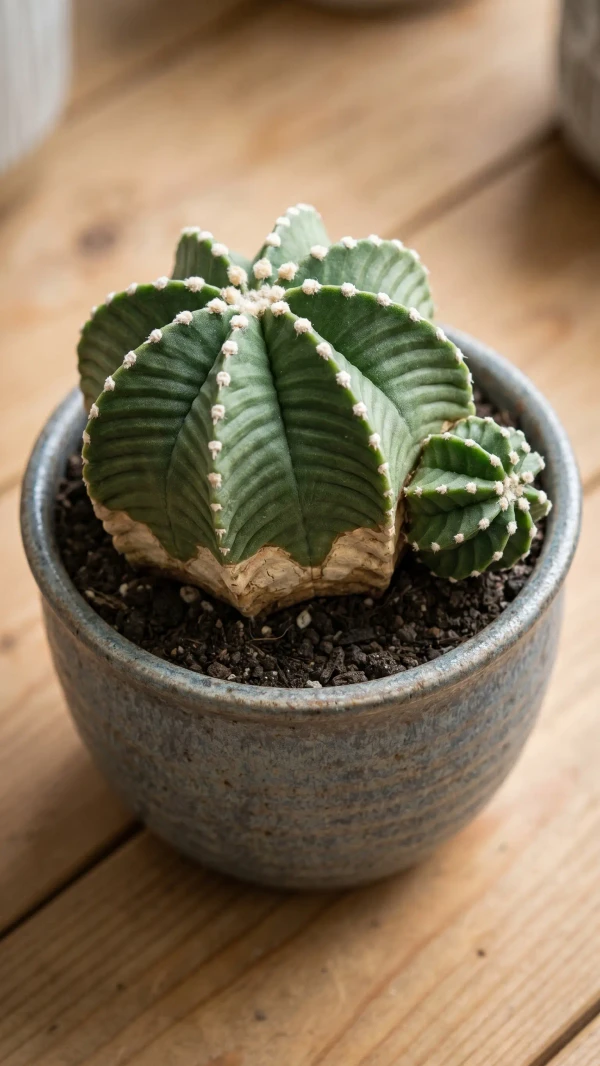
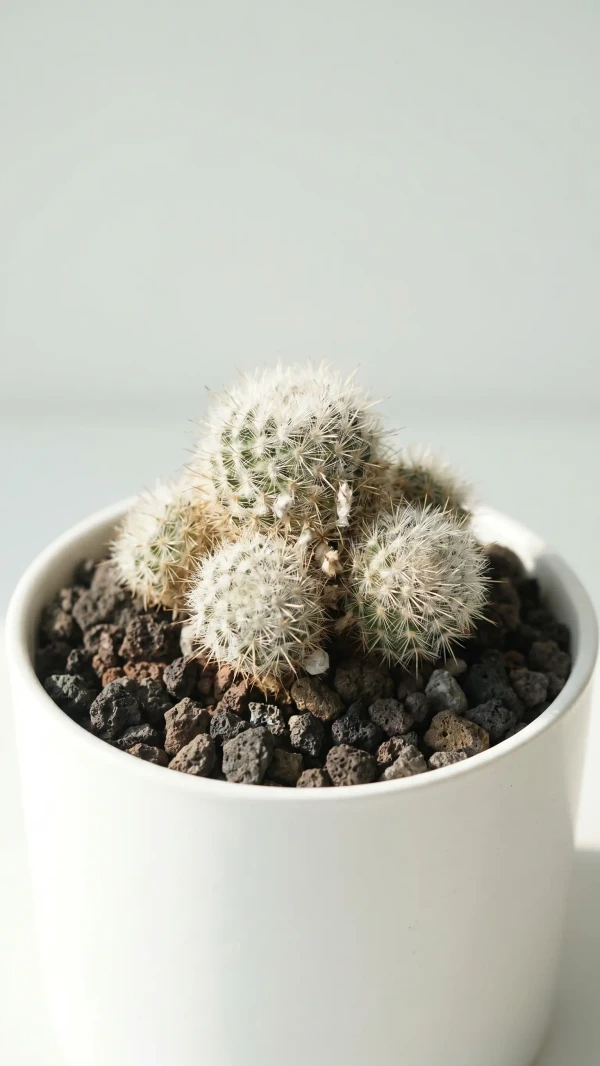
Echinopsis 'Chocolate'
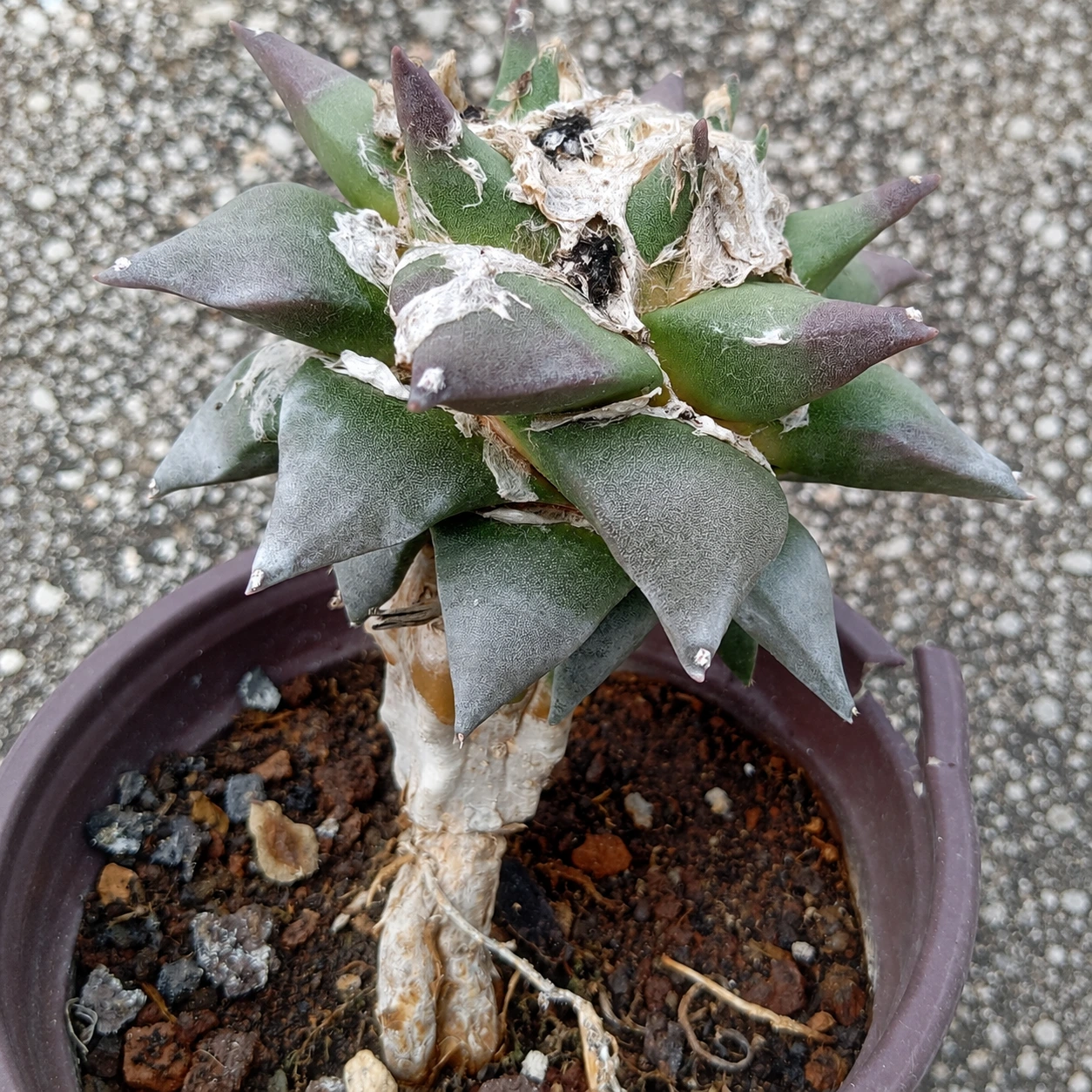
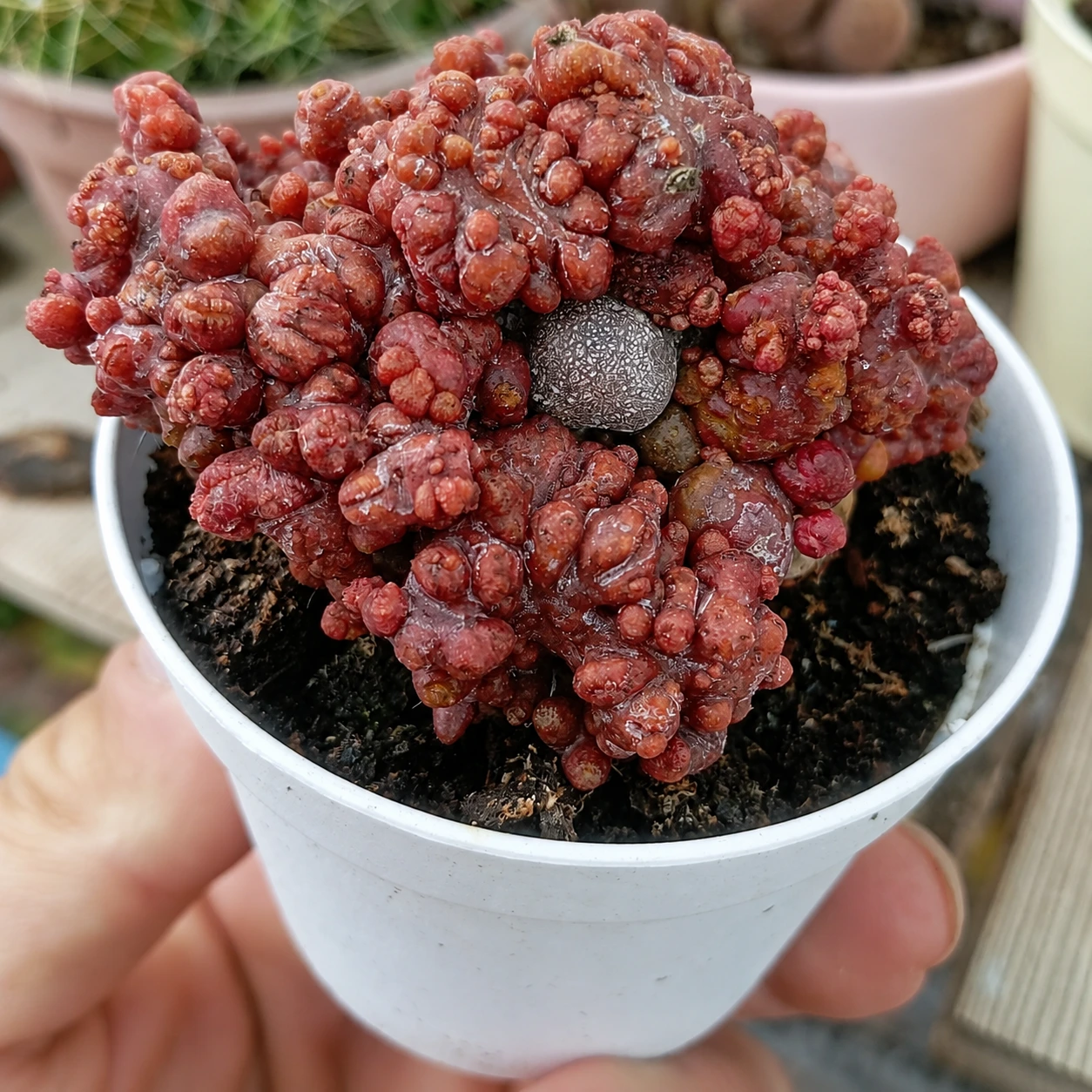
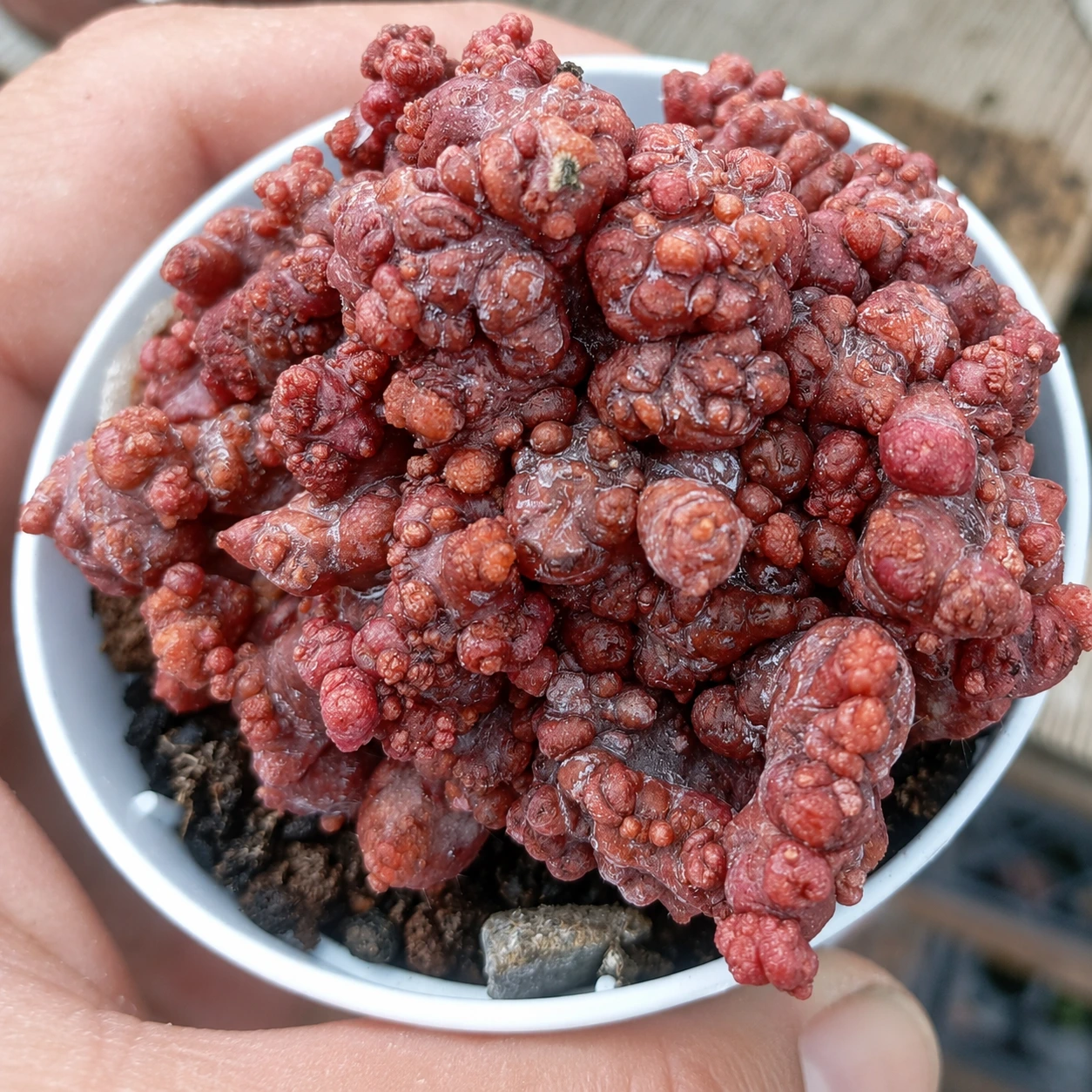
Description Echinopsis 'Chocolate' should be treated as a horticultural cultivar or trade form, not as a formally accepted wild species name. On the product page, “Chocolate Cactus” is a clear buyer facing name. In the botanical dictionary, the display name can be Echinopsis 'Chocolate' , with an explicit note that it is a collector/cultivar name used around Echinopsis material rather than a settled species level taxon. LLIFLE describes Echinopsis cv. Chocolate as a plant often found grafted but capable of growing on its own roots, requiring good drainage, a very porous mix, controlled watering from spring to autumn, and a dry winter rest. Cactus Art presents a similar horticultural name, “Echinopsis sp. cv. Chocolate f. monstruosa cristata,” and warns against overwatering and poor ventilation because of rot risk. Trade and collector sources describe the form as chocolate red, crested or monstrose, with soft irregular clusters and highly variable growth. Appearance The appeal of this plant is its departure from the standard green ribbed cactus body. It may form small lumps, crests, folds and asymmetric monstrose growth. Color can shift from burgundy to reddish brown depending on light and culture. Some plants show very few spines, while others may show occasional hairs or spine traces. This variability is part of the charm, but it is also why the plant should not be over identified from a photograph. A quality flag is appropriate in content data: the form can be described confidently as Echinopsis 'Chocolate' in the horticultural sense, but not as a verified wild species identity. Cultivation Use a gritty, airy cactus mix and a pot with drainage. Do not water during the first settling week after delivery. After that, water only when the mix has dried fully. Because crested and monstrose surfaces can hold moisture in folds, avoid overhead wetting in cool or poorly ventilated conditions. Keep the plant drier in winter and protect it from frost. Light should be bright but not brutally hot. Good light helps preserve color, while extreme midday exposure can stress the surface. The safest placement is bright, airy and protected from the harshest summer sun. Commercial note If this is a single specimen product, the listing should state whether the photos show the exact plant. With variable monstrose forms, no two plants are identical. Avoid guarantees about maintaining a specific shape. Better wording: “monstrose/crested character,” “chocolate burgundy tones,” and “individual form may vary.” Cultivation note Chocolate Cactus is for collectors who want an unusual form, not for someone looking for a perfectly predictable cactus. Let it settle for a week before watering. Keep it in bright airflow, use a mineral mix, and avoid wet roots. The value of the plant is its form and health, not fast growth. Common confusion points Echinopsis 'Chocolate' is a horticultural name, not a clean wild species identity. Plants sold under this name can vary in cresting, color intensity, root status and growth pattern. If the plant is grafted or own root, record it when known. If it is not known, do not invent certainty. Cultivation and placement note This is not a symmetrical classic cactus. The buyer is choosing a sculptural, strange form. Exact specimen photography matters. After watering, keep the plant airy so moisture does not remain trapped in folds. Soft dark spots, wet patches or unpleasant smell should be treated as warning signs. References
Dictionary Entry
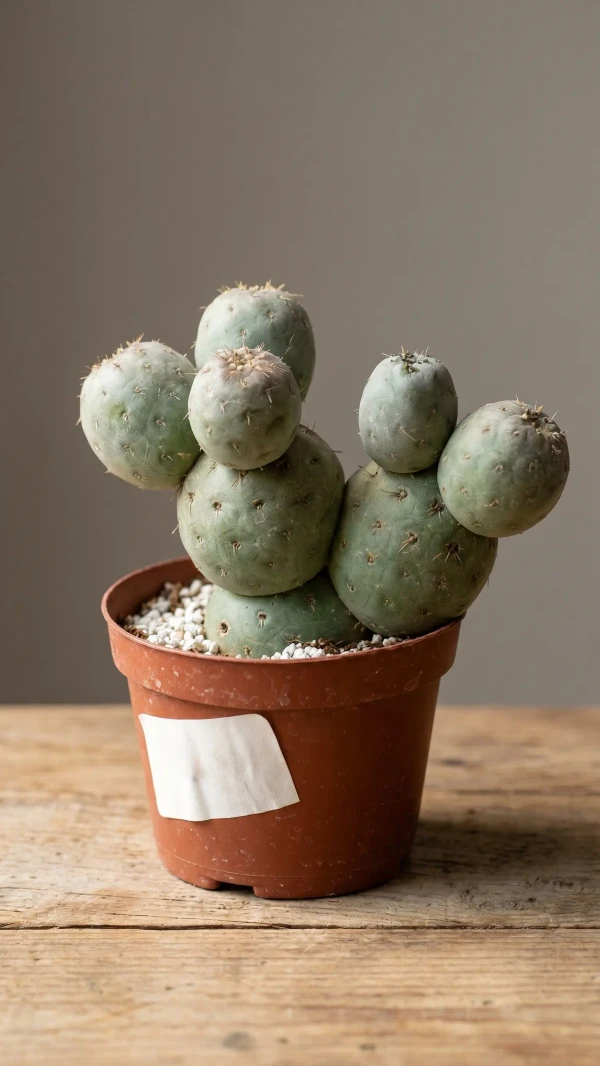
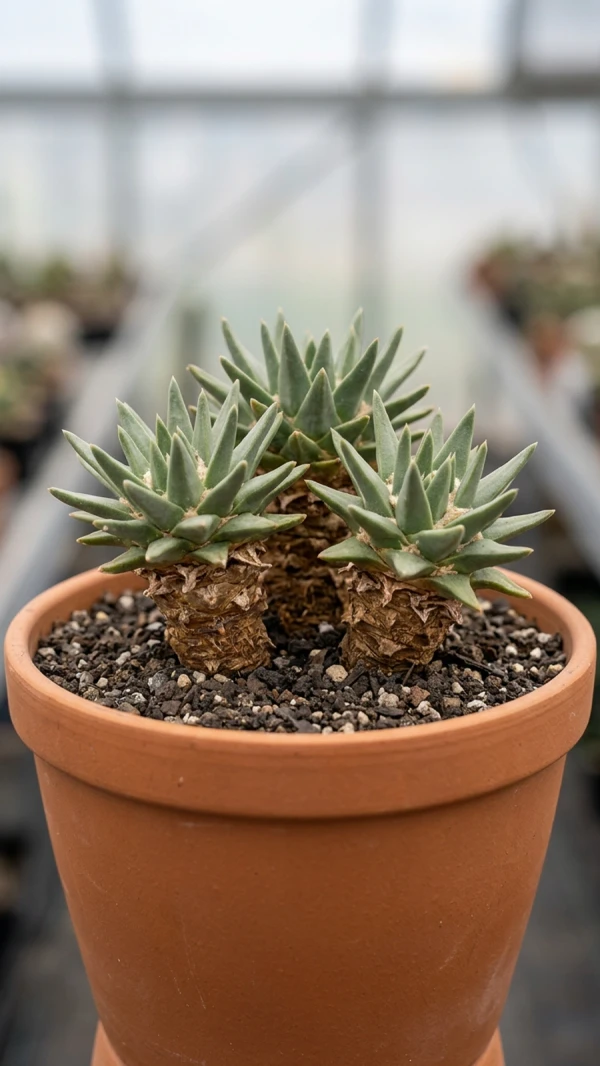
Astrophytum myriostigma var. nudum
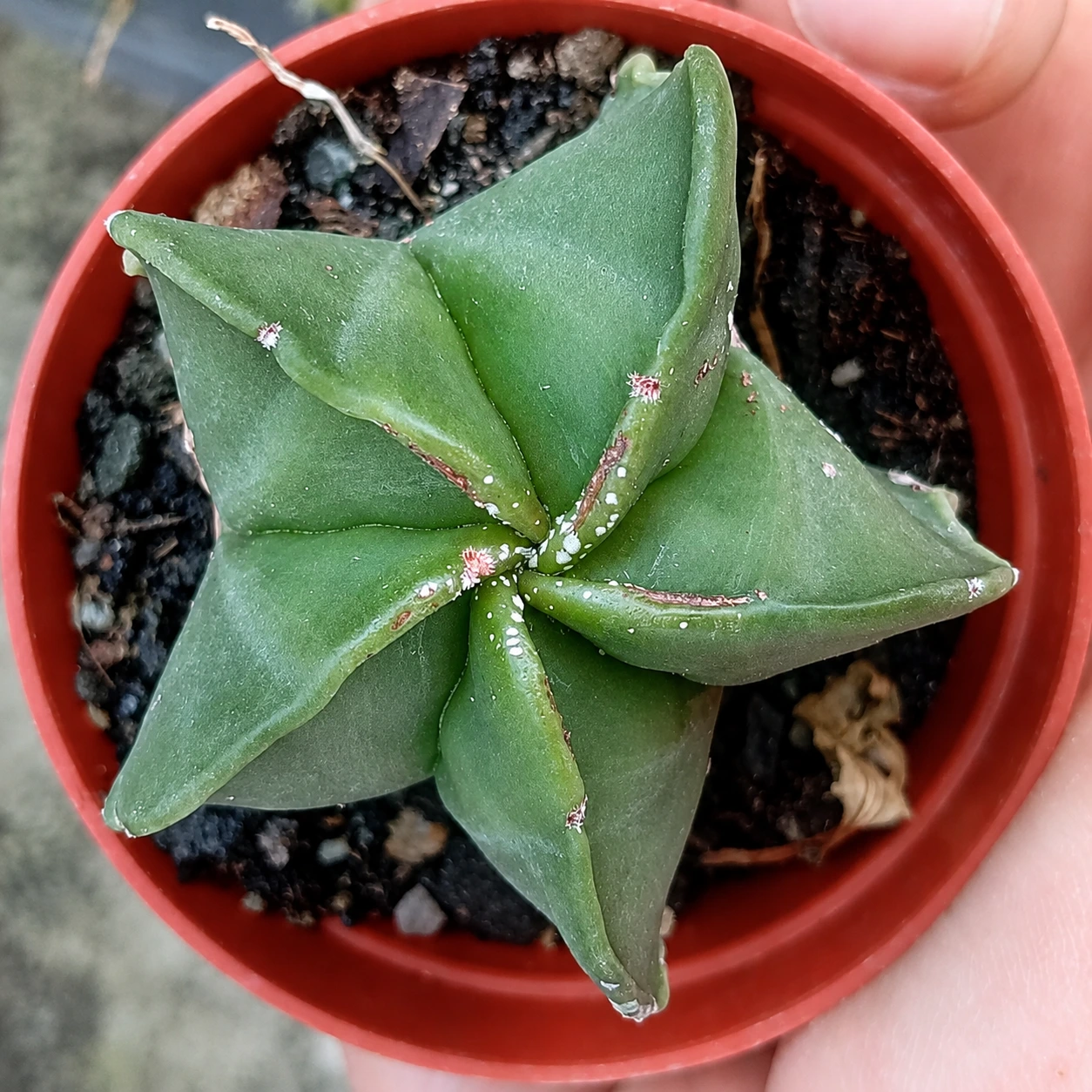
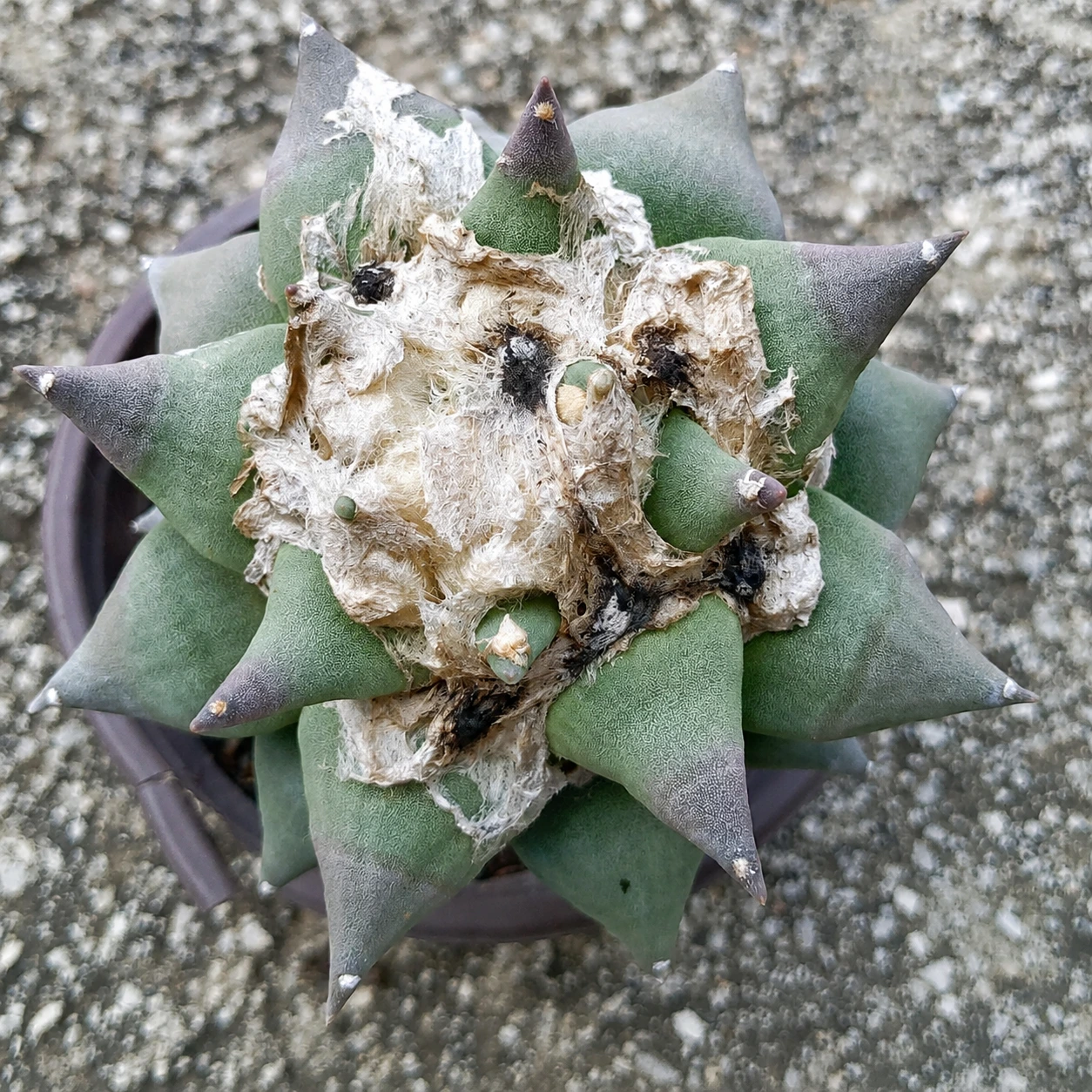
Description Astrophytum myriostigma var. nudum is a cleaner green, reduced flecking form of Astrophytum myriostigma , the Bishop's Cap cactus. It should not be presented as Star Cactus; Star Cactus belongs to the Astrophytum asterias line. The plant keeps the spineless, star sectioned rib structure of Bishop's Cap while showing a quieter green surface.
Dictionary Entry
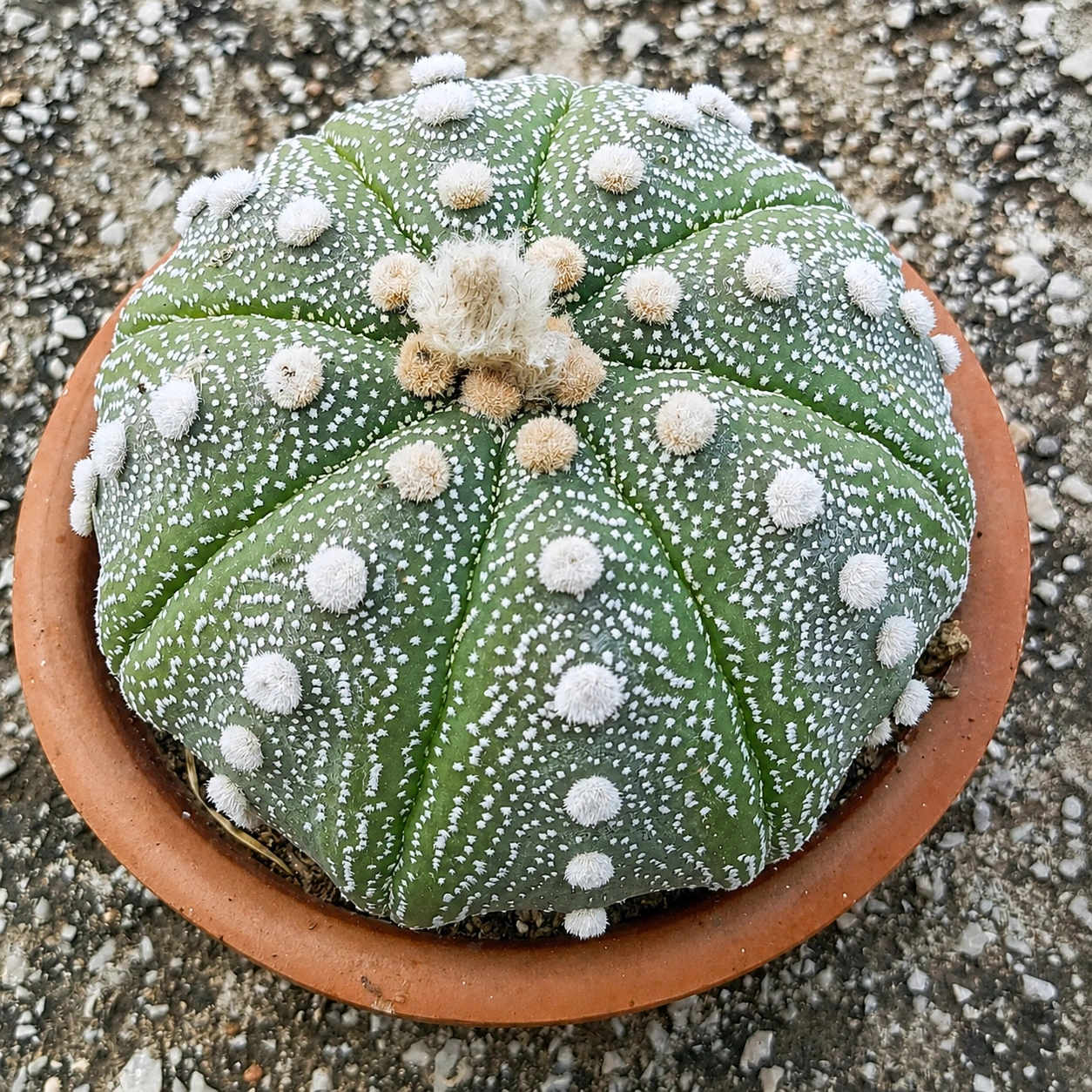
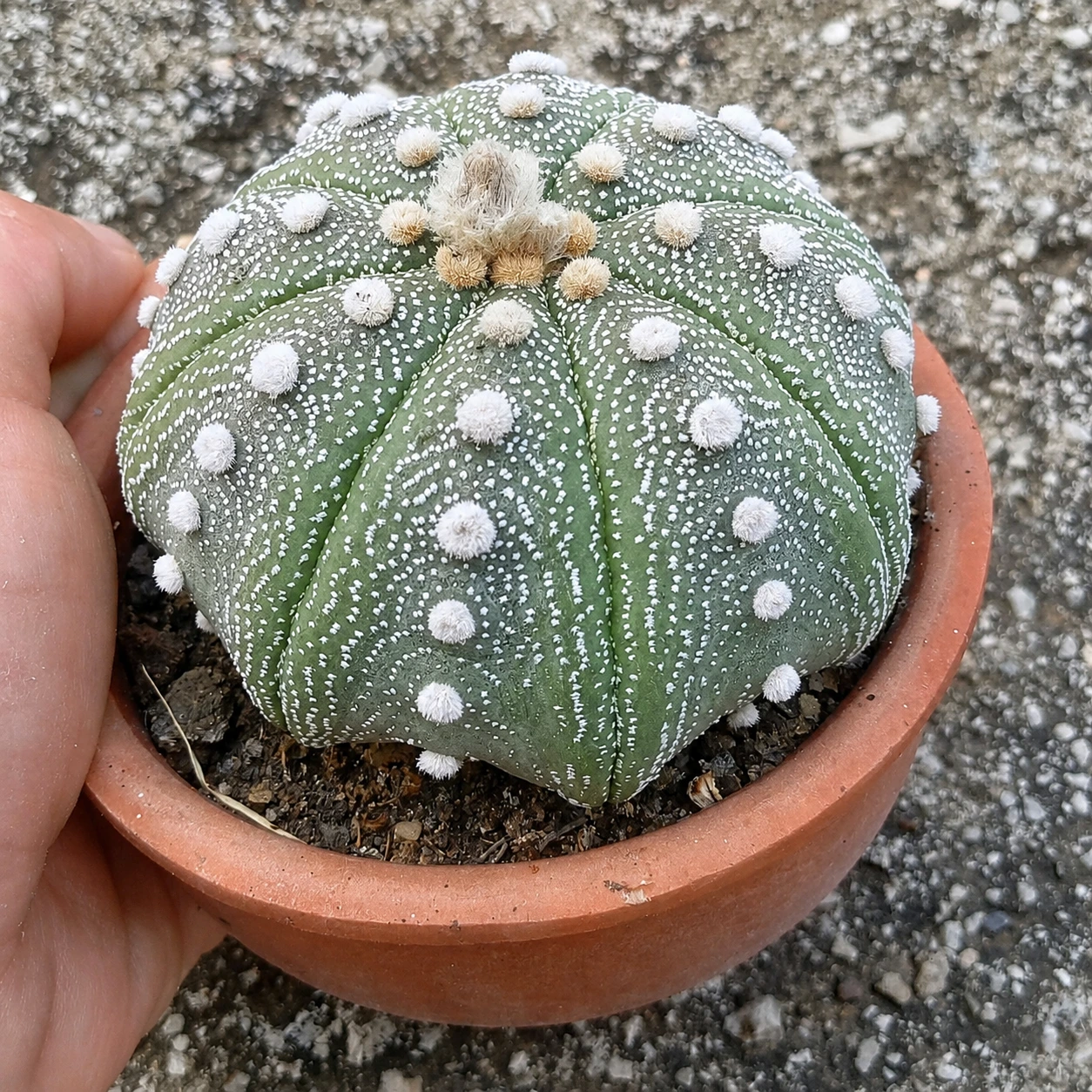
Astrophytum asterias 'Star Shape'
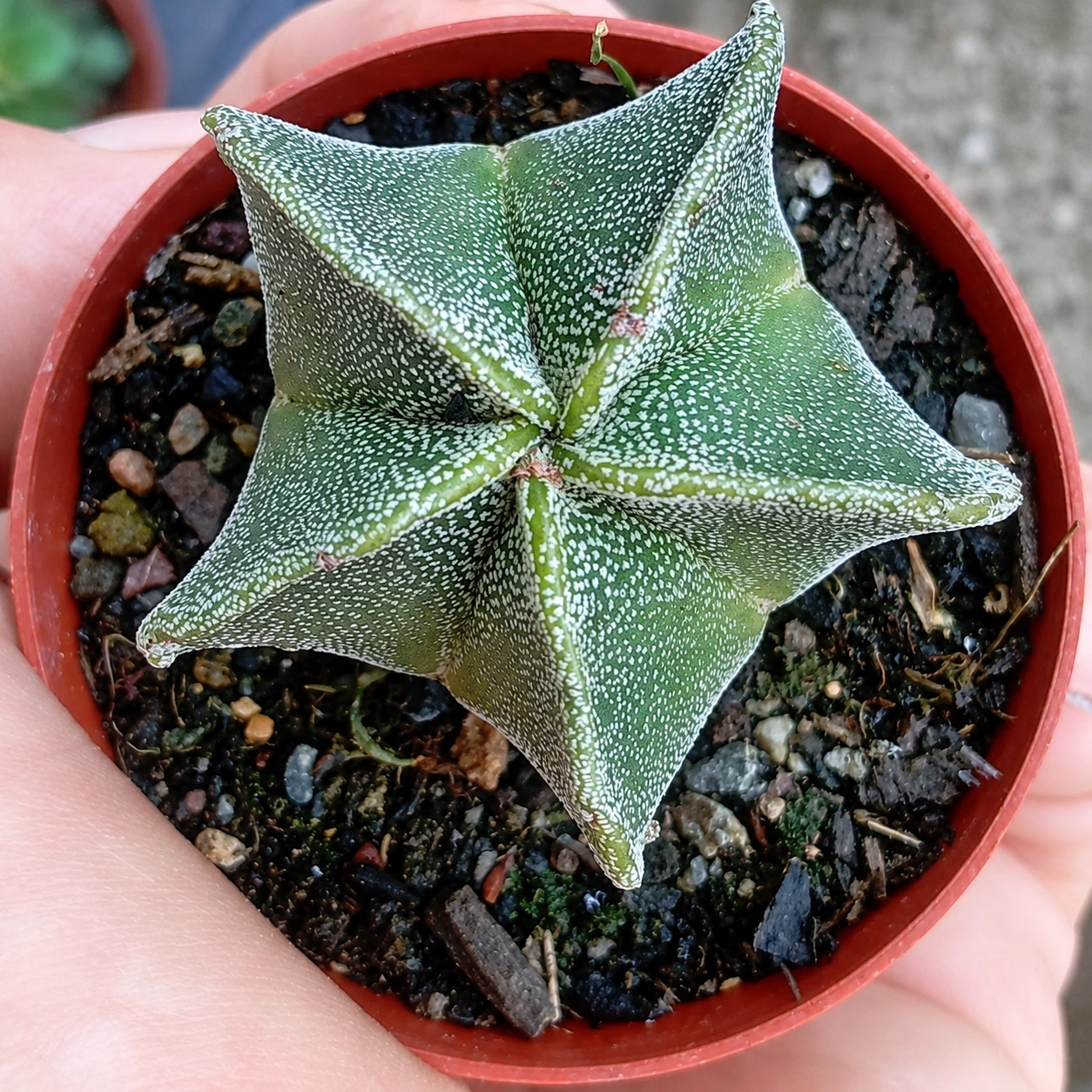
Description Astrophytum asterias is a small, spineless, flattened cactus with a clean star like body and orderly woolly areoles. The product name “Star Cactus” or “Sand Dollar Cactus” is clear for buyers, while the botanical dictionary keeps the scientific basis: Astrophytum asterias (Zucc.) Lem. POWO/Kew treats the name as accepted and records a narrow native range from southern Texas to Nuevo León and Tamaulipas in Mexico. World Flora Online also reports the name as accepted in Cactaceae. The product label “Star Shape” should be treated as a horticultural or commercial descriptor, not as a separate botanical species. The dictionary can display Astrophytum asterias 'Star Shape' if that is the sales form, but the entry must explain that the underlying species is Astrophytum asterias. Native range and habitat The wild distribution of Astrophytum asterias is limited. POWO links it to southern Texas and northeastern Mexico. LLIFLE describes habitat in gravelly alluvial loams, saline or calcareous clays, thorn shrub vegetation and grassland, often with the plant partly buried and difficult to see. This low, cryptic habit is part of what makes the plant so distinctive. Conservation and ethical trade This species requires a stronger conservation note than most common cactus products. Kew’s CITES cactus guide identifies Astrophytum asterias as the only Astrophytum species listed in Appendix I, with a distribution in Mexico and Texas and a Vulnerable assessment. GBIF also records multiple common names such as Sand Dollar Cactus and Sea Urchin Cactus. A commercial listing must not imply wild collection. Production source should be documented where possible, and artificially propagated stock should be clearly separated from wild origin material. Cultivation Care should be calm and precise. Do not water during the first settling week after delivery. Keep the plant in bright light, but introduce direct sun gradually. Use a mineral, fast draining cactus mix and a pot with drainage. Water only after the pot has dried fully, and keep the plant much drier in winter. Because the body is smooth and spineless, sun scorch can be very visible. Avoid abrupt exposure to harsh summer sun. Too little light, however, can weaken the form. The safest route is bright, stable light with gradual acclimation. Cultivation note Star Cactus is a collector plant. It deserves a product page that is beautiful but honest: one specimen, clear photographs, clear sourcing and careful aftercare. Do not water during the first week, do not disturb the roots, and avoid sudden harsh sun. The plant’s value is in its form and rarity, not in fast growth. Common confusion points Astrophytum asterias is easily confused with Astrophytum myriostigma in a storefront. Asterias is lower and more disc like, with orderly areoles that create the star effect. 'Star Shape' is a horticultural/trade descriptor and should not be treated as a separate wild species. Cultivation and placement note Because the species is conservation sensitive, sourcing language must be honest. Do not imply wild collection. For single specimens, state whether the images show the exact plant. In care, protect the compact body and root health rather than expecting fast growth. References

Dictionary Entry
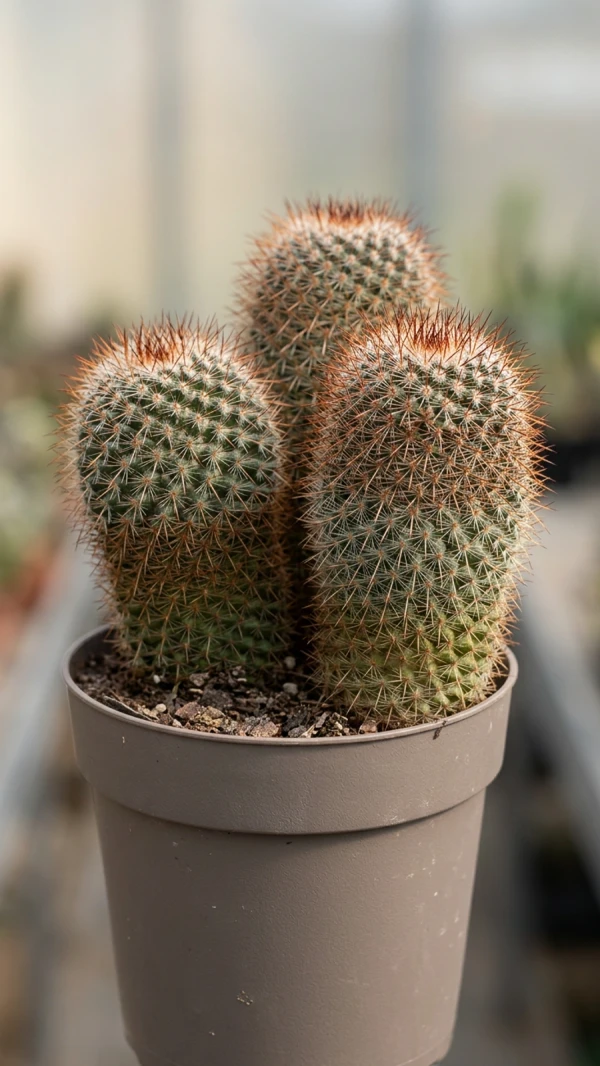
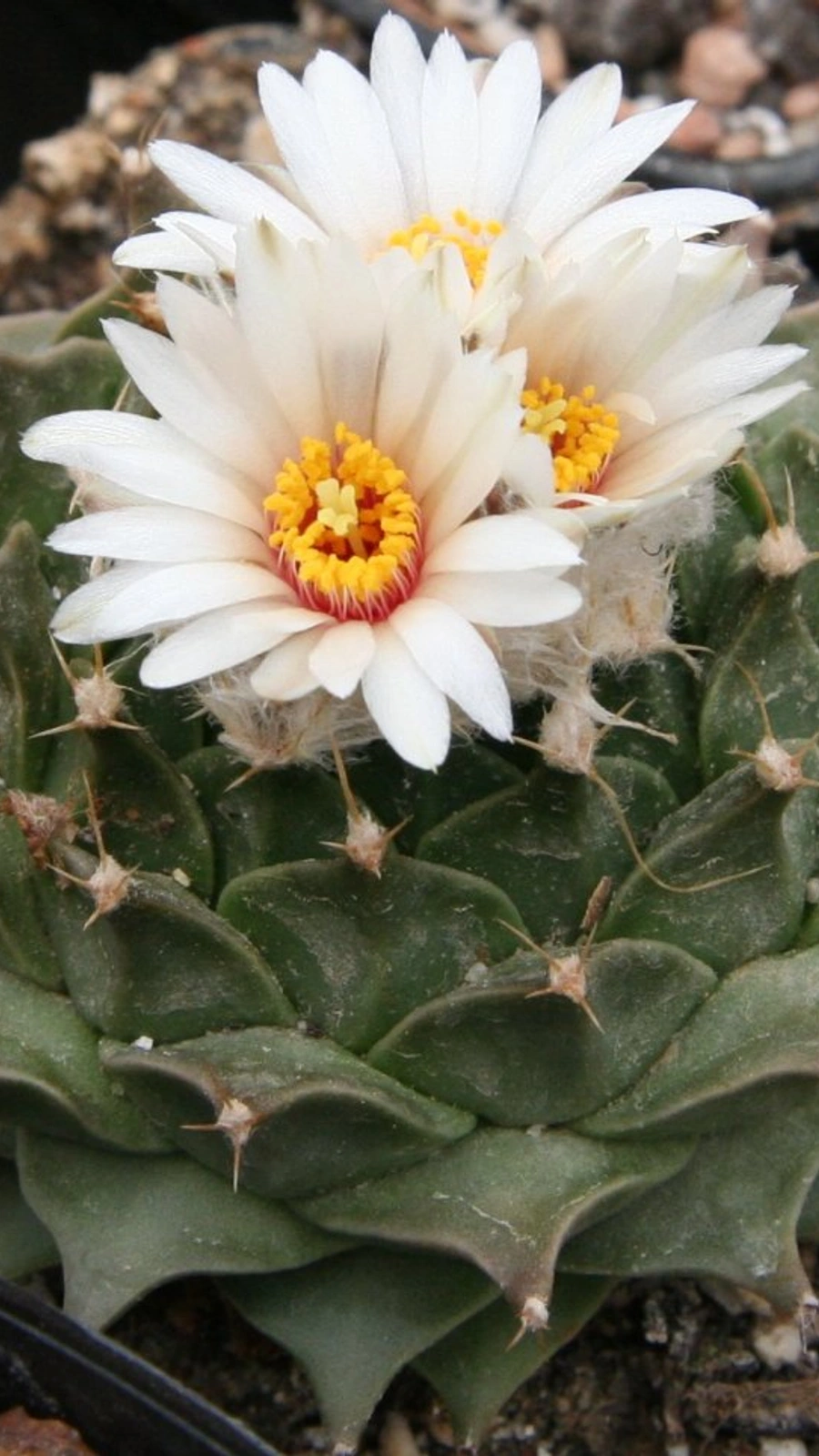
Acanthocalycium keuhhasii
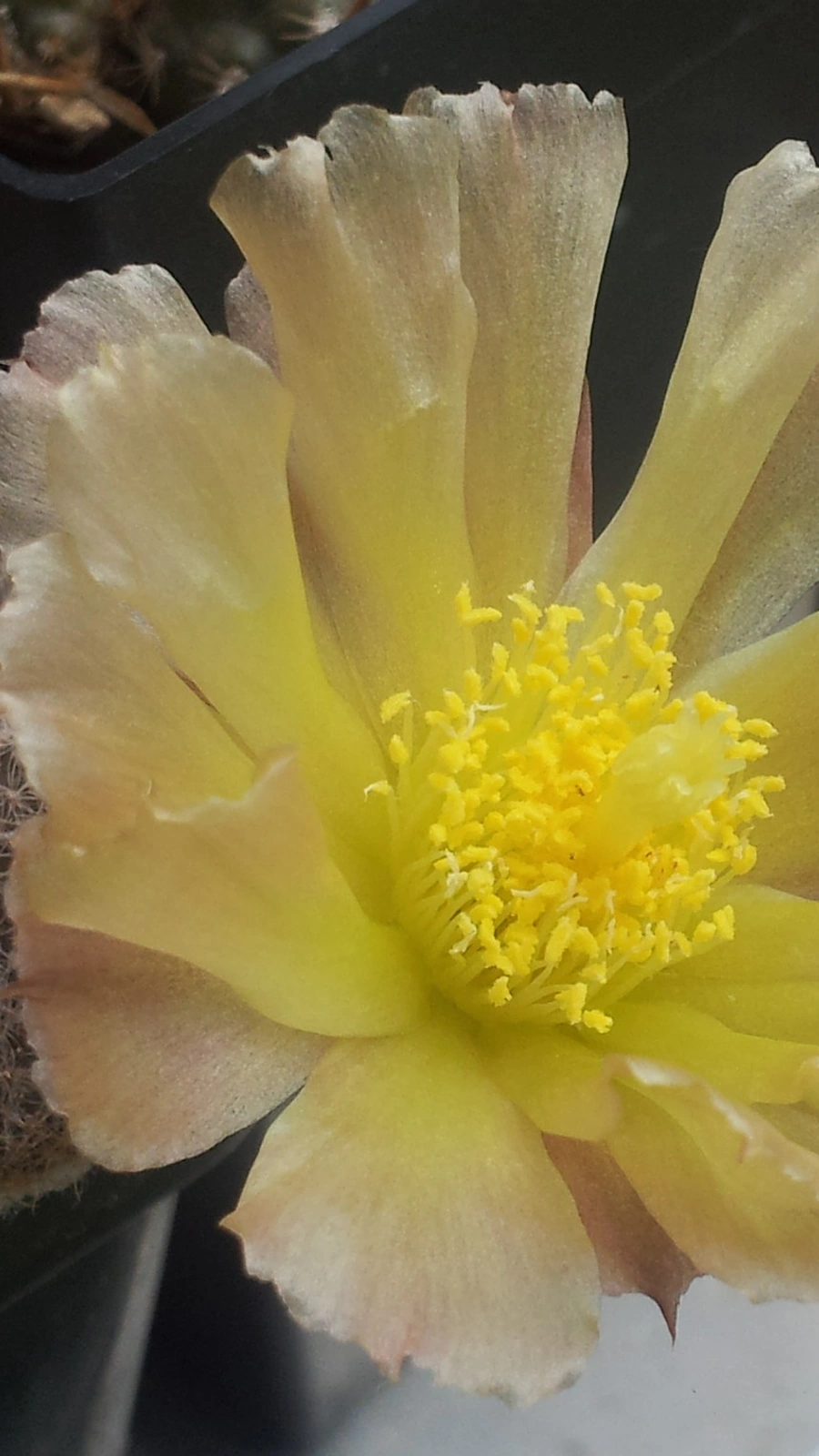
Genel bakış\n Acanthocalycium keuhhasii is a perennial, succulent subshrub in the family Cactaceae, native to the arid and semi arid mountainous regions of western and northwestern Argentina . Known for its dense, fierce spination and showy funnel shaped flowers, this cactus is highly adapted to withstand harsh alpine like conditions in its natural habitat.\n\n Sınıflandırma ve adlandırma\nThe species is classified under the genus Acanthocalycium . The generic name is derived from the Greek words "akantha" (spine) and "kalyx" (calyx/bud), referring to the characteristic spiny scales covering the flower tube . The specific epithet keuhhasii honors a prominent plant explorer or cactus enthusiast. Recent molecular and morphological studies maintain its status within Acanthocalycium .\n\n Doğal yayılış ve habitat\nThis taxon is widespread across several provinces in Argentina, including Catamarca, La Rioja, San Juan, San Luis, Mendoza, Salta, and Jujuy . It is typically found at elevations between 1000 and 2500 meters above sea level, growing on rocky slopes, gravelly plains, and crevices within subtropical mountain biomes.\n\n Görünüm\nThe stem is solitary, globose when young, and becomes short cylindrical with age, displaying a dark green to grayish green epidermis. It features prominent ribs lined with woolly areoles. The spines are stiff, varying from yellowish brown to gray, providing excellent shade and protection. The summer blooming flowers are yellow, orange, or reddish, distinguished by their uniquely spiny floral tubes.\n\n Kültürde bakım\nIn cultivation, Acanthocalycium keuhhasii requires an extremely porous, mineral based cactus substrate . It thrives under full, direct sunlight, which promotes strong spine development and abundant flowering. During the winter dormancy, the plant should be kept completely dry and placed in a cool, frost free location to encourage the next season's blooms.\n\n Sık görülen bakım hataları\nThe most common pitfall is overwatering, particularly during the cold winter months, which quickly leads to root rot . Poorly draining soil and insufficient light also cause etiolation, wherein the stem stretches unnaturally toward the light, weakening its overall structure and defense mechanisms.\n\n Kaynaklar\n Plants of the World Online (POWO), Kew Royal Botanic Gardens.\n Anderson, E. F. (2001). The Cactus Family. Timber Press, Portland.
Write to us if you are not sure
Share where the plant will live, the light conditions, or your care expectations. We can help narrow down suitable options.
Contact UsWhat would you suggest for a low-light corner?
Which plant is better for a beginner?
Is this plant suitable for shipping?
How to place an order
Browse the plants.
Create your cart and place your order.
Contact us if you would like more detailed information.
Let us help you choose the right plant
Questions you may have
Short answers about choosing live plants, ordering, and using the dictionary.
How do I place a live plant order?+
Add the plants you like to your cart and complete your delivery and contact details at checkout. After your order is received, the necessary order information is shared with you.
Can I ask you before buying?+
Yes. You can contact us about light conditions, placement, or care expectations before choosing a plant.
What is the plant dictionary for?+
The dictionary gives you more detail about species origin, growth habit, light needs, watering, and care notes.
Do product photos show the exact same plant?+
Live plants are natural products. Form, color, size, and growth stage may vary depending on current stock. We keep product information as current as possible.
Can plants be damaged during shipping?+
Packing is planned according to the plant. Live plants can still be affected by transit, so please contact us on the delivery day if you notice a serious issue.
Do you sell pots and add-on products too?+
Yes. The collection may include pots and complementary products alongside live plants.
How do I know which plant is right for me?+
Start with where the plant will live, how much light it receives, and the care routine you prefer. If you are unsure, you can contact us and we can narrow down suitable options together.
Can the plant dictionary help me choose a product?+
Yes. Dictionary notes on care, light, watering, and difficulty help you compare species. This lets you choose by the plant's needs, not only by appearance.
How often is stock updated?+
We keep collection stock and product details as current as possible. Since live plants may be one-off or limited in number, it is best to check availability when you find a plant you like.
Can I ask care questions after ordering?+
Yes. After your plant arrives, you can contact us about placement, first watering, light acclimation, or general care questions.