
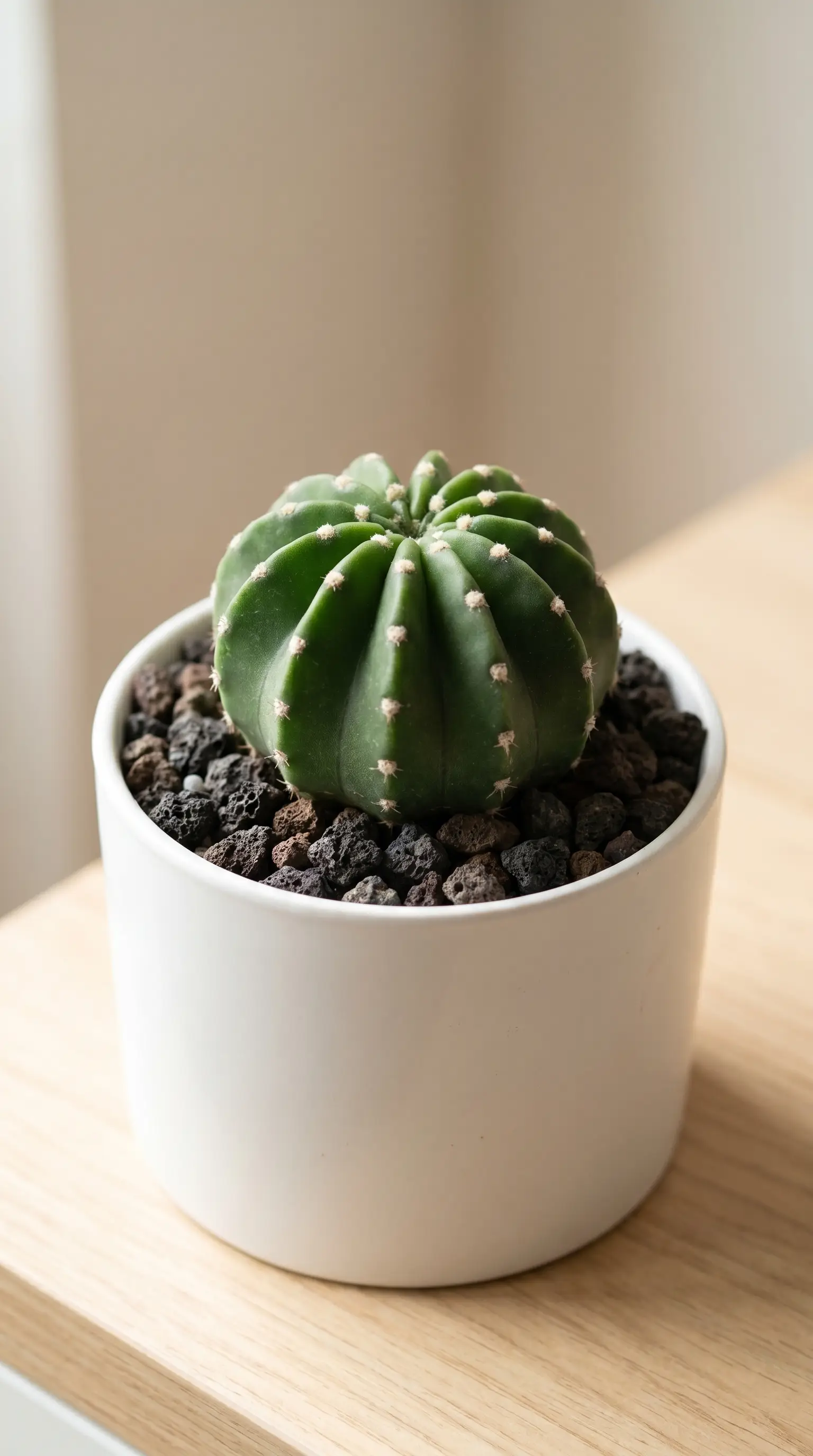
KD_ECHINOPSIS_SUBINERMIS_001

Echinopsis subinermis

Spineless Hedgehog Cactus

TRY 2,870
In Stock
Last one

Echinopsis subinermis: Spineless Elegance

Carefully cultivated by Kaktüs Doktoru, Echinopsis subinermis is one of the most striking members of the cactus family. Deriving its scientific name from 'subinermis,' meaning "unarmed" or "spineless," this species boasts a smooth and attractive appearance, a departure from the classic spiny image of cacti.

Why Choose Echinopsis subinermis?

  • Elegant Form: It captures attention with its generally globular or slightly columnar form and prominent ribs. The subtle texture and short, soft hairs emerging from the areoles add a unique feel.
  • Easy Care: Ideal for beginners in cactus cultivation. It requires minimal effort with low water needs and a love for abundant sunshine.
  • Stunning Blooms: With proper care, it can produce magnificent, large, funnel-shaped flowers, typically opening at night during summer, ranging from white to pink. These blooms crown the plant's already impressive beauty.
  • Collector's Item: An excellent choice for those seeking an alternative to spiny cacti or wishing to add a distinctive touch to their collection.

If you're looking to create a modern and minimalist ambiance in your home, office, or cactus corner, Echinopsis subinermis is perfect for you. This unique plant will add a natural work of art to your living spaces.

Free Shipping
Light
Full Sun

Abundant sunlight is critical for healthy growth and flowering. Insufficient light can lead to etiolation.

Soil
50% mineral (pomza, lav kırığı, perlit), 30% torf/coco coir, 20% kaba kum veya bahçe toprağı ile zenginleştirilmiş, iyi drenajlı kaktüs karışımı.

For best results, use a specially formulated, well-draining cactus and succulent soil mix.

Water
Measured

Ensure the soil completely dries out between waterings. Overwatering is the most common cause of root rot.

Difficulty
Easy

This species is a relatively easy-care cactus, suitable even for beginners in cactus cultivation.

Frequently Asked Questions

Why is Echinopsis subinermis called "spineless" or "almost spineless"?
Echinopsis subinermis derives its name from the Latin word "subinermis," meaning "almost spineless." Unlike most cactus species, this particular species does not have prominent and sharp spines, or it possesses very short, sparse ones. This characteristic forms the origin of its name and gives it a smooth appearance [^9, ^10]. [^9]: R.E.Fr. "Echinopsis subinermis". The International Plant Names Index. Accessed: 2024-05-27. https://www.ipni.org/n/77114670-1 [^10]: Anderson, Edward F. "The Cactus Family." Timber Press, 2001. ISBN: 978-0881924985.
How often does Echinopsis subinermis bloom, and how long do its flowers last?
Echinopsis subinermis typically blooms during late spring and summer. Its flowers are large, funnel-shaped, and bright yellow. They usually open at night and last for only one day. However, with proper care and conditions, the plant can produce many successive blooms throughout the growing season [^10]. [^10]: Anderson, Edward F. "The Cactus Family." Timber Press, 2001. ISBN: 978-0881924985.
Is this cactus species safe for pets?
In general, cacti like Echinopsis subinermis are not considered toxic and do not pose a serious threat to pets. However, the short and sparse spines that some plants might have can prick curious pets' mouths or paws. Therefore, it is best to keep the plant out of reach of pets to prevent potential injuries [^16]. [^16]: ASPCA. "Cactus (Cactaceae)". Accessed: 2024-05-27. https://www.aspca.org/pet-care/animal-poison-control/toxic-and-non-toxic-plants/cactus
How do I protect Echinopsis subinermis from cold?
Echinopsis subinermis is sensitive to cold and frost. In regions where temperatures are expected to drop below 5°C (41°F) during winter, it is important to bring your plant indoors or cover it with a frost cloth to protect it from freezing temperatures. Allowing it to rest in a dry and cool environment during winter is beneficial for the plant's health [^12]. [^12]: Tekşam, S. (2018). *Kaktüs ve Sukulent Bakımı*. Atlas Yayınevi.
Why is my cactus stretching and becoming weak (etiolation)?
Your cactus stretching and becoming weak (etiolation) is usually caused by insufficient light. Cacti like Echinopsis subinermis are exposed to abundant sun in their natural habitats. If your plant is not receiving enough light, it will grow abnormally long, thin, and pale in an attempt to reach more light. To prevent this, move your plant to a brighter location or use a grow light [^13]. [^13]: Gordon, D. (2019). *The Essential Guide to Cacti & Succulents*. Kyle Books.

Reviews

There are no reviews for this product yet.

Care reminder list

Get seasonal care reminders for this product at your preferred frequency. You can change the email address below and unsubscribe from any reminder email.