
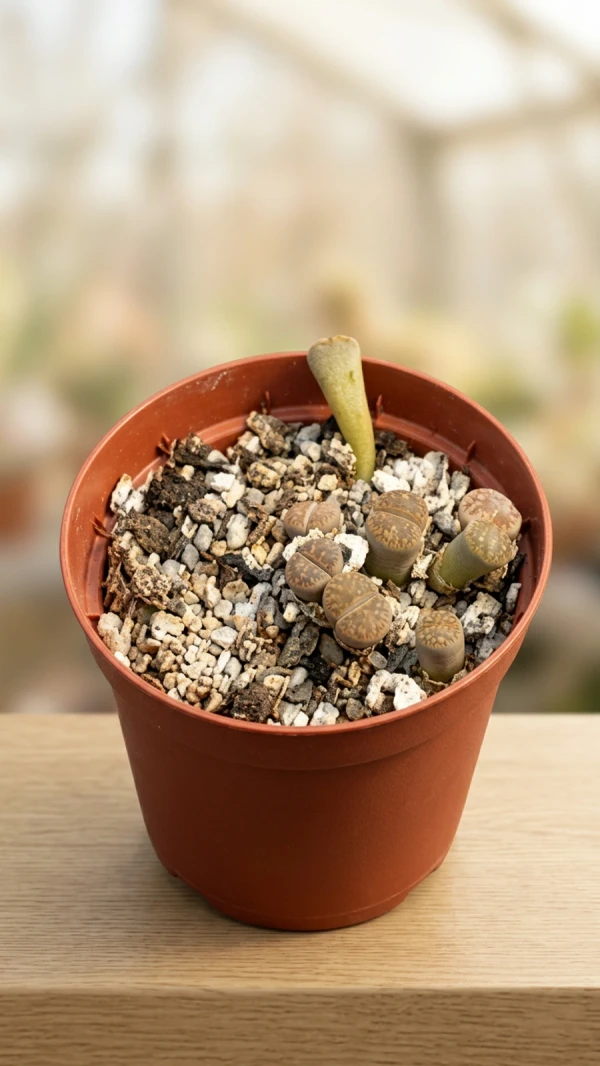
 Representative AI image
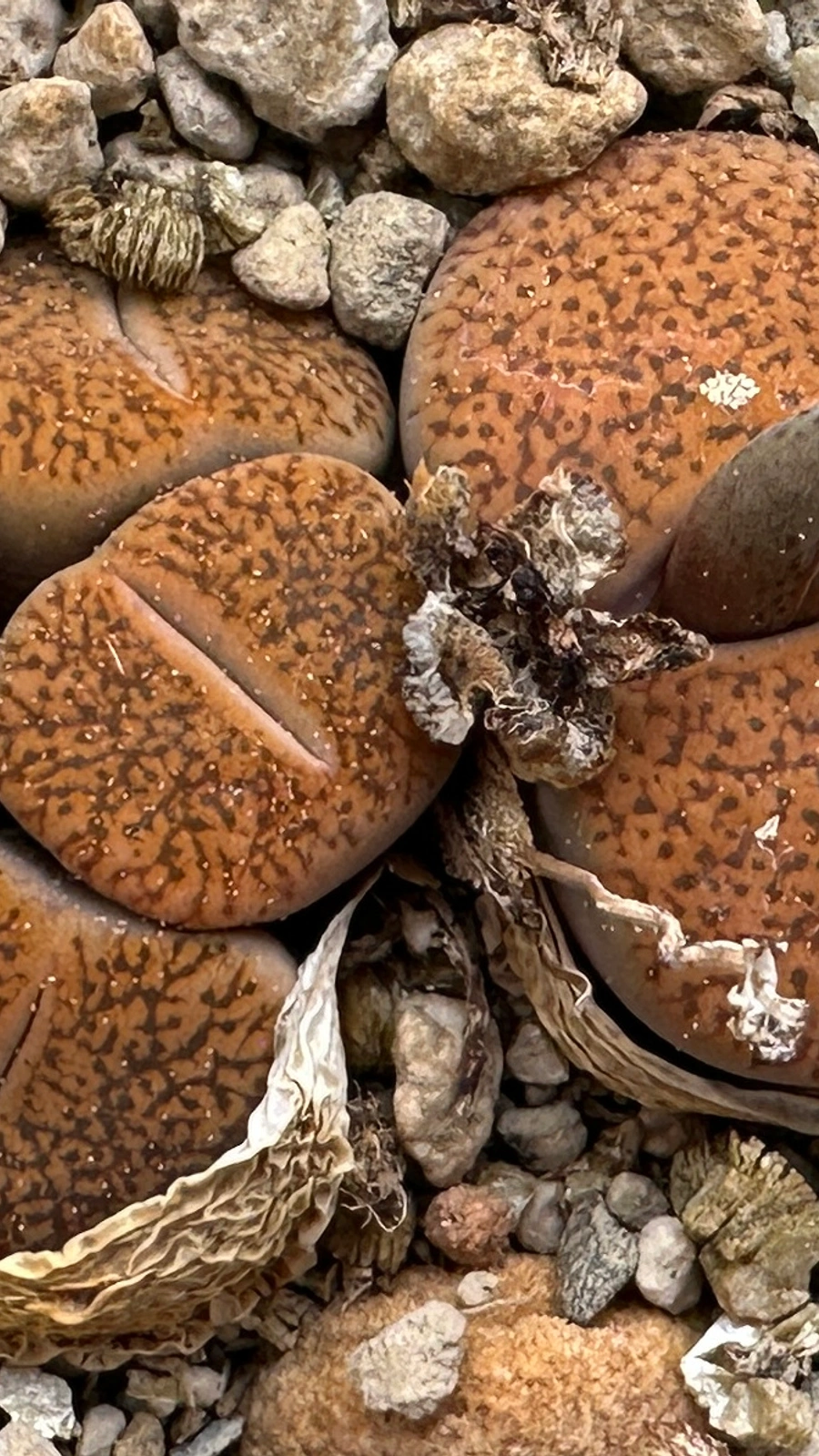 Reference image
Lithops lesliei
Leslie's Living Stone
Lithops lesliei: Nature's Camouflaged Marvel
Lithops lesliei is a unique species of "living stone" found naturally in the arid plains of Southern Africa, featuring distinctive patterns. It blends so perfectly with its surroundings that it often remains unnoticed. Popular among collectors, this plant stands out not only for its appearance but also for its minimal care requirements.
If you're looking for natural elegance and a conversation starter in your home or office, Lithops lesliei is an ideal choice. Its peculiar shape and texture add unique character to any collection. The plant also attracts attention with its growth cycle that changes with the seasons; shedding old leaves to reveal new, fresh ones.
At Kaktüs Doktoru, we are proud to offer you carefully cultivated, healthy Lithops lesliei specimens. Bring these miniature wonders into your living space and discover the mysterious beauty of nature.
Very bright light with gradual acclimation to strong sun.
Highly mineral, airy and rapidly draining mix.
Modest water after full drying in active growth; mostly dry during leaf replacement.
Moderate because the seasonal leaf cycle must be read correctly.
Frequently Asked Questions
When should Lithops lesliei be watered?
Should it be watered while the old leaves dry?
Does wrinkling always mean thirst?
What medium is suitable?
Can it take direct sun?
Why does it look like two leaves?
What does NE conservation status mean?
Is Lithops burchellii the same species?
Reviews
There are no reviews for this product yet.
Recently Viewed
Care reminder list
Get seasonal care reminders for this product at your preferred frequency. You can change the email address below and unsubscribe from any reminder email.
