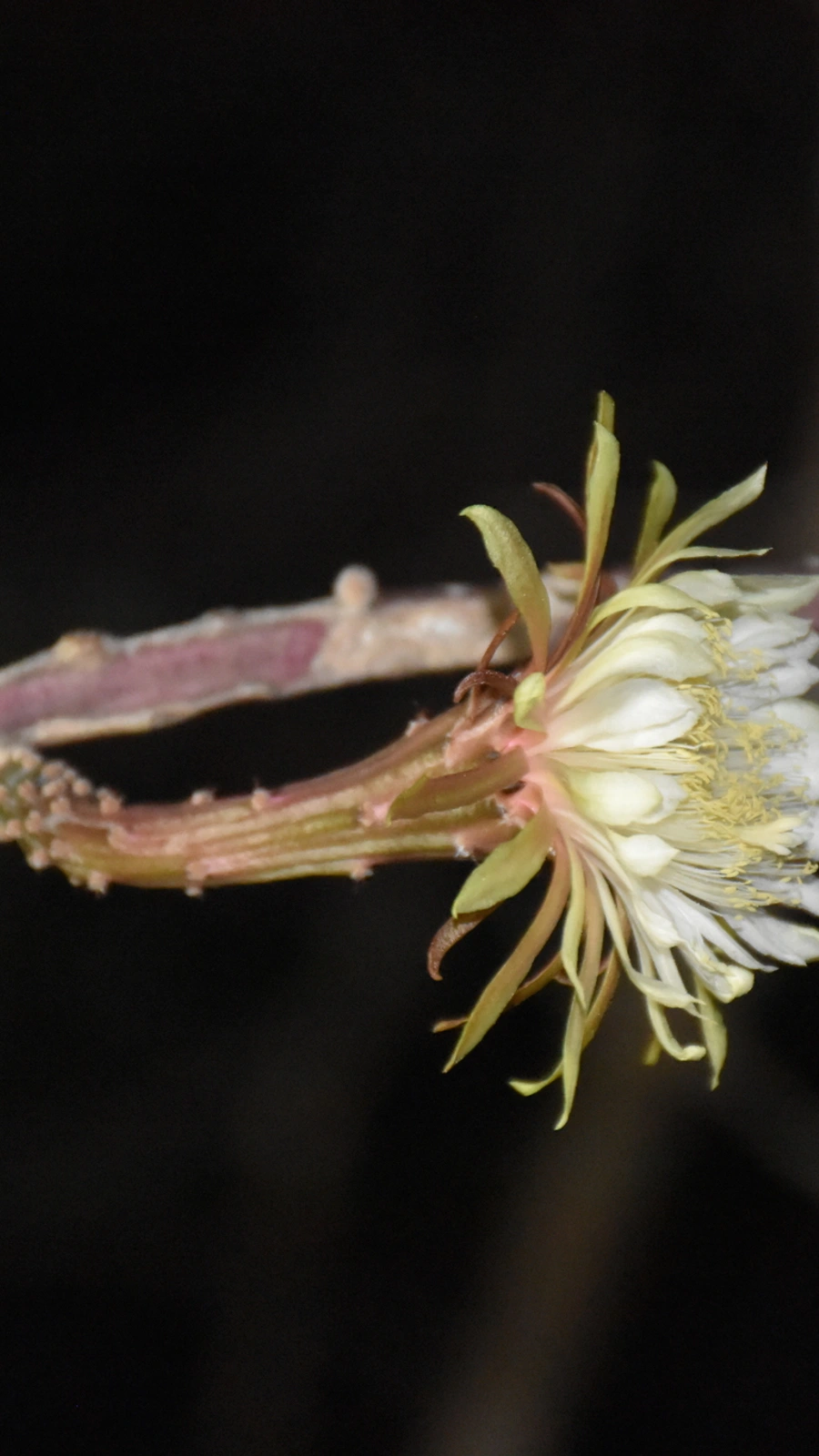
Acanthocereus atropurpureus

Dark Purple Cereus

Overview

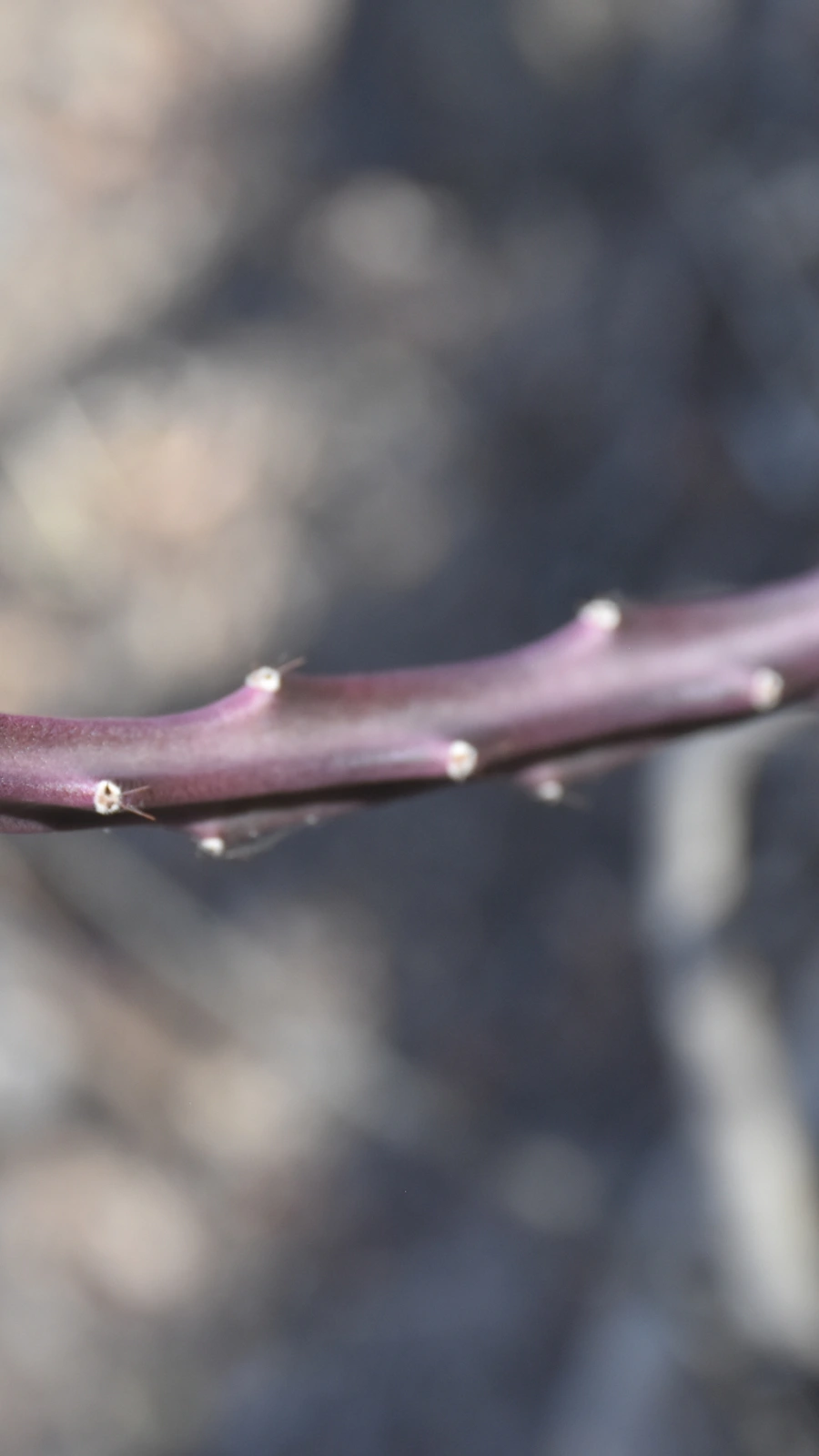
Acanthocereus atropurpureus is an intriguing, semi-scandent or shrubby cactus species belonging to the Cactaceae family. Known for its remarkable dark purple-bronze coloration on its stems when exposed to bright light, it is a highly sought-after species among collectors.

Classification and naming

The species is taxonomically placed within the genus Acanthocereus. The specific epithet atropurpureus translates to 'dark purple', highlighting the unique coloration of its epidermis under stress or high light conditions 1.

Distribution and habitat

This species is native to Mexico, particularly distributed across the western and southern regions including Jalisco, Colima, Guerrero, Michoacán, and Oaxaca 2. It thrives in seasonally dry tropical biomes, often growing under the canopy of deciduous shrubs or on rocky outcrops.

Morphology

The stems are typically 3 to 5-angled, boasting prominent ribs lined with small areoles and fine, needle-like spines. The nocturnal flowers are large, funnel-shaped, and white, designed to attract night-pollinating insects. Under optimal light, the epidermis turns a deep purple.

Cultivation

In cultivation, it requires bright, indirect sunlight to develop its deep purple hues without getting sunburned. A well-aerated, gritty cactus mix is crucial. Water thoroughly when the soil is dry during the growing season, and withhold water during winter 3.

Common cultivation mistakes

Overwatering in poorly draining soil leads to root rot. Insufficient light will cause etiolation, wherein the stems stretch and lose their distinctive purple coloration, reverting to a dull green.

References

  1. Plants of the World Online (POWO), Kew Science Database.
  2. GBIF Secretariat (2023). Acanthocereus atropurpureus Taxonomy.
  3. Hunt, D. (2006). The New Cactus Lexicon. DH Books.
Light

Bright Indirect Light

Needs bright, filtered sunlight to maintain its deep purple coloration.
Watering

7-21 Days

Allow soil to dry out completely between waterings; keep dry in winter.

Soil

Well-draining cactus mix with high pumice and coarse sand content

Requires highly porous, gritty, and fast-draining cactus soil.

Safety

Pet Friendly

Features fine spines that require careful handling. Non-toxic to pets.

Difficulty

Moderate

Moderate care; mainly requires careful water management.

Native Habitat

Mexico

Native to the seasonally dry tropical forests of western and southern Mexico, stretching across Jalisco, Guerrero, Colima, Michoacán, and Oaxaca, where it grows amidst rocky terrains.

Frequently Asked Questions

Why is my Acanthocereus atropurpureus turning green?
If the plant does not receive enough light, it will revert to green due to increased chlorophyll production. Place it in a bright, filtered sunlight spot to restore and maintain its purple color.
Is it toxic to pets?
No, *Acanthocereus atropurpureus* is non-toxic to pets. However, because of its sharp spines, it should be kept out of reach of curious animals to prevent physical injury.
How often should it be watered in a pot?
In summer, water thoroughly once the soil has dried out completely (approx. once a week). In winter, during dormancy, reduce watering to once every 3 to 4 weeks.
What is the best soil mix for this cactus?
Use a highly gritty cactus mix containing plenty of pumice, lava rock, and coarse sand. Standard potting soil retains too much moisture and causes root rot.
How can I encourage it to bloom?
To promote blooming, provide a cool and dry winter dormancy period. With sufficient light in spring and summer, it will produce large, nocturnal white flowers.
What is its growth rate?
It has a moderate growth rate when provided with warm temperatures and bright light. Due to its climbing habit, it may require a stake for support over time.
Can it be left on the balcony during winter?
It is sensitive to frost. Once temperatures drop below 10°C (50°F), it is recommended to move the plant indoors to a bright, draft-free spot.
Is it normal for the stems to shrivel?
Shriveling is usually a sign of dehydration. However, if the soil is wet and the stem is shriveled, it indicates root rot, meaning the plant can no longer absorb water.
When should it be repotted?
Repot every 2 to 3 years in early spring, and only when the roots have completely filled the current pot. Move up to just one size larger.
Which fertilizers should I use?
During spring and summer, apply a diluted, low-nitrogen cactus fertilizer once a month to support growth and healthy cell structure.