
Light
Bright Indirect Light
Prefers bright, filtered light; avoid intense, scorching direct midday sun.
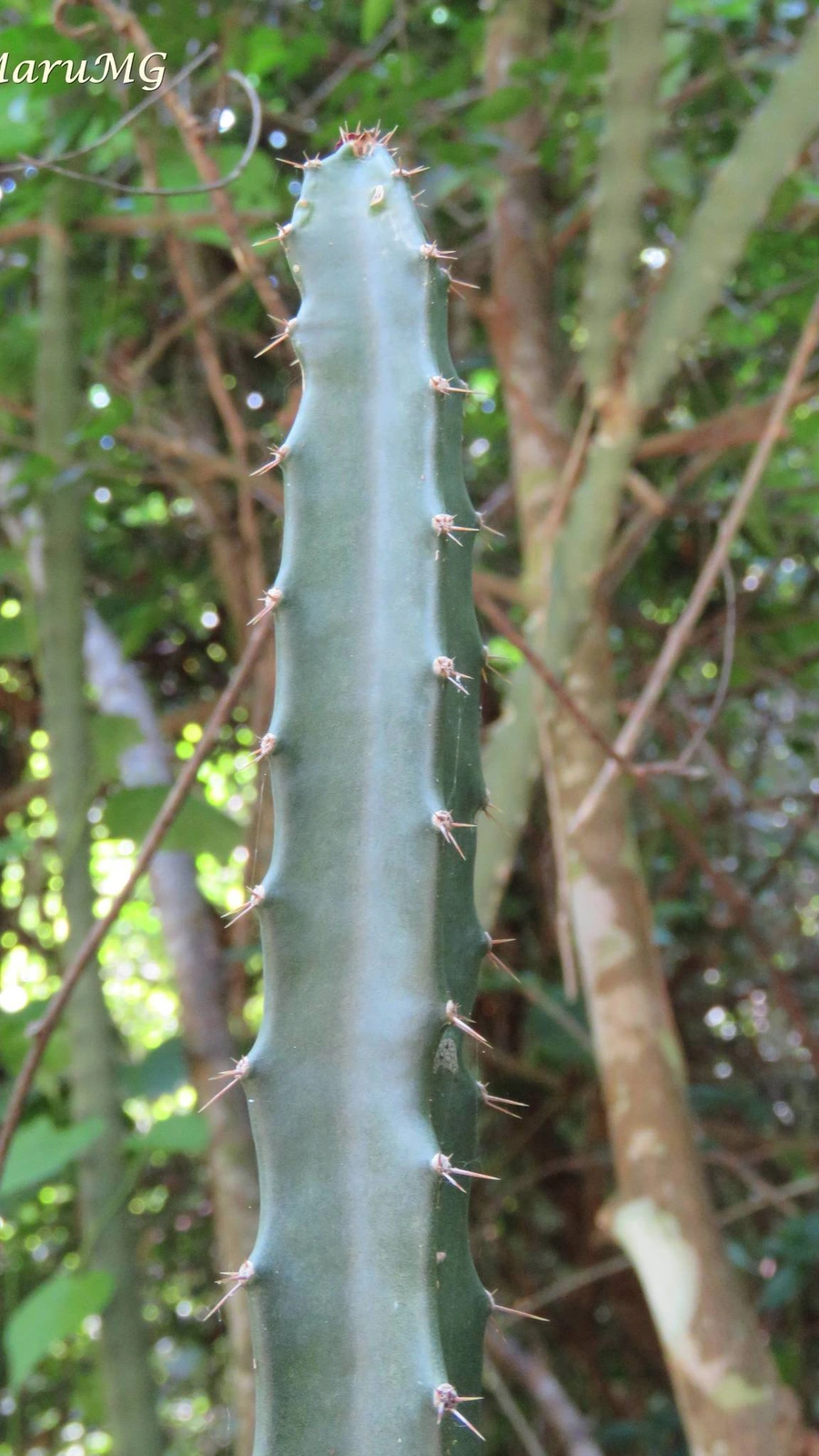 Reference image
 Reference image
Castella's Acanthocereus
Acanthocereus castellae is a rare, scrambling succulent shrub or subshrub belonging to the family Cactaceae. In its native environment, it relies on surrounding vegetation and rocky outcrops for support. In cultivation, it requires sharp drainage and adequate indirect sunlight to thrive 1.
Classified under the genus Acanthocereus, this species is distinguished by its relatively slender, ribbed stems and specific spination. Although taxonomic discussions occasionally group it near other members of the genus, it remains accepted as a distinct species 2.
Native to Mexico, this cactus is predominantly found in dry shrublands and arid deciduous forests. It occupies states such as Michoacán, Guerrero, Oaxaca, and Jalisco, growing on rocky soils and steep slopes 1.
The stems are slender, 3 to 5-ribbed, and colored green to grayish-green. Small, sharp spines emerge from its areoles. During the summer nights, it produces large, nocturnal, funnel-shaped white flowers with a subtle scent 2.
It prefers extremely porous gritty soils. Water thoroughly during the summer months when the substrate is dry, and drastically reduce watering during the winter. Filtered morning sunlight helps prevent stem sunburn.
Overwatering in poorly draining pots is the leading cause of root rot. Lack of adequate light results in weak, thin, and stretched stems, a condition known as etiolation.
Prefers bright, filtered light; avoid intense, scorching direct midday sun.
Allow the potting mix to dry out fully between waterings. Sensitive to overwatering.
Requires excellent drainage. Use a cactus mix enriched with pumice and coarse sand.
Spines can cause skin irritation; the plant's sap is potentially toxic to pets.
Moderate care level due to specific winter temperature and watering needs.
Native to dry deciduous shrublands and rocky slopes throughout Michoacán, Guerrero, Oaxaca, and Jalisco in Mexico.
