
Light
Bright Indirect Light
Requires bright indirect light or filtered sun; shield from scorching afternoon sun.
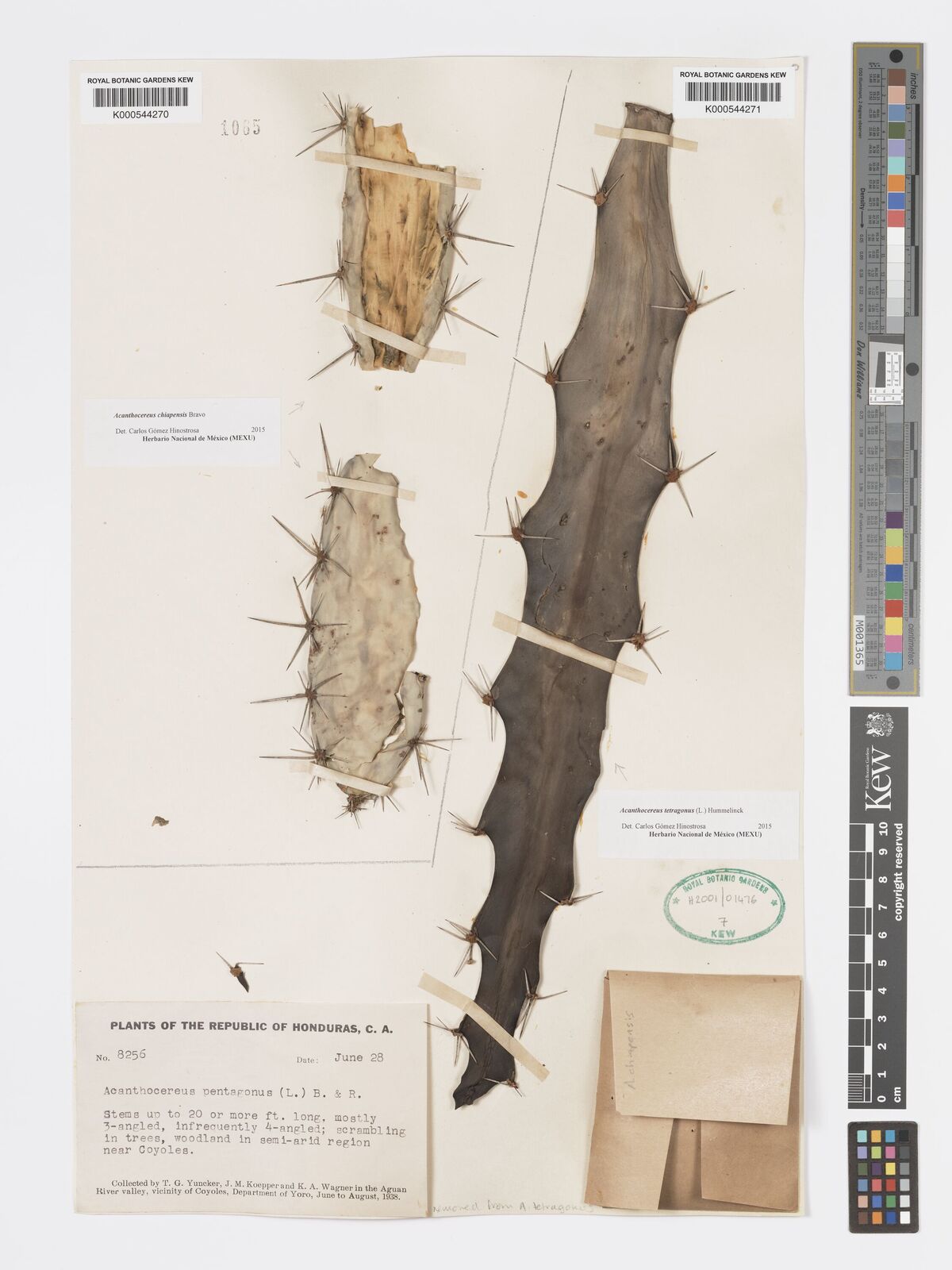 Reference image
Chiapas Spiny Cereus
Acanthocereus chiapensis is a succulent shrub or subshrub belonging to the Cactaceae family. Characterized by its branching, scandent habit, this species is highly adapted to seasonally dry tropical environments where it grows under the canopy of dry deciduous forests 1.
This species is classified under the genus Acanthocereus. Named after the Chiapas region in southern Mexico, it represents a resilient lineage of night-blooming cereoid cacti that occupy transitional dry forest niches 2.
Its native range spans southern Mexico (including Chiapas and the Yucatan Peninsula), Guatemala, and Honduras. It thrives in seasonally dry tropical biomes, often found clinging to rocky soils or limestone outcrops in open woodlands 1.
The stems are typically 3-to-4-ribbed, dull green, and support prominent areoles with sharp, grayish-brown spines. It produces large, nocturnal white flowers that are highly fragrant, designed to attract moth pollinators during the night.
In cultivation, it requires warm conditions and excellent drainage. It responds well to bright indirect light or filtered sun. Water thoroughly during the hot growing season only after the substrate has dried out completely, and keep dry in winter.
Overwatering and poor soil drainage are the primary causes of root rot in this species 2. Insufficient light leads to etiolated, weak, and thin stem growth that ruins its robust structure.
Requires bright indirect light or filtered sun; shield from scorching afternoon sun.
Water thoroughly only when the soil is completely dry. Keep almost dry in winter.
Coarse, well-draining mineral soil with high pumice or perlite content.
Equipped with sharp spines; handle with thick gardening gloves. Non-toxic but physically hazardous.
Moderate. Requires strict adherence to drying cycles and protection from frost.
Native to the seasonally dry tropical zones of Southern Mexico and northern Central America, where it populates rocky terrains and deciduous shrublands.
