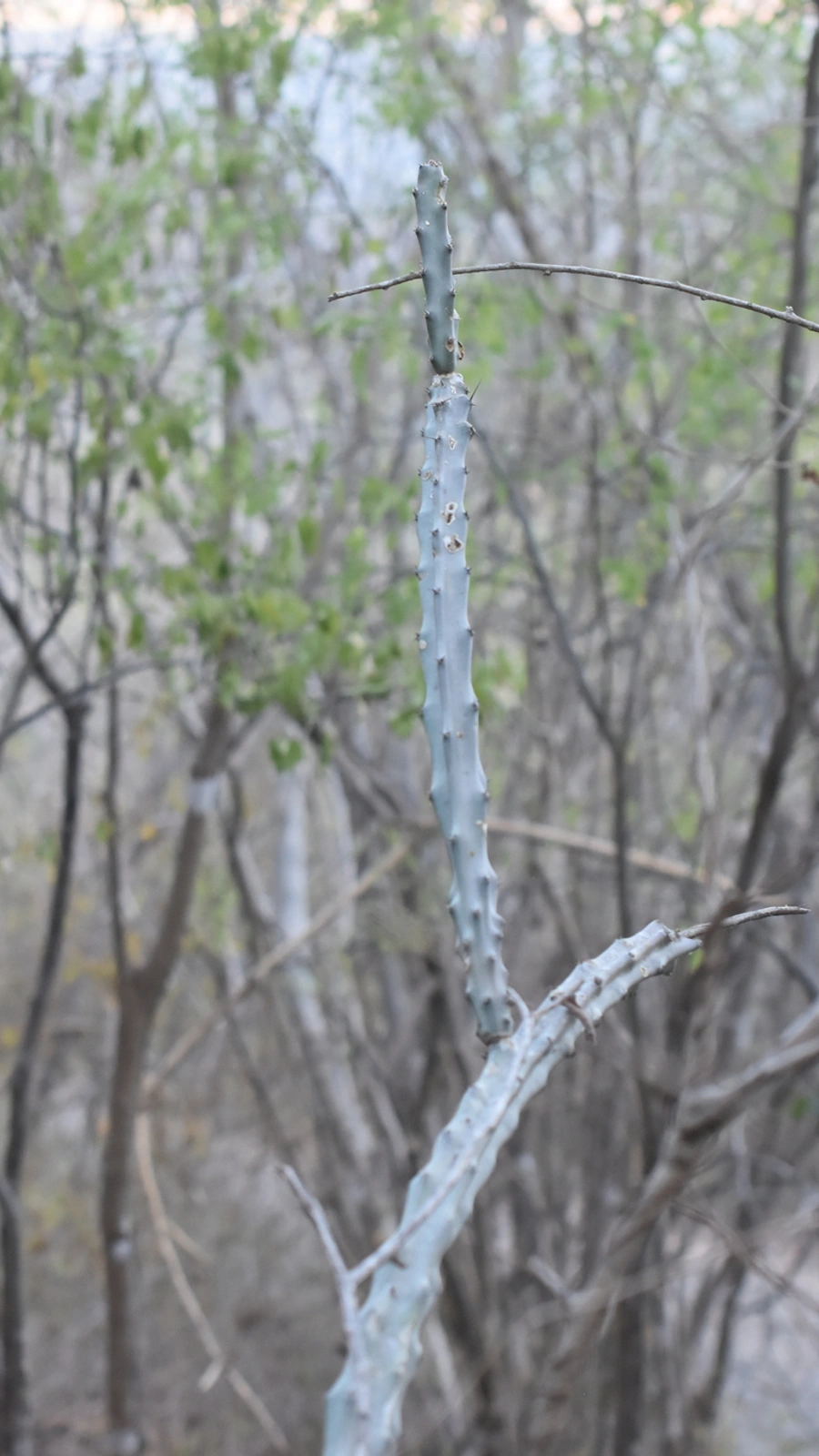
Acanthocereus cuixmalensis

Cuixmala Spiny Cereus

Overview

Acanthocereus cuixmalensis is a rare, scrambling succulent shrub belonging to the family Cactaceae 1. It is characterized by its slender, angular stems and nocturnal white blooms that rely on specific pollinators.

Taxonomy and Naming

Named after the Cuixmala Biosphere Reserve in Jalisco, Mexico, where it was first documented, this species belongs to the genus Acanthocereus, known for their sprawling, ribbed growth habits 1.

Distribution and Habitat

This species is endemic to Mexico, specifically along the Pacific slopes in Jalisco, Colima, Michoacán, Guerrero, and Oaxaca 2. It thrives in seasonally dry tropical forests and coastal scrub, growing in sandy or rocky soils.

Appearance

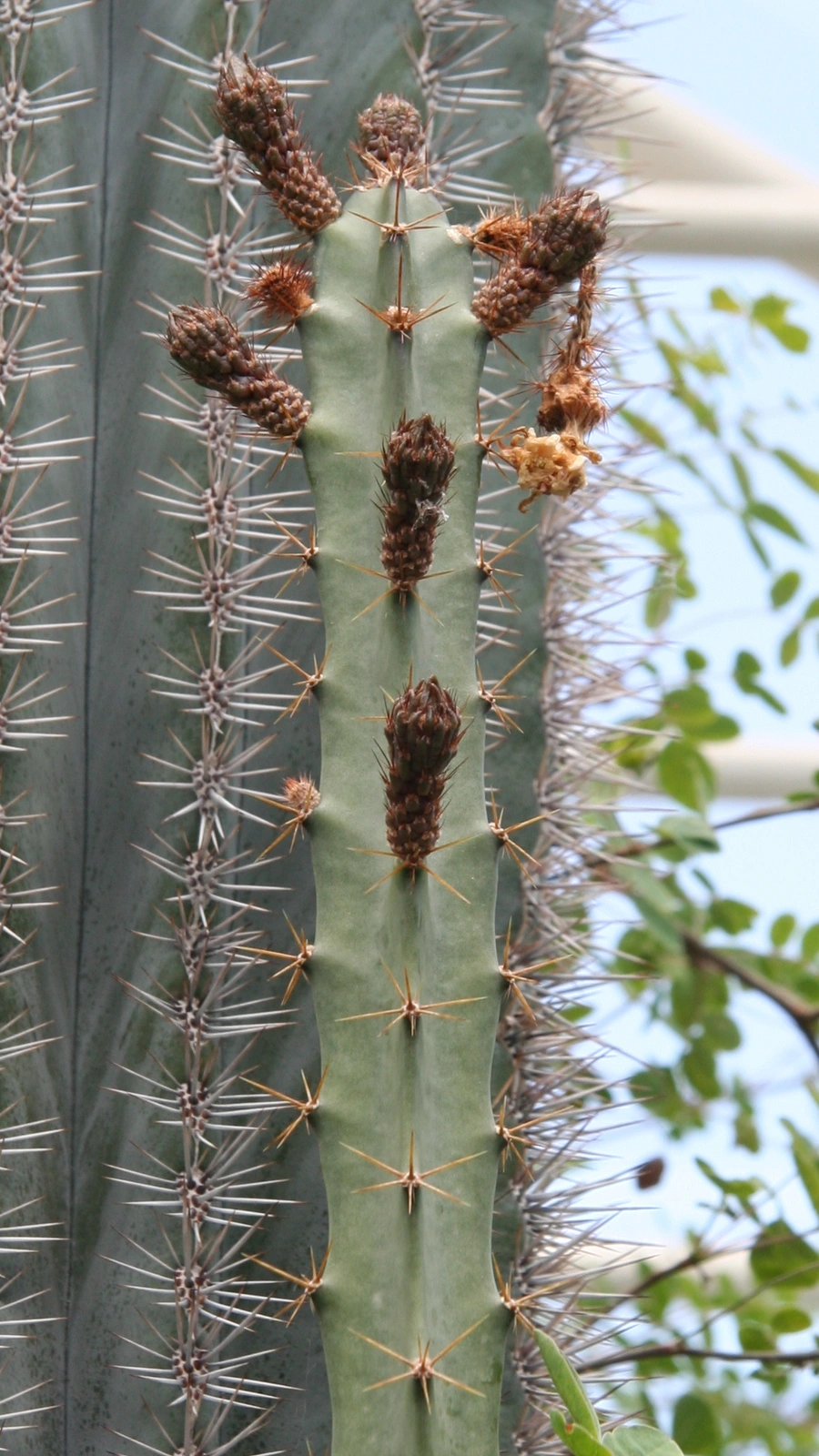
The stems are thin, green to grey-green, typically with 3 to 4 prominent ribs and small clusters of radial spines. In summer, it produces large, fragrant, white funnel-shaped flowers that open at night.

Cultivation and Care

In cultivation, it requires a well-draining cactus mix, bright filtered sunlight, and moderate watering. It has poor frost tolerance and must be kept above 10°C during winter.

Common Mistakes

Overwatering is the primary cause of root rot. Lack of sufficient light leads to weak, etiated stems that fail to support themselves.

References

  1. Plants of the World Online (POWO), Royal Botanic Gardens, Kew.
  2. IUCN Red List of Threatened Species, Acanthocereus cuixmalensis Assessment.
Light

Bright Indirect Light

Prefers bright, indirect light or filtered sun. Avoid prolonged scorching afternoon sun.
Watering

10-30 Days

Allow the potting medium to dry out completely before watering. Avoid waterlogged soil.

Soil

Well-draining, pumice and sand-rich cactus potting mix

Requires highly porous, sandy, and well-drained soil formulated for cacti.

Safety

Contact/Ingestion Risk

Equipped with sharp, rigid spines. Keep out of reach of children and pets.

Difficulty

Moderate

Requires moderate care due to its sensitivity to frost, high humidity, and overwatering.

Native Habitat

Mexico (Pacific Coast)

Native to the coastal areas of western and southwestern Mexico, growing in dry tropical deciduous forests and coastal thorn scrubs in sandy, nutrient-poor substrates.

Frequently Asked Questions

Can Acanthocereus cuixmalensis be grown indoors?
Yes, but it must be placed near a bright south- or west-facing window with plenty of indirect light, and kept cool and dry during winter.
How often should this cactus be watered?
Water every 10 days in summer once the soil dries completely, and reduce to once a month during its winter dormancy.
What is the best soil mix for this plant?
A highly porous cactus mix amended with 50% pumice, perlite, or coarse sand is ideal to prevent root rot.
Is Acanthocereus cuixmalensis toxic to pets?
While its sap is not toxic, its sharp spines pose a physical hazard to curious pets and children.
Why are the stems growing very thin and weak?
This is due to insufficient light (etiolation). Gradually move your plant to a brighter location with more filtered sunlight.
When does it bloom and what are its flowers like?
It blooms in summer, producing large, fragrant white flowers that open at night and close by early morning.
Is using a support stake mandatory?
Since it is a scrambling cactus, using a bamboo stake or trellis is highly recommended to support its long, heavy stems.
What is its cold hardiness in winter?
It tolerates a minimum of 10°C (50°F). It is frost-sensitive and must be overwintered indoors in cold climates.
What is its growth rate?
Under optimal light and watering conditions, it has a moderate-to-fast growth rate compared to other cacti, producing long branches.
How often should it be repotted?
Repot every 2 years in early spring, or when the roots have completely filled the container, moving up only one pot size.