
Light
Bright Indirect Light
Thrives in bright indirect light or filtered morning sun.
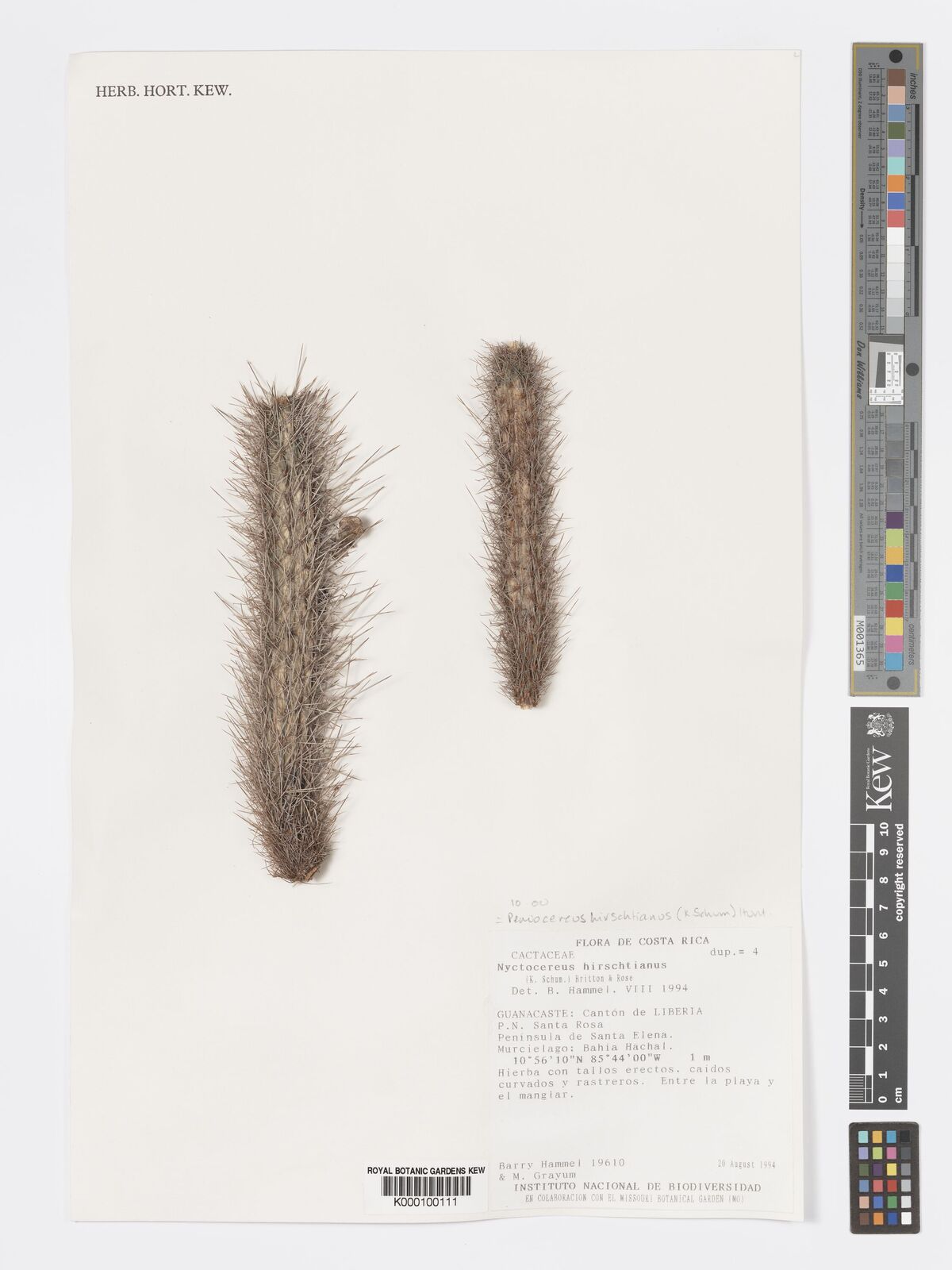 Reference image
Hirscht's Acanthocereus
Acanthocereus hirschtianus is a scrambling, succulent subshrub or shrub belonging to the family Cactaceae. In its native habitat, it displays a semi-scandent growth habit, relying on surrounding vegetation for support 1. It is highly appreciated by succulent enthusiasts for its slender angled stems and nocturnal, fragrant flowers.
The species was originally described by Carl Schumann as Cereus hirschtianus before being transferred to the genus Acanthocereus based on modern molecular and morphological analyses 2. It is also widely known by its synonym, Peniocereus hirschtianus. The specific epithet honors Hirscht, an esteemed figure in early cactus botany.
Native to Central America, this species occurs naturally across Guatemala, El Salvador, Costa Rica, Honduras, and Nicaragua 1. It thrives primarily in seasonally dry tropical biomes, growing among deciduous scrubs and rocky outcroppings where soils are shallow but rich in mineral components 3.
The plant features thin, segmented, green to grayish-green stems that are typically 3 to 5-ribbed. The areoles bear small, needle-like, brownish spines. During its blooming season, it produces spectacular, nocturnal, funnel-shaped white to cream-colored flowers. The subsequent fruits are fleshy, bright red, and attract local fauna.
Acanthocereus hirschtianus prefers bright, filtered light and slightly more humidity than typical desert cacti. During the active growing phase in spring and summer, it requires moderate watering but must dry out completely between applications. A highly porous, mineral-based potting soil combined with excellent pot drainage is essential for healthy development.
Overwatering is the single most common cause of failure, quickly leading to root and basal rot 3. Insufficient light leads to weak, stretched stems (etiolation), while abrupt exposure to intense, direct afternoon sun can cause permanent scorching.
Thrives in bright indirect light or filtered morning sun.
Allow the potting mix to dry out completely before watering again.
Very sandy, porous, mineral-rich cactus soil with added pumice.
Features sharp, needle-like spines. Place out of reach of pets and children.
Moderate; requires careful watering and protection from freezing temperatures.
Spans across Guatemala, El Salvador, Honduras, Nicaragua, and Costa Rica within dry tropical forests and rocky scrublands.
