
Light
Bright Indirect Light
Enjoys plenty of bright, indirect sunlight, but protect from intense midday summer sun to avoid scorching.
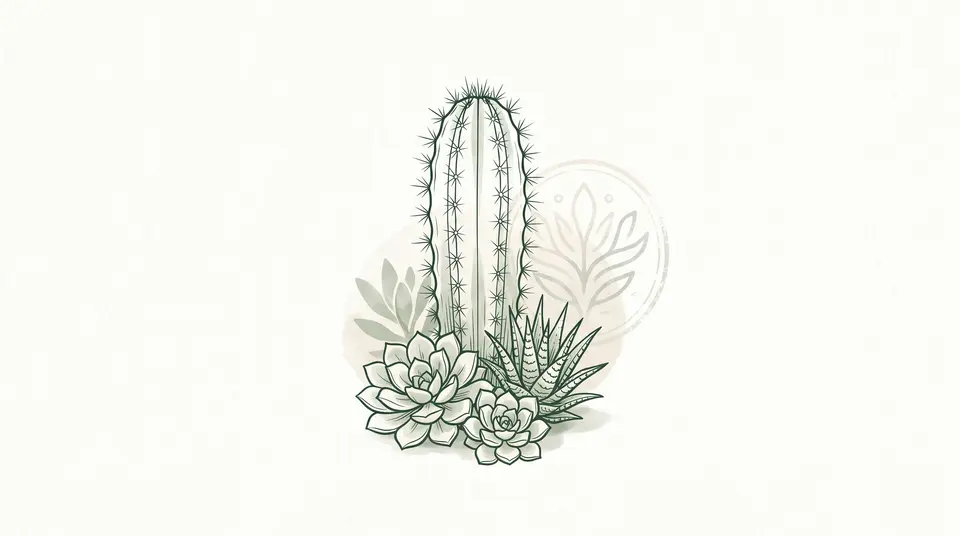 Reference image
Lempira Spiny Cactus
Acanthocereus lempirensis is a rare and distinctive succulent subshrub or shrub belonging to the family Cactaceae. It thrives in seasonally dry tropical biomes, exhibiting a sprawling or semi-erect growth habit suitable for collectors of exotic cacti.
The species epithet 'lempirensis' refers directly to its origin in the Lempira department of Honduras. The genus Acanthocereus is characterized by its heavily ribbed, nocturnal-blooming stems, making this species an essential taxon for understanding Central American succulent diversity 1.
This species is primarily native to Honduras in Central America. It inhabits dry tropical forests and rocky slopes, where it has adapted to survive prolonged dry seasons by storing water in its ribbed, fleshy stems 2.
Acanthocereus lempirensis features green to grayish-green branches with 3 to 5 prominent ribs. Spines are stout, sharp, and arranged along the areoles. Its large, nocturnal, funnel-shaped white flowers are designed to attract night-pollinating insects.
In cultivation, it requires a coarse, fast-draining mineral substrate and a pot with ample drainage. Water thoroughly during the summer only when the substrate is completely dry, and maintain dry conditions during the cold winter resting phase.
The most critical mistake is overwatering, which quickly causes root rot. Placing the cactus in a low-light environment leads to etiolation, causing the stems to grow thin, weak, and lose their natural aesthetic appeal.
Enjoys plenty of bright, indirect sunlight, but protect from intense midday summer sun to avoid scorching.
Water only when the substrate is completely dry during spring and summer; keep dry during winter.
Requires highly porous, sandy, and gritty cactus soil mixes with excellent drainage properties.
Equipped with sharp spines; keep out of reach of children and curious domestic pets.
Moderately easy to care for, provided you do not overwater and maintain proper light levels.
Endemic to the seasonally dry tropical forests of Honduras, where it grows on rocky substrates and dry plains.
