
Light
Bright Indirect Light
Prefers bright, indirect light or filtered morning sun rather than scorching direct afternoon sunlight.
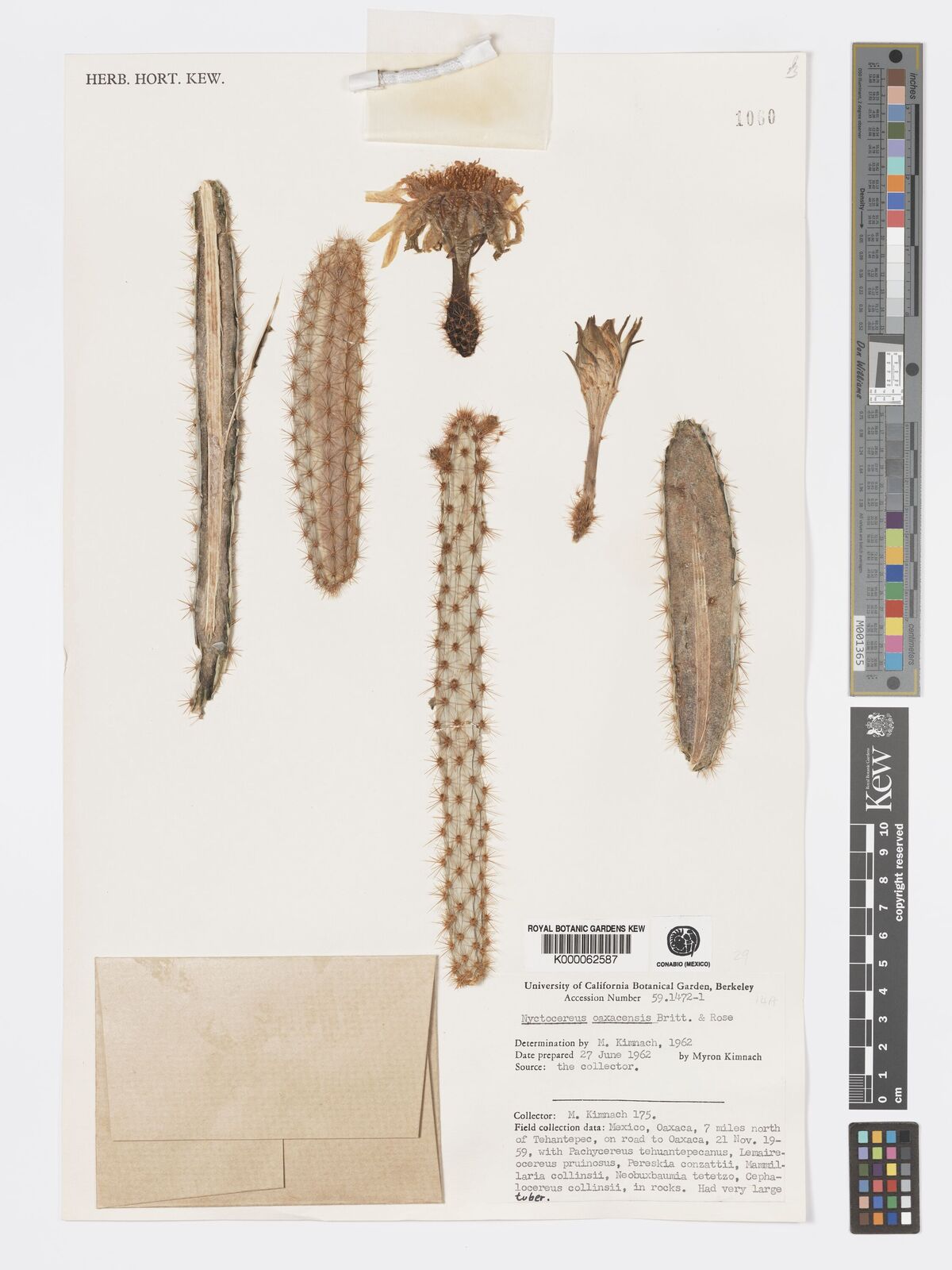 Reference image
Oaxaca Bramble Cactus
Acanthocereus oaxacensis is a scrambling or shrubby succulent cactus belonging to the family Cactaceae. Known for its climbing growth habit and nocturnal blooms, it integrates beautifully into arid landscapes and specialized succulent collections.
The species was historically classified under various combinations but is currently accepted as Acanthocereus oaxacensis according to Kew's Plants of the World Online 1. The genus name Acanthocereus is derived from the Greek word akantha, meaning thorn. The specific epithet oaxacensis directly refers to its primary native region in Oaxaca, Mexico.
This species is native to southwestern Mexico, particularly in the states of Oaxaca, Guerrero, and Jalisco 2. It thrives in seasonally dry tropical forests, rocky slopes, and deciduous shrublands where it scrambles through surrounding vegetation.
It features slender, green, 3 to 5-ribbed stems that can climb or trail. The areoles carry moderate, grayish-brown spines. During summer, it produces large, white, funnel-shaped flowers that open at night, followed by small, reddish, edible globose fruits.
It prefers a highly porous, mineral-based soil mix. During the active growing season, it benefits from moderate watering, which should be drastically reduced in winter. It thrives best in bright, indirect light or filtered morning sun.
The most frequent issue is root rot caused by waterlogged soil and poor container drainage. Additionally, keeping the plant in freezing temperatures or overly humid conditions during winter can lead to fungal infections.
Prefers bright, indirect light or filtered morning sun rather than scorching direct afternoon sunlight.
Water only when the substrate is completely dry. Keep nearly dry during the cold winter dormancy.
Requires highly porous, well-draining soil rich in pumice, grit, and coarse sand.
Equipped with sharp spines; keep out of reach of children and curious pets.
Moderately easy to grow if overwatering is avoided and winter protection is provided.
Native to the seasonally dry tropical forests and rocky, limestone-rich scrublands of southwestern Mexico.
