
Light
Direct Sun
At least 6 hours of direct sunlight or very bright indirect light is ideal for healthy growth and flowering.
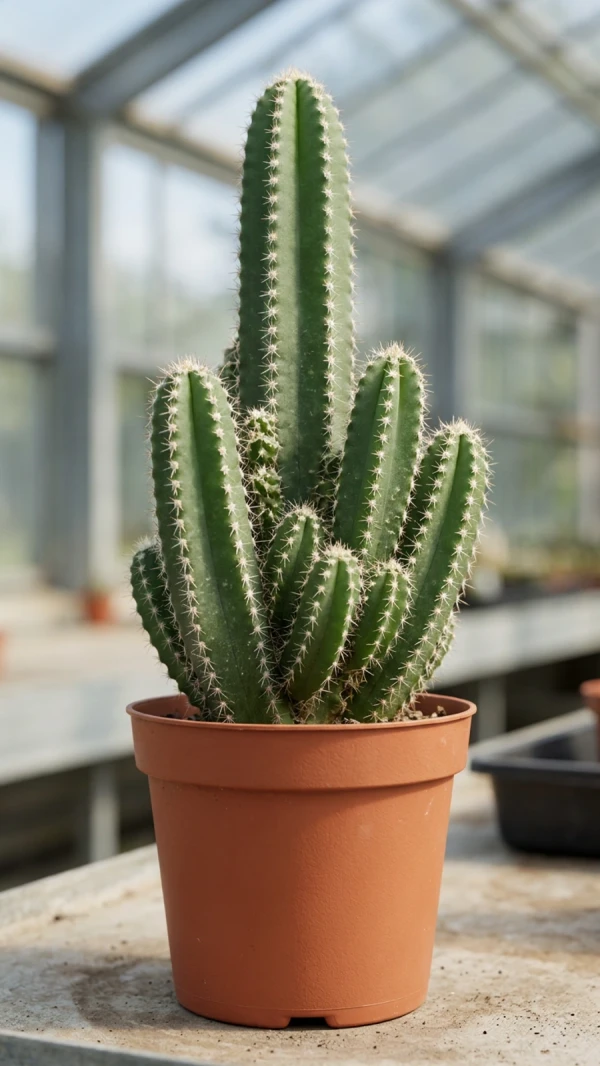
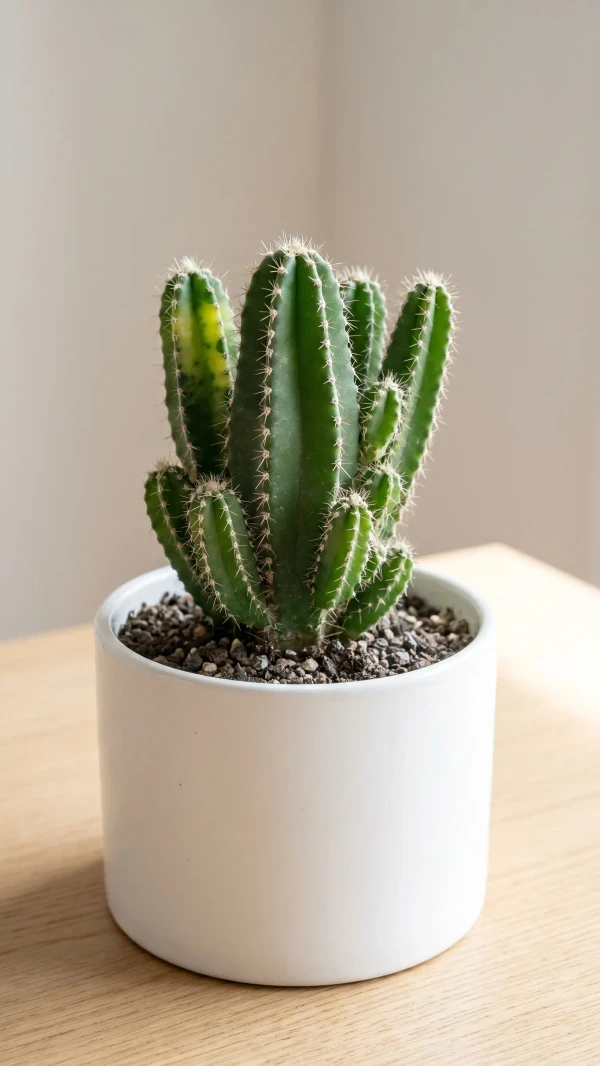
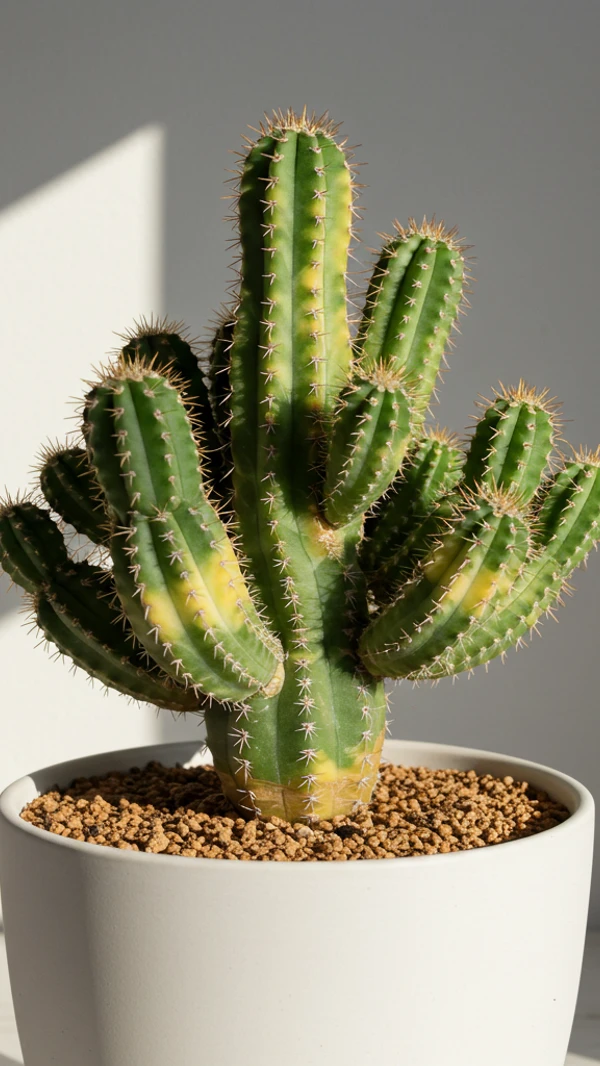
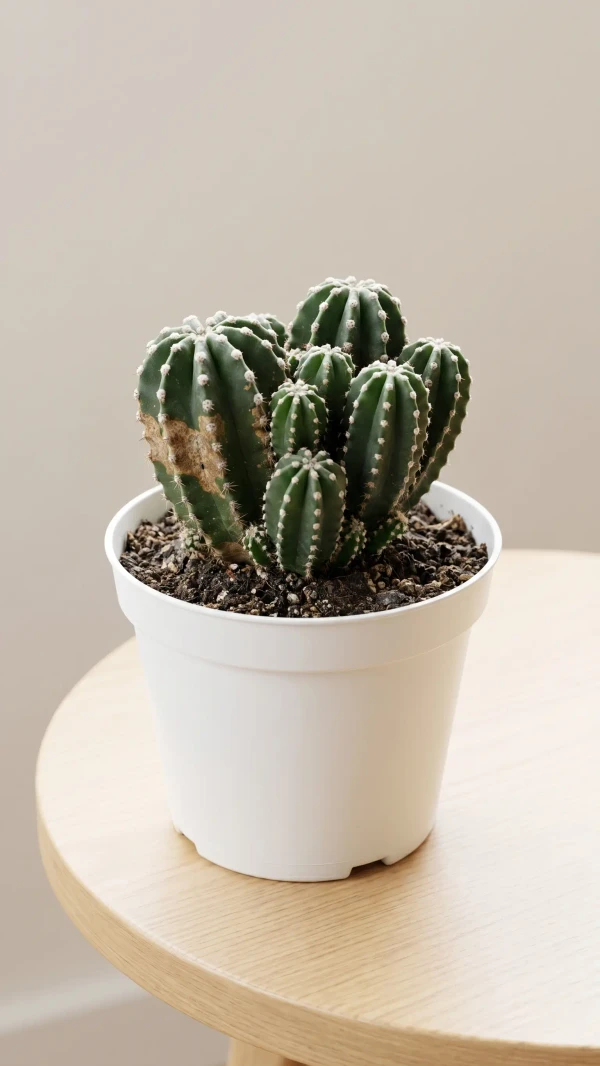
 Reference image
 Reference image
Triangle Cactus
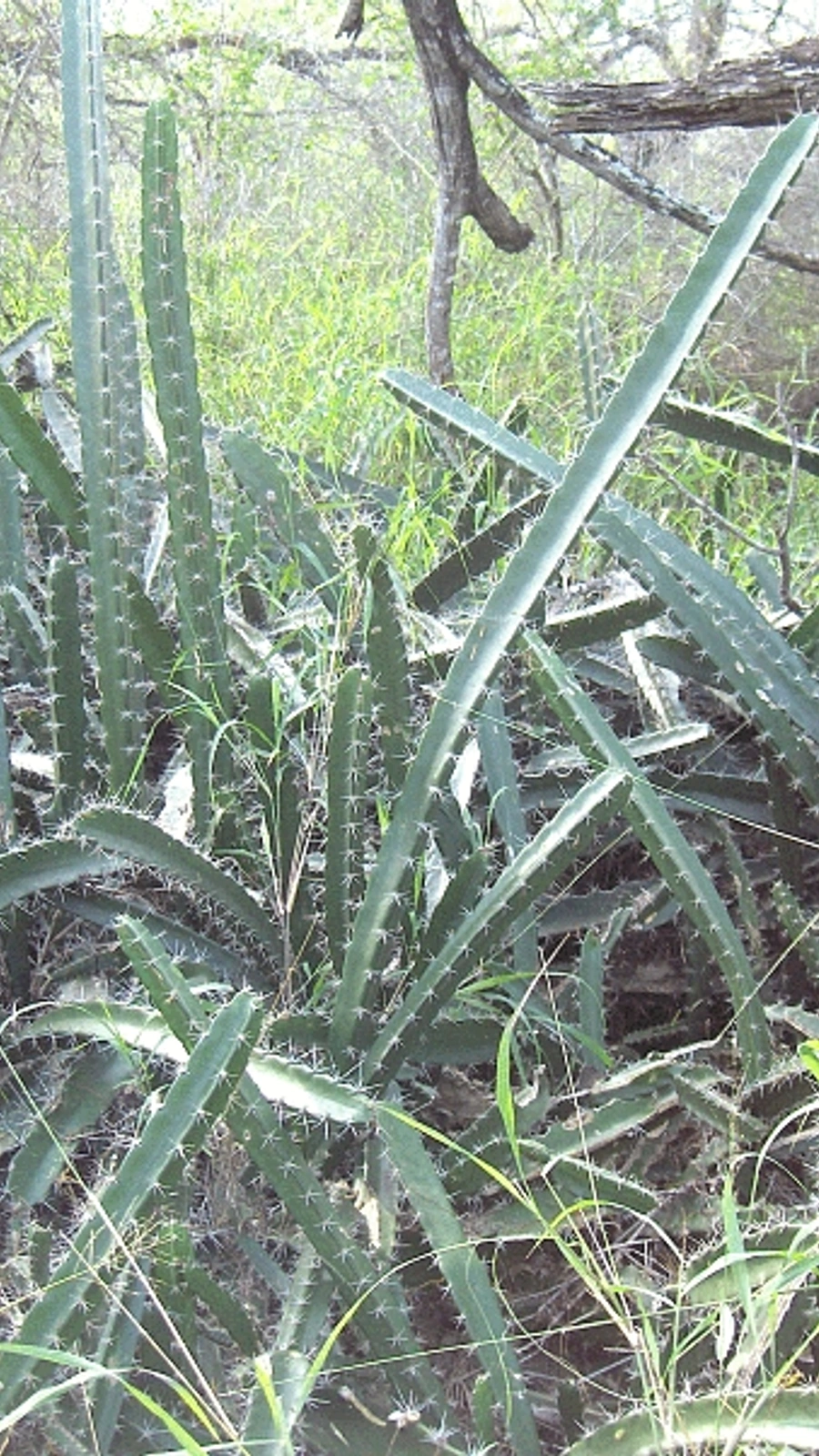
Acanthocereus tetragonus is a striking member of the cactus family (Cactaceae). Commonly known as "Triangle Cactus" or "Barbed Wire Cactus," this plant is recognized by its long, erect or scrambling, three- to five-angled, green stems. The stems are bright green when young, becoming darker and more woody as they mature. This cactus derives its name from the fact that its stem cross-section is frequently triangular.
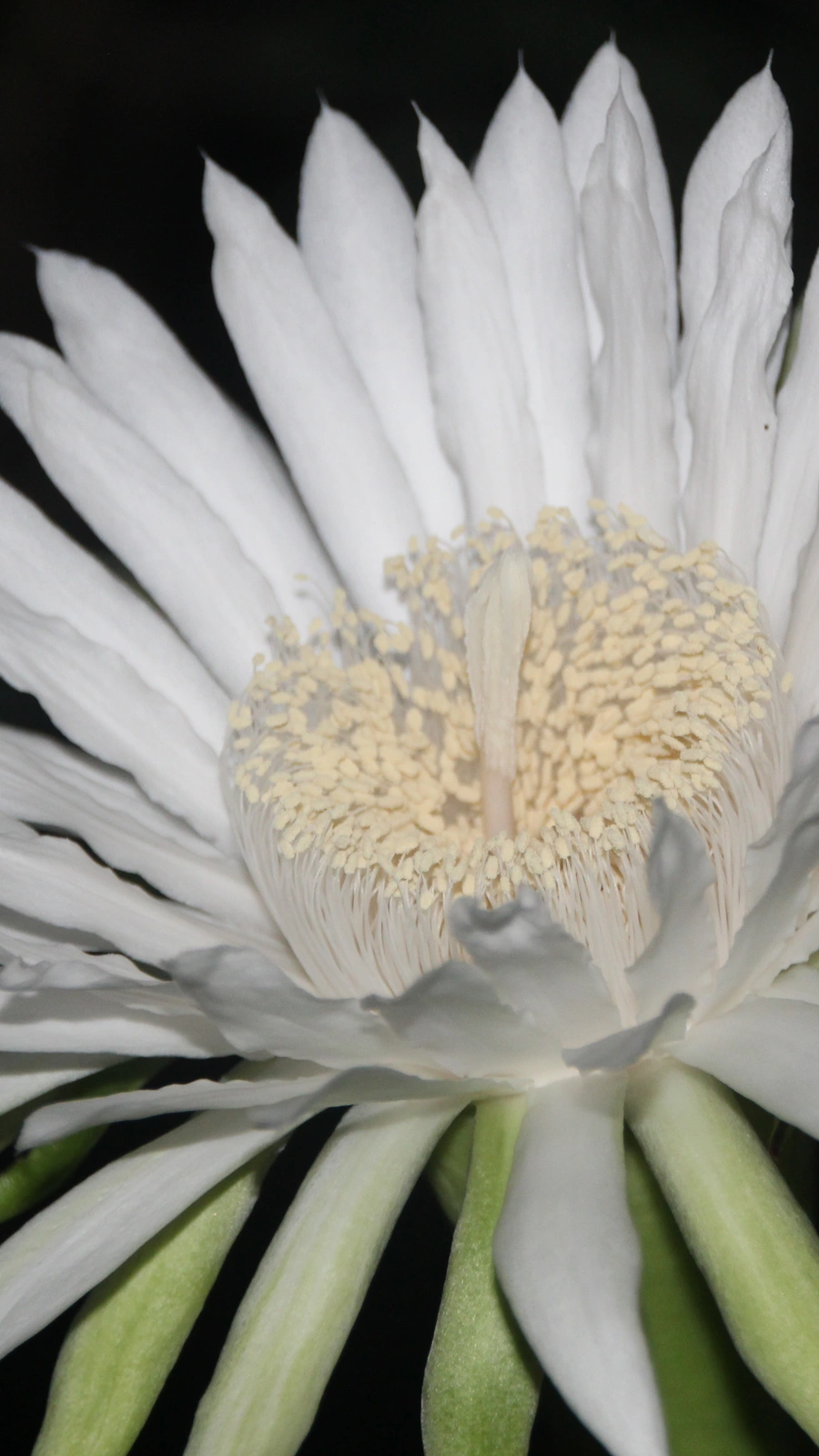
In its natural habitat, Acanthocereus tetragonus is a shrub or scrambling subshrub that can grow up to 5 meters (16 feet) tall. Its stems are typically branched and covered with dense spines, which provide an effective defense mechanism, earning it the moniker "Barbed Wire Cactus." The plant produces large, showy, white flowers that open at night and are pollinated by moths and butterflies. These fragrant flowers usually remain open for only a few hours. Following flowering, sweet and edible, red or purple, delicious cactus fruits develop. These fruits serve as a food source for both humans and wildlife.
This cactus species plays a significant ecological role in its natural habitats, particularly in arid and semi-arid climates. Its fruits provide sustenance for numerous wild animals, while its dense, spiny structure can offer shelter to small creatures. A. tetragonus has gained popularity worldwide as an ornamental plant due to both its aesthetic appeal and its relatively easy care. In regions with warm climates, it is also frequently used to form natural hedges and to prevent soil erosion. The plant's resilience and adaptability to various environmental conditions make it a valuable asset among cactus collectors and gardeners.
At least 6 hours of direct sunlight or very bright indirect light is ideal for healthy growth and flowering.
Ensure the soil is completely dry before watering. Reduce watering significantly, almost to cessation, during winter months.
Use a porous, fast-draining cactus and succulent potting mix.
This plant has sharp spines. Handle with care and keep out of reach of children and pets.
Care is moderately easy; it thrives when basic cactus needs are met, but its potential large size can make placement challenging.
Acanthocereus tetragonus is widely distributed from southern Mexico across the Southeastern United States, through Central America (including El Salvador and Guatemala), and across numerous islands in the Caribbean (such as Cuba, Hispaniola, and Puerto Rico). It is particularly characteristic of tropical and subtropical dry forests, scrublands, and coastal areas.
