
Light
Full Sun
Requires full sun or intense bright light. Insufficient light causes weak, stretched growth.
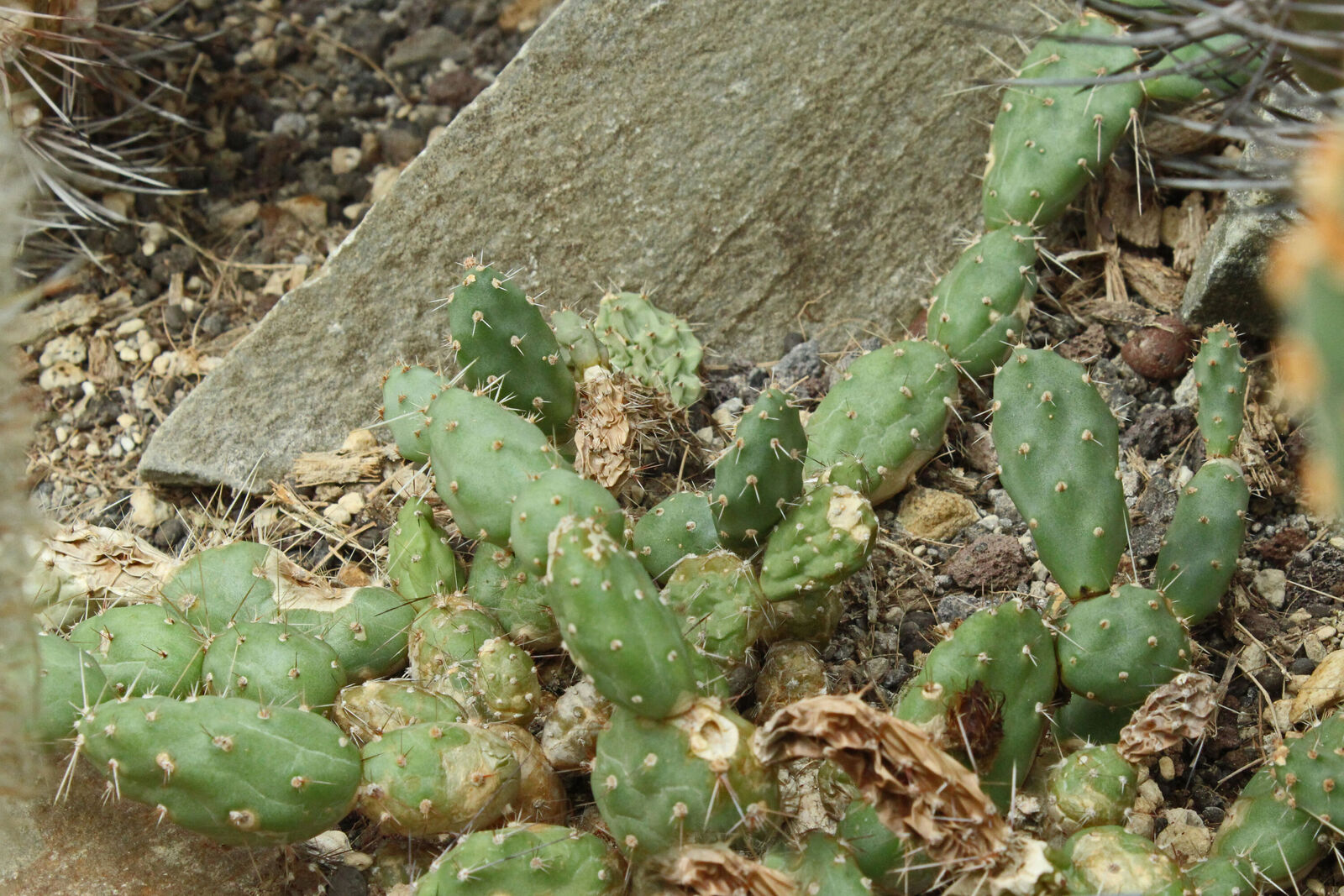 Reference image
Erect-branched Airampoa
Airampoa erectoclada (syn. Tunilla erectoclada or Opuntia erectoclada) is a distinctive, low-growing, succulent subshrub in the family Cactaceae 1. It is well-known for its jointed, flattened stem segments and upright growth habit among the opuntioid cacti.
The species has undergone several taxonomic revisions, being placed under Opuntia, Tunilla, and currently Airampoa 2. The genus name Airampoa is derived from the local indigenous name for these plants, often associated with a dye extracted from their fruits. The specific epithet erectoclada translates from Latin as "erect-branched", highlighting its upright stem growth.
This cactus is native to South America, specifically northwestern Argentina (including provinces such as Salta, Jujuy, Tucumán, Catamarca, and La Rioja) 1. It thrives in high-altitude, arid, gravelly slopes, semi-deserts, and dry shrublands where soil drainage is exceptional.
Airampoa erectoclada forms small, dense clumps of upright or semi-prostrate branches. The segments are flattened, narrowly oval to lanceolate, and armed with small, sharp spines and highly irritating glochids 2. During the late spring and summer, it produces beautiful, diurnal flowers in shades of yellow, orange, or red.
In cultivation, it requires an extremely porous, mineral-rich potting medium with excellent drainage. It thrives in full sun or very bright, direct light. Watering must be done sparingly, allowing the soil to dry out completely between sessions. During winter, keeping the plant dry helps it tolerate near-freezing temperatures.
The most common issues stem from overwatering and poor air circulation, which quickly lead to root rot. Insufficient light causes the plant to stretch unnaturally (etiolation). Physical handling without protection should be avoided due to its glochids.
Requires full sun or intense bright light. Insufficient light causes weak, stretched growth.
Water only when the substrate is completely dry. Keep nearly dry during winter dormancy.
Requires an ultra-porous mineral mix with high ratios of pumice, coarse sand, and perlite.
Caution! Features tiny, barbed glochids that easily dislodge and irritate the skin. Keep away from pets.
Moderate. Easy if watering is strictly controlled and high light levels are provided.
Naturally distributed across the high-altitude, rocky slopes and arid valleys of northwestern Argentina, adapting to intense solar radiation and minimal rainfall.
