
Light
Full Sun
Requires full, direct sun; partial shade leads to weak, elongated growth.
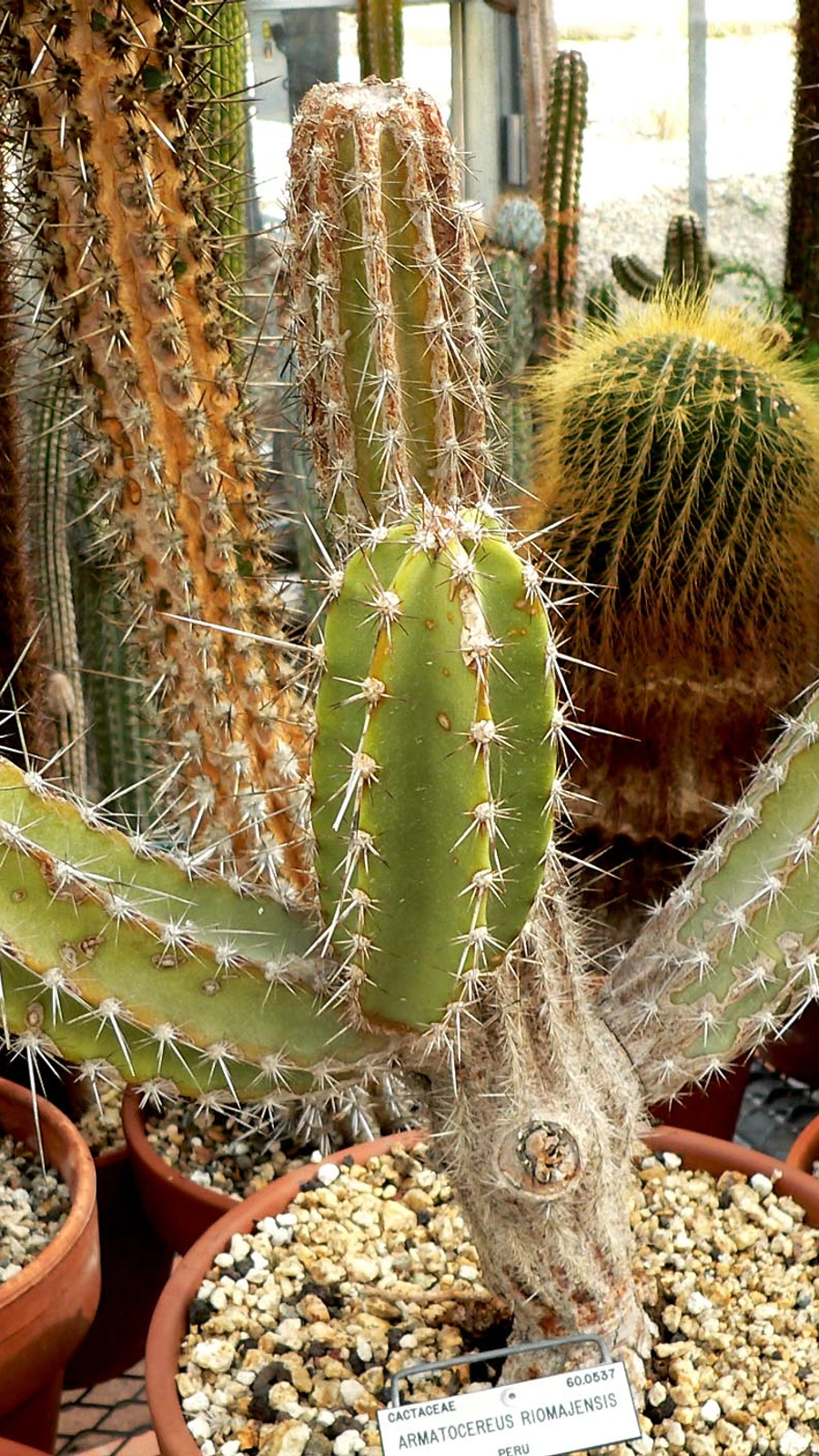 Reference image
Armatocereus ghiesbreghtii is an arborescent (tree-like) cactus species belonging to the Cactaceae family. Known for its imposing stature in its native habitat, this species is highly prized by cactus enthusiasts for its distinct segmented growth and fierce spine armament 1.
Belonging to the genus Armatocereus, the species epithet honors the plant collector Ghiesbreght. Its classification is characterized by its columnar, branched habit and unique nocturnal floral morphology that distinguishes it from related cereoid cacti 2.
This species is native to Western South America, particularly the arid valleys of Peru. It thrives in desert biomes and dry shrublands, clinging to rocky slopes where it tolerates extreme solar radiation and prolonged drought 1.
The plant develops a thick, woody trunk with heavily ribbed branches. The branches are divided into distinctive annual segments, giving it a jointed appearance. Areoles bear stout, greyish spines. It produces large, nocturnal white flowers that open for pollination by bats and moths 2.
In cultivation, it requires a very gritty, well-draining mineral substrate and maximum sunlight. Watering should be deep but infrequent, allowing the substrate to dry out completely. It has low tolerance for wet winters.
Overwatering and poorly draining soil are the leading causes of root rot. Lack of adequate sunlight leads to etiolation, where the stems become weak, thin, and pale. Exposing the plant to freezing temperatures while wet will cause tissue collapse.
Requires full, direct sun; partial shade leads to weak, elongated growth.
Water only when the substrate is completely dry. Keep strictly dry in winter.
Use an extremely porous mineral mix rich in pumice, coarse sand, and perlite.
Features very sharp, stout spines. Handle with thick leather gloves and keep away from pets.
Moderate. Easy if sun and dry winter conditions are met, but susceptible to rot if overwatered.
Inhabits the arid, rain-shadow valleys and rocky slopes of western Peru, adapted to low rainfall and intense solar exposure.
