
Light
Full Sun
Requires full sun, ideally 6+ hours of direct sunlight daily for robust growth.
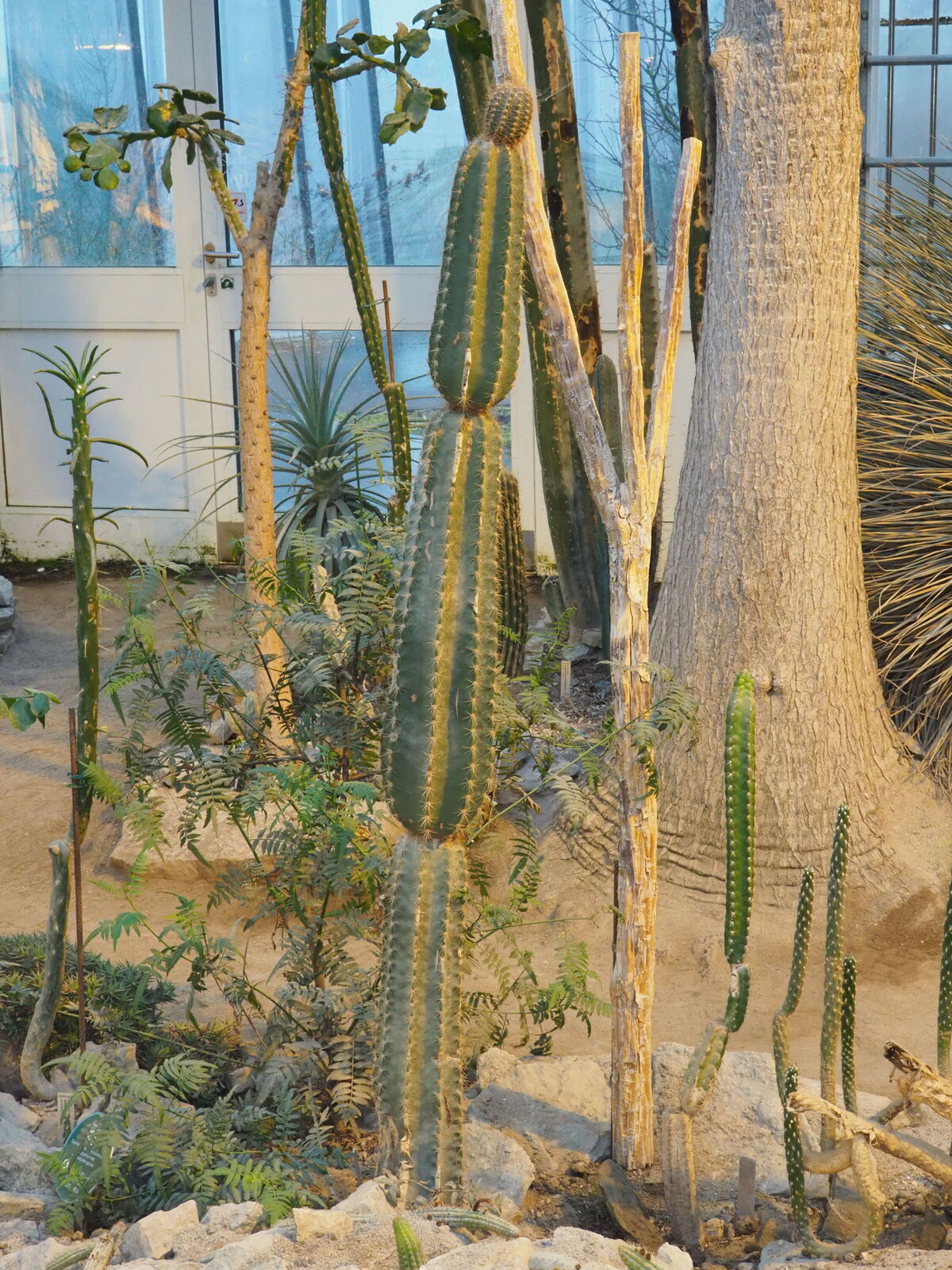 Reference image
Goding's Armored Cereus
Armatocereus godingianus is a striking, tree-like or shrubby columnar cactus species belonging to the Cactaceae family 1. Characterized by its robust segmented branches and formidable spines, it is a prominent indicator species of seasonally dry environments.
The species epithet honors the botanist Harry L. Goding. The genus name Armatocereus combines the Latin 'armatus' (armed) with 'cereus' (wax torch/column), referencing the heavily armored appearance of these cacti 2.
This species is endemic to the seasonally dry tropical valleys of southern Ecuador 1. It thrives on steep, dry, rocky slopes and canyon walls at elevations ranging from 1,000 to 2,300 meters above sea level.
In its natural habitat, Armatocereus godingianus can reach heights of up to 10 meters, presenting a heavily branched, tree-like habit. The stems are distinctly segmented, with each segment displaying a dull grayish-green hue. The ribs are prominent and carry large areoles with robust, needle-like spines that range from yellow-brown to gray, reaching up to 8 cm in length. Nocturnal, white to cream tubular flowers bloom from the upper segments.
While challenging to grow indoors due to its ultimate size, young specimens can be successfully cultivated in bright, direct sunlight. Perfect soil drainage is paramount. Watering should be deep but infrequent, restricted primarily to the active growing season in spring and summer 2.
The most prevalent failure is root rot caused by waterlogged soils or excessive humidity. Insufficient light exposure leads to etiolation, causing the segments to grow thin, weak, and susceptible to pests.
Requires full sun, ideally 6+ hours of direct sunlight daily for robust growth.
Allow the substrate to dry out entirely between waterings. Suspend watering in winter.
Use a heavily mineralized substrate with pumice, grit, and very little organic matter.
Non-toxic, but the extremely long and sharp spines can cause painful physical injuries.
Moderate. Easy if kept dry and sunny, but highly sensitive to overwatering and low light.
Native to the Andean dry valleys of Ecuador, where it inhabits rocky, arid slopes within seasonally dry tropical scrublands and microclimates.
