
Light
Full Sun
Requires full, direct sun; insufficient light leads to thin, weak growth.
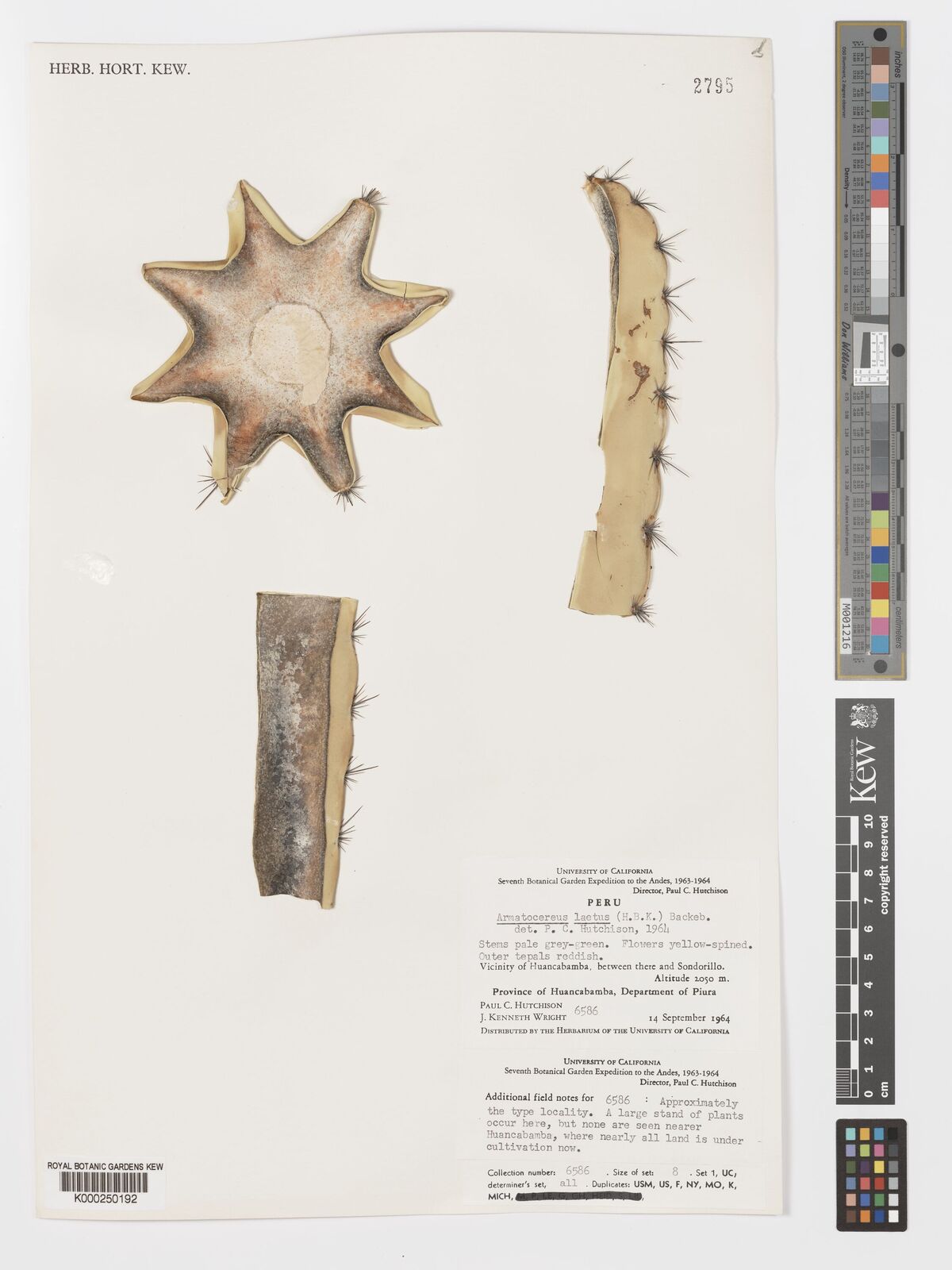 Reference image
Armatocereus laetus is an imposing arborescent or shrubby columnar cactus species belonging to the family Cactaceae. In its native dry-shrubland and desert habitats, it plays a vital ecological role, adapting perfectly to prolonged droughts 1. When cultivated, its sturdy, ribbed stems and sharp, formidable spination make it a prized specimen for arid-gardens and succulent collectors.
Originally described as Cereus laetus, the species was later classified under the genus Armatocereus, a name derived from Latin meaning "armed cereus," which refers to the heavily spined fruits and stems 2. The specific epithet "laetus" translates to "bright" or "cheerful," referencing its attractive, light-green epidermal color.
This species is native to western South America, predominantly found in the arid river valleys and rocky slopes of Peru. It thrives in gravelly, mineral-rich soils within desert biomes and dry shrublands, often at moderate elevations where solar radiation is high 3.
In the wild, Armatocereus laetus can grow up to 4 to 6 meters tall, branching from the base to form a tree-like structure. The segmented stems are grayish-green to bright green with prominent ribs. The areoles bear stout, yellowish-brown spines that fade to gray with age. It produces nocturnal, white to cream-colored flowers 4.
It requires full sun and highly porous, mineral-based cactus soil. Water thoroughly only when the substrate is completely dry, and suspend watering almost entirely during the winter. Minimum temperature should be kept above 5°C to avoid frost damage.
Overwatering and using heavy, organic-rich soil mixes are the most frequent causes of root rot. Placing the plant in high-humidity areas with poor ventilation will also trigger fungal spot diseases.
Requires full, direct sun; insufficient light leads to thin, weak growth.
Water thoroughly once every two weeks in summer; keep dry in winter.
Highly porous, grit-heavy cactus mix with excellent drainage.
Possesses sharp, strong spines; handle with care and keep away from pets.
Moderate difficulty; easily managed if watering is strictly controlled.
Inhabits the dry river valleys and rocky, sun-drenched hillsides of western Peru, growing in nutrient-poor, rocky soils.
