
Light
Full Sun
Requires full sun or very bright direct sunlight to maintain spine color and dense form.
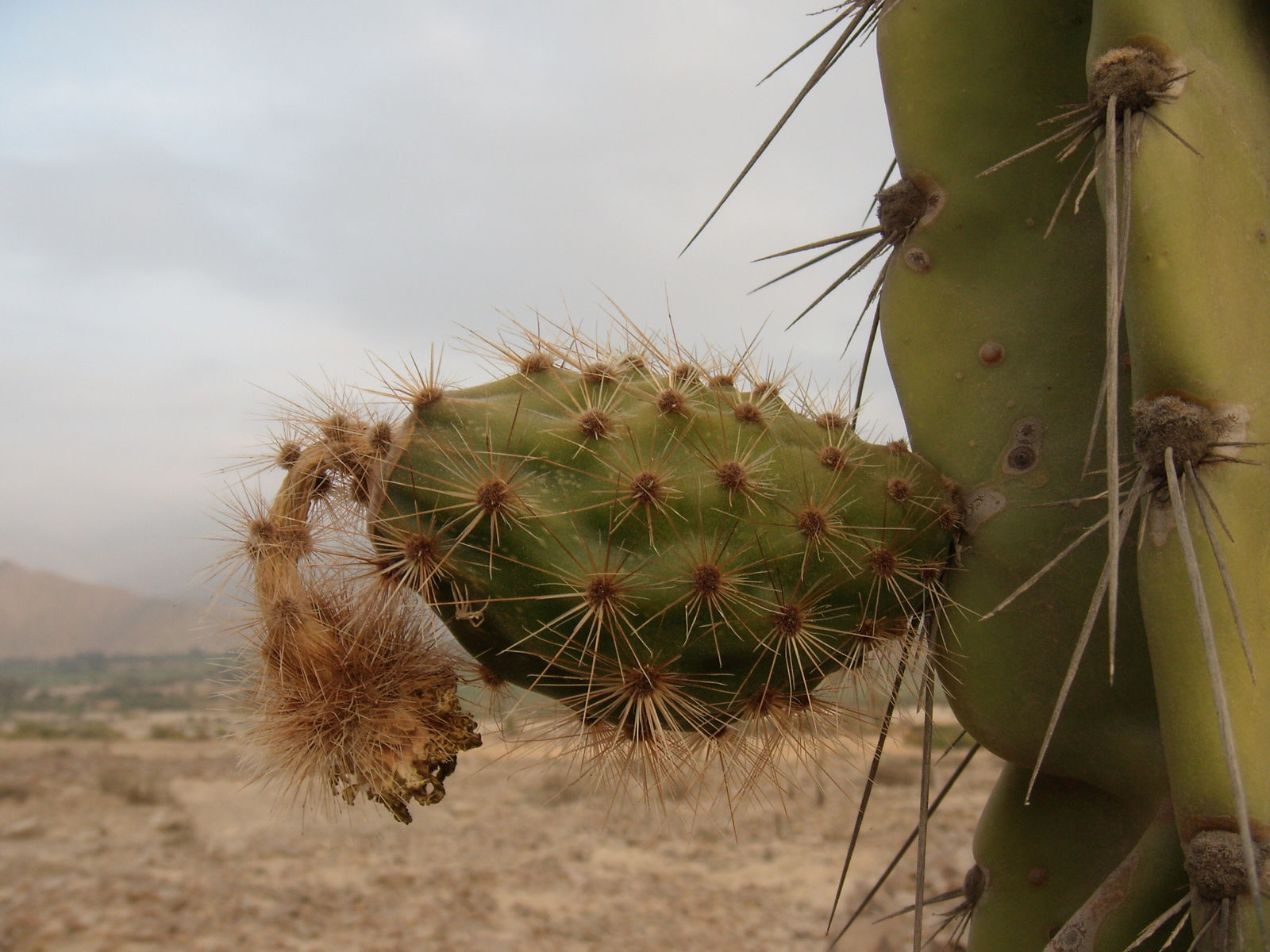 Reference image
Armatocereus procerus is a striking, tree-like columnar cactus belonging to the Cactaceae family. Known for its massive, formidable spines and distinct segmented growth, it is a hallmark species of desert landscapes.
The species was formally described by Curt Backeberg in 1957 1. The genus name Armatocereus derives from the Latin armatus, meaning 'armed' (referring to the heavy spines), and cereus, meaning 'taper' or 'torch'. The specific epithet procerus translates to 'tall' or 'lofty', highlighting its stature.
This species is native to western South America, specifically endemic to the arid coastal regions and valleys of Peru 2. It thrives in hyper-arid deserts, gravelly plains, and rocky slopes at elevations ranging from 500 to 1,500 meters above sea level.
In its natural habitat, Armatocereus procerus grows as a succulent shrub or tree reaching heights of 3 to 7 meters. It develops a heavily branched crown of greyish-green, segment-like joints. Stems feature 8 to 10 prominent ribs decorated with large woolly areoles. These areoles bear robust, yellowish-grey spines, with central spines reaching up to 10 cm in length. Large, nocturnal, funnel-shaped white flowers bloom in late spring and summer.
In cultivation, it demands maximum direct sunlight and a highly porous, mineral-rich substrate. Watering must be deeply penetrative but infrequent, allowing the soil to dry out completely. Cold protection is necessary during winter months.
The most frequent failures include overwatering, which quickly leads to root rot, and low light conditions that cause weak, pale, and stretched growth (etiolation).
Requires full sun or very bright direct sunlight to maintain spine color and dense form.
Drench thoroughly then allow to dry out completely. Keep completely dry in winter.
Requires a gritty, highly porous mineral substrate with excellent drainage.
Features extremely sharp, rigid spines. Handle with thick leather gloves and keep away from pets.
Moderate; easy if provided with sufficient light and kept safe from overwatering.
Discovered across the hyper-arid coastal deserts and dry river valleys of Peru, adapting perfectly to prolonged droughts and intense solar radiation.
