
Light
Bright Indirect Light
Requires bright, indirect sunlight or heavily filtered morning sun.
 Reference image
 Reference image
Yellow-Spined Column Cactus
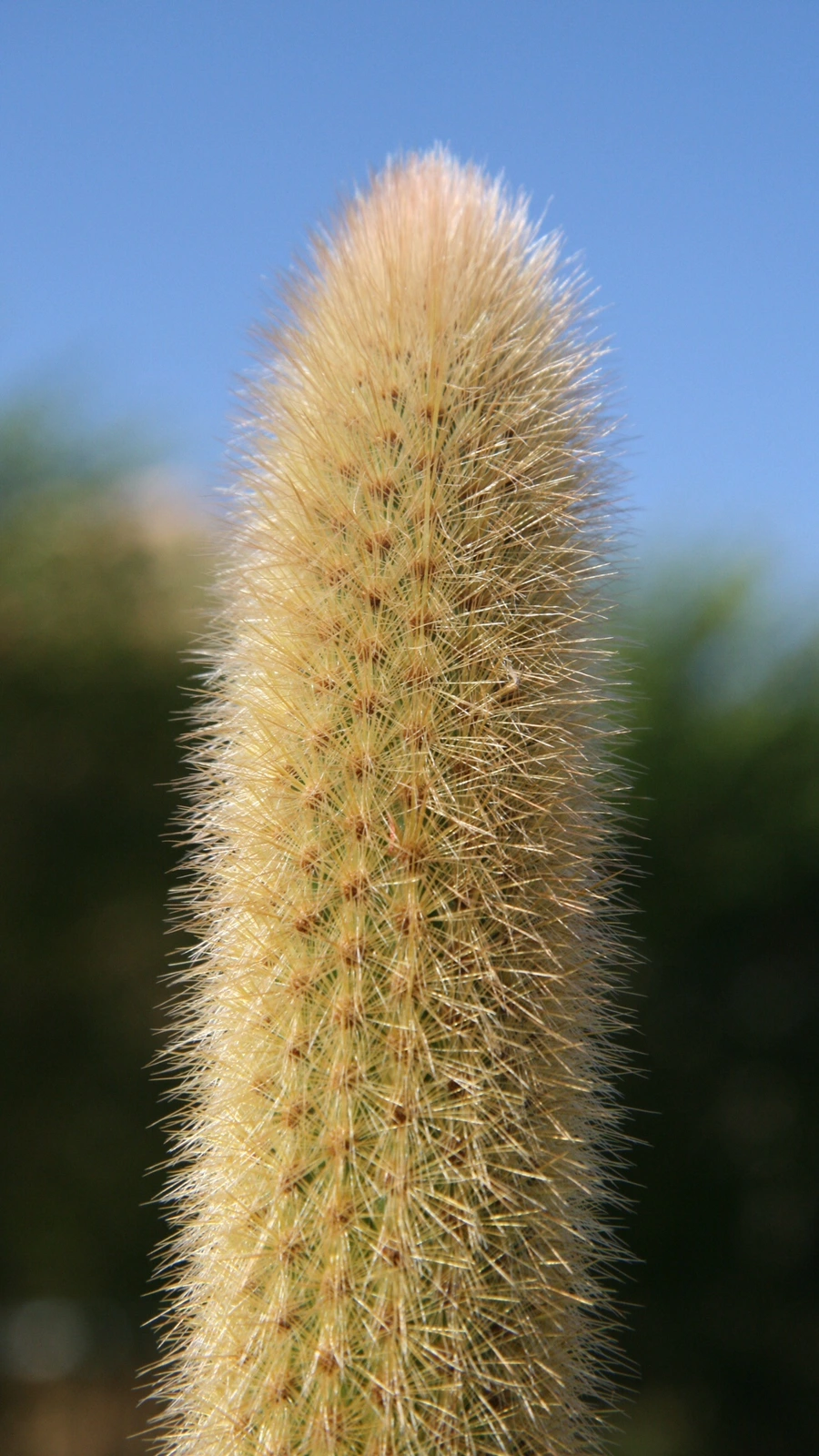
Arthrocereus melanurus is an elegant, slender columnar cactus belonging to the Cactaceae family, highly appreciated for its dense covering of golden-yellow spines and fragrant nocturnal flowers 1. Endemic to Brazil, this species is a prized gem among succulent collectors.
Belonging to the tribe Trichocereeae within the Cactaceae family, the genus name Arthrocereus refers to the segmented or jointed nature of the stems. The specific epithet "melanurus" translates from Ancient Greek as "black tail", pointing to the darker-colored spines occasionally found at the stem tips 2.
This species is narrowly endemic to the southeastern region of Brazil, specifically within the state of Minas Gerais 1. It thrives at elevations between 800 and 1200 meters, growing in rocky crevices and shallow, quartzite-rich sandy soils within seasonally dry tropical biomes 2.
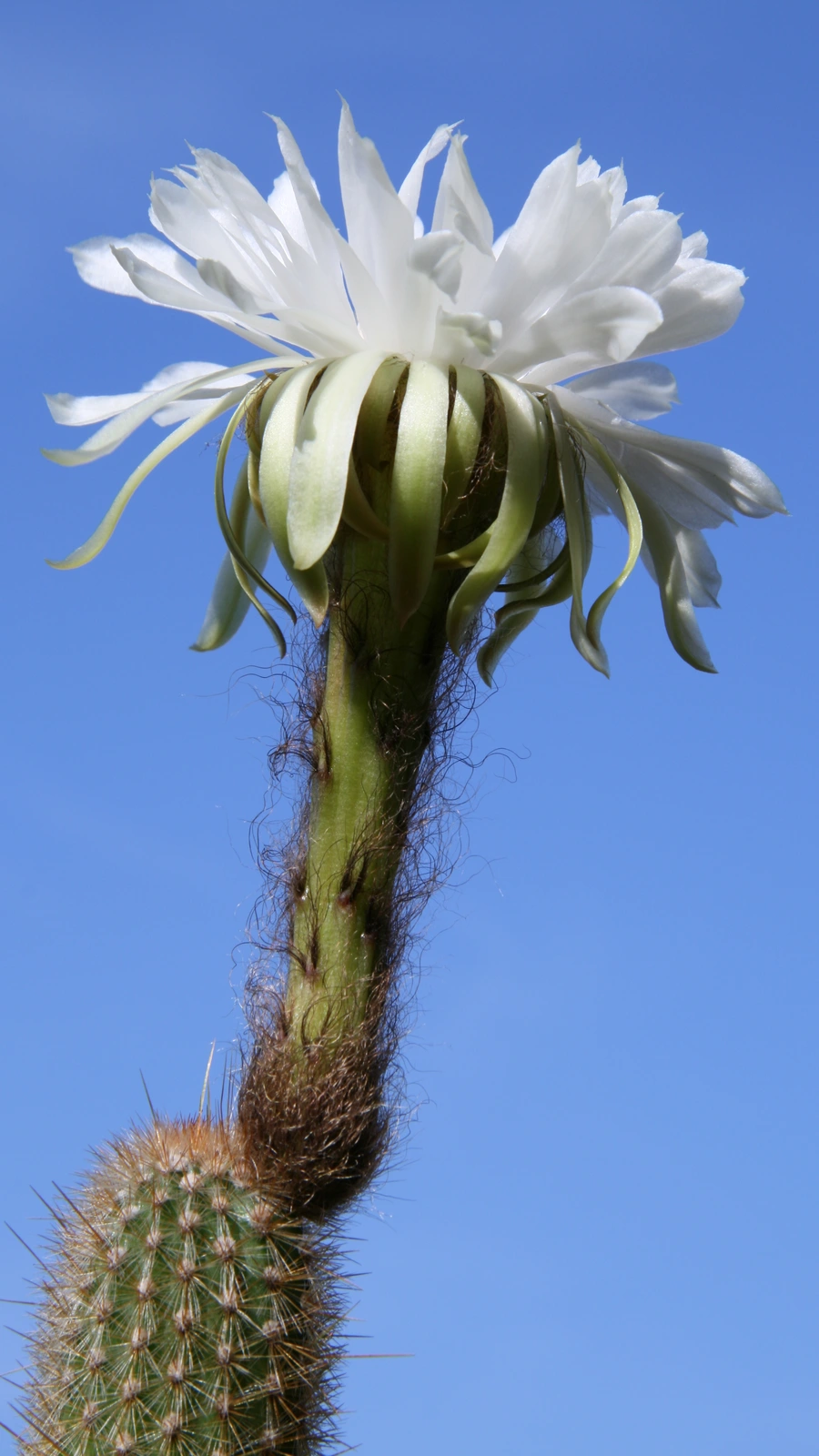
The plant grows as slender, semi-erect columns branching from the base. The green stems feature multiple low ribs densely populated with fine, needle-like golden-yellow spines. In summer, it produces large, nocturnal, white funnel-shaped flowers that release a sweet scent.
In cultivation, it requires a very porous, mineral-rich potting mix with excellent drainage 2. It demands bright, filtered sunlight to keep its compact form and vibrant spine color. Water thoroughly only when the substrate has completely dried out.
Overwatering and using heavy clay soil are the most common causes of root rot. Additionally, leaving the plant in cold, damp environments during winter will quickly lead to fungal infections.
Requires bright, indirect sunlight or heavily filtered morning sun.
Allow the substrate to dry completely between waterings; restrict watering in winter.
Highly porous cactus mix rich in pumice, coarse sand, and grit.
Non-toxic, but features sharp spines that can cause physical injury.
Moderate care level due to strict watering and drainage requirements.
Native to the rocky quartzitic grasslands and montane savannas of southeastern Brazil, thriving in highly mineralized soils.
