
Light
Bright Indirect Light
Prefers bright, indirect light or filtered sun; shade causes undesirable elongated, weak growth.
 Reference image
 Reference image
Spiniest Joint-Cactus
Arthrocereus spinosissimus is a rare, highly spiny, and slender succulent subshrub belonging to the Cactaceae family 1. Native to the seasonally dry tropical savannas of Brazil, this species is appreciated by collectors for its fragile, jointed stems and beautiful nocturnal flowers.
Belonging to the tribe Trichocereeae within the Cactaceae family, the genus name Arthrocereus is derived from the Greek word 'arthron', meaning joint, referencing the segmented look of the stems. The specific epithet spinosissimus means 'most spiny' in Latin, directly pointing to the extremely dense golden-brown spines covering the plant 2.
This species is endemic to central Brazil, particularly found in Goiás, Distrito Federal, Mato Grosso, and Mato Grosso do Sul 1. It thrives on rocky outcrops and sandy fields within the 'Cerrado' savanna ecosystem. Due to habitat destruction caused by agriculture, it is classified as Vulnerable (VU) by the IUCN 3.
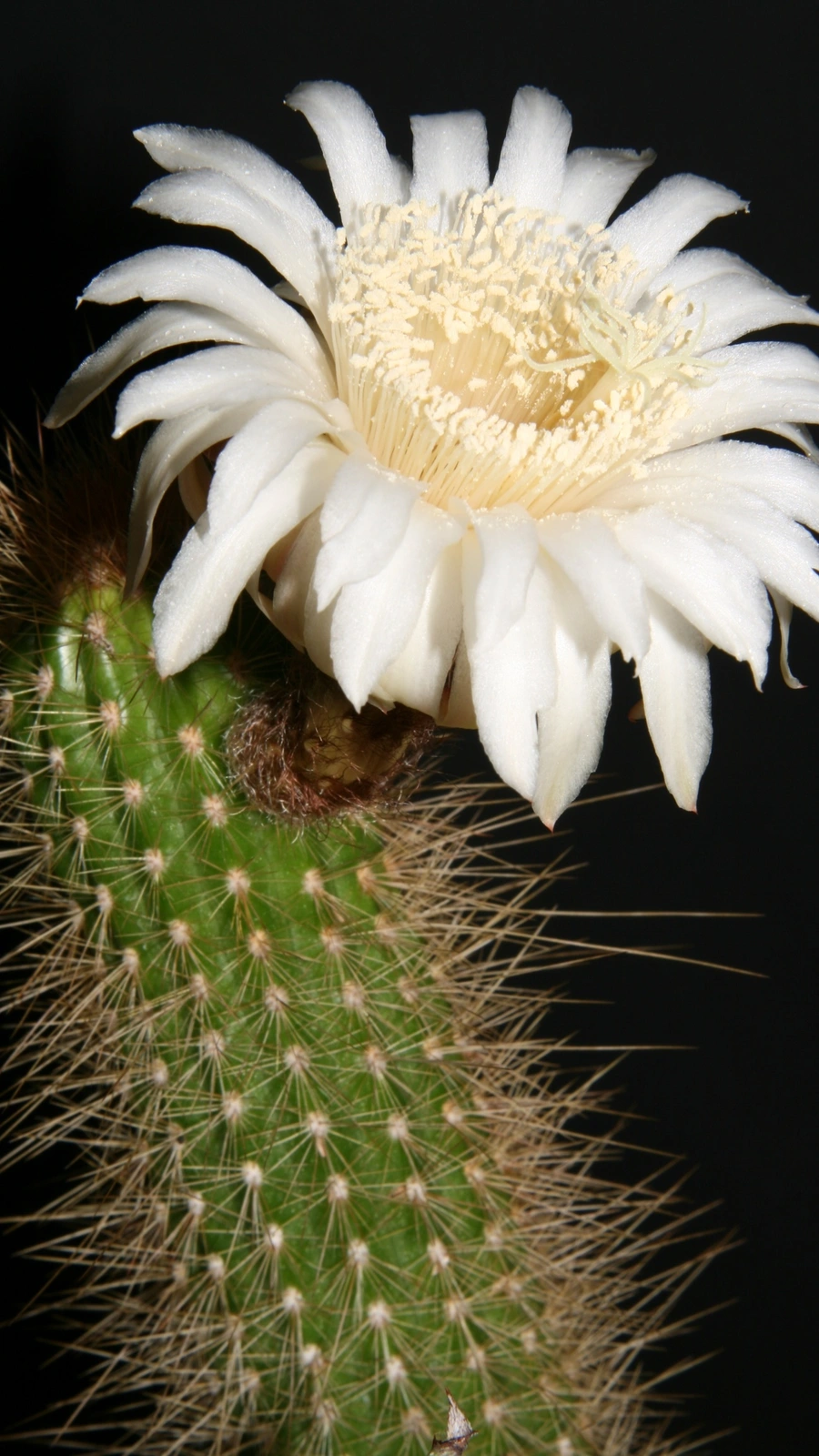
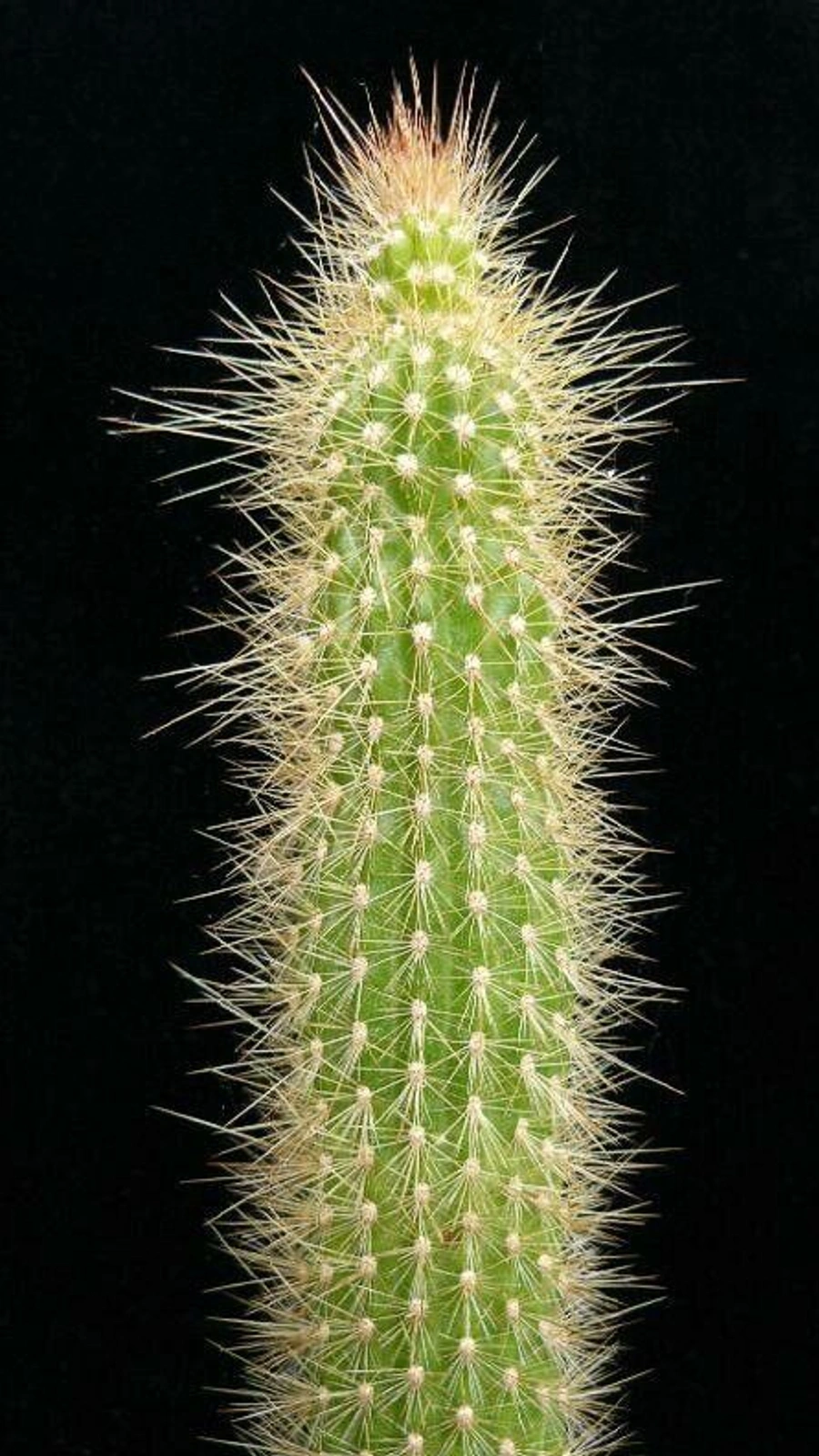
Arthrocereus spinosissimus forms branched, upright cylindrical stems that reach up to 3-5 cm in diameter. The stems are divided into multiple shallow ribs, which are densely packed with fine, yellowish-brown acicular spines. The long, funnelform white to cream-colored flowers open at night to attract nocturnal pollinators.
In cultivation, this cactus requires exceptional drainage and bright, filtered light. During the spring and summer active growth phases, it should be watered thoroughly only after the substrate has completely dried. In winter, watering should be reduced to an absolute minimum to prevent rot.
The most frequent mistake is keeping the soil too damp or using organic-heavy soil mixes, which leads to rapid root rot. Insufficient light exposure also causes etiolation, where stems grow weak, pale, and unnaturally thin.
Prefers bright, indirect light or filtered sun; shade causes undesirable elongated, weak growth.
Water only when the substrate is fully dry; reduce watering to a minimum in winter.
Requires highly porous, inorganic-heavy cactus soil mixed with plenty of pumice or grit.
Non-toxic to pets, but the extremely dense, sharp spines can cause painful skin irritation.
Moderate care level; requires precise winter moisture control and excellent drainage.
Naturally distributed across the sandy, rocky slopes of the Cerrado savannas in central Brazil, adapted to dry, nutrient-poor soils.
