
Light
Bright Indirect Light
Requires bright, direct sunlight or very strong filtered light to preserve its natural form and spine density.
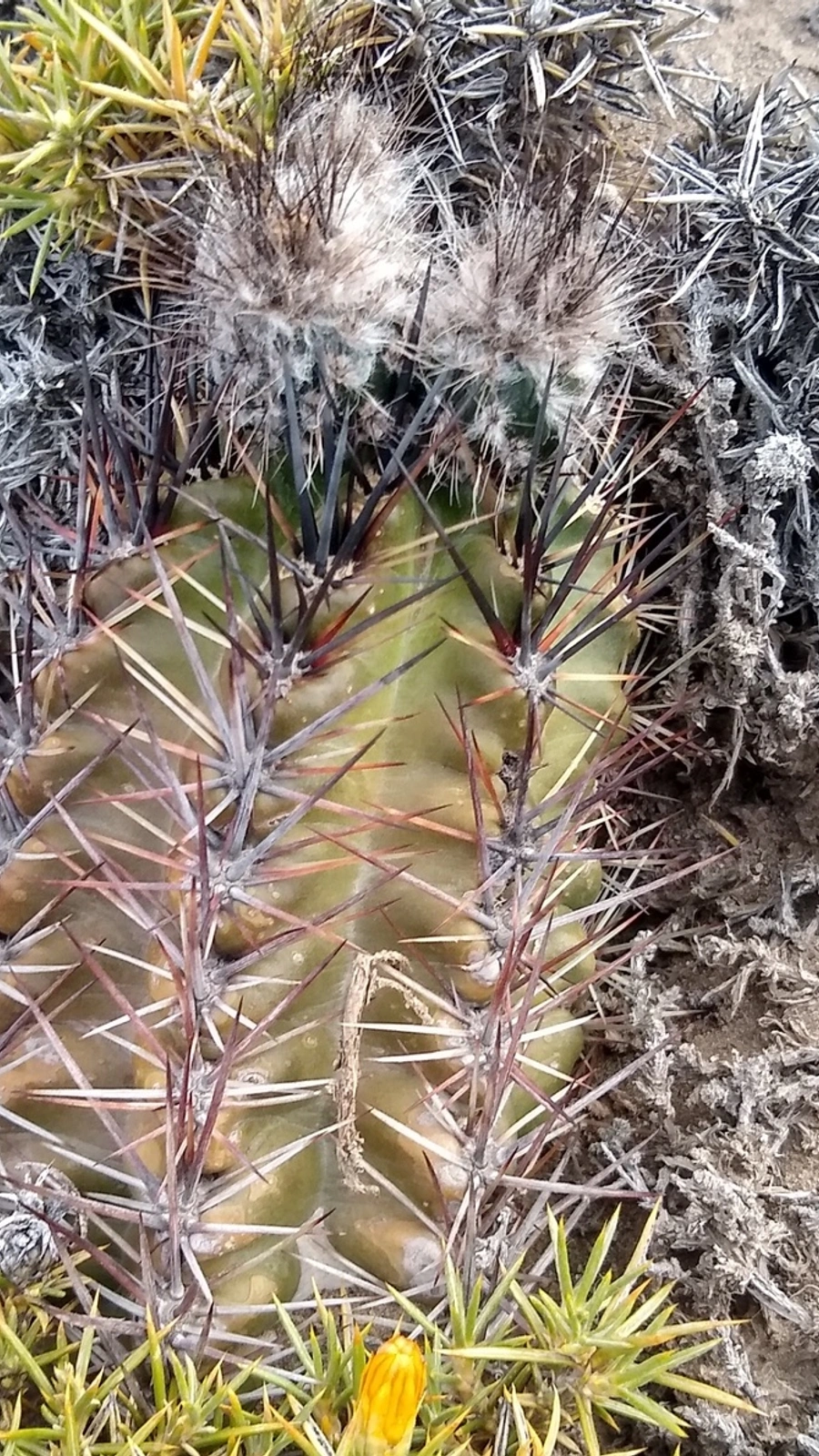 Reference image
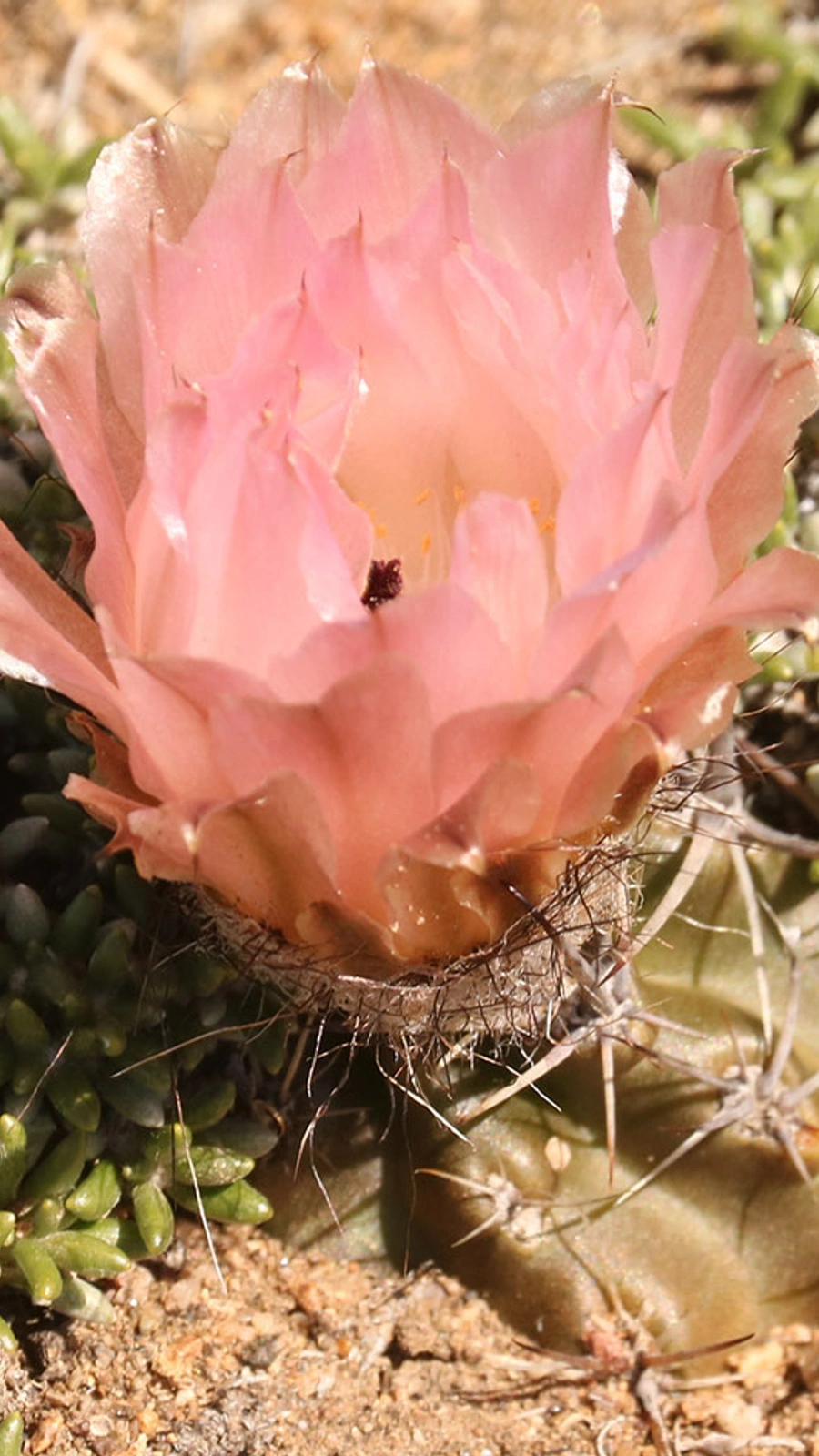 Reference image
Aonikenk Austrocactus
Austrocactus aonikenkensis is a rare and highly specialized cactus species belonging to the family Cactaceae. Adapted to the extreme weather of Patagonia, this succulent subshrub is renowned for its remarkable cold tolerance and adaptation to strong, desiccating winds 1.
The genus name Austrocactus refers to its southern distribution, while the specific epithet aonikenkensis honors the Aonikenk (Tehuelche) people, the native inhabitants of southern Patagonia 2. It represents an evolutionary lineage adapted to temperate, high-latitude conditions.
Native to southern Argentina, particularly in the provinces of Santa Cruz and Chubut 1. It thrives in the barren, wind-swept Patagonian steppes, growing among gravelly soil and rocky crevices with low annual precipitation.
This species forms a small, semi-prostrate or upright subshrub. The stems are grayish-green, featuring prominent ribs adorned with strong, often curved spines. These spines serve as a crucial shield against both intense UV rays and icy winds. Flowers are typically yellowish, coppery, or pale brownish, opening in late spring 2.
In cultivation, replicating the dry, cold winter dormancy of its native habitat is essential. It requires an exceptionally porous, mineral-rich substrate. While highly frost-tolerant, the soil must remain bone-dry during freezing temperatures.
The most prevalent issue is waterlogging or using highly organic potting soil, which triggers rapid root rot. Lack of sufficient direct sunlight leads to etiolation and weakens the plant's spine development.
Requires bright, direct sunlight or very strong filtered light to preserve its natural form and spine density.
Water only when the substrate is completely dry during the growing season; keep dry in winter.
Requires a gritty, low-organic mix rich in pumice, lava rock, and coarse sand.
Spines are sharp and rigid; handle with thick gloves. Non-toxic to cats and dogs.
Moderately easy if winter dryness is strictly maintained; extremely cold hardy.
Endemic to the cold, arid steppes of southern Argentina, where it endures harsh winds and low winter temperatures in gravel-rich soils.
