
Light
Bright Indirect Light
Requires bright light with some direct sun; benefits from light shading during intense summer afternoons.
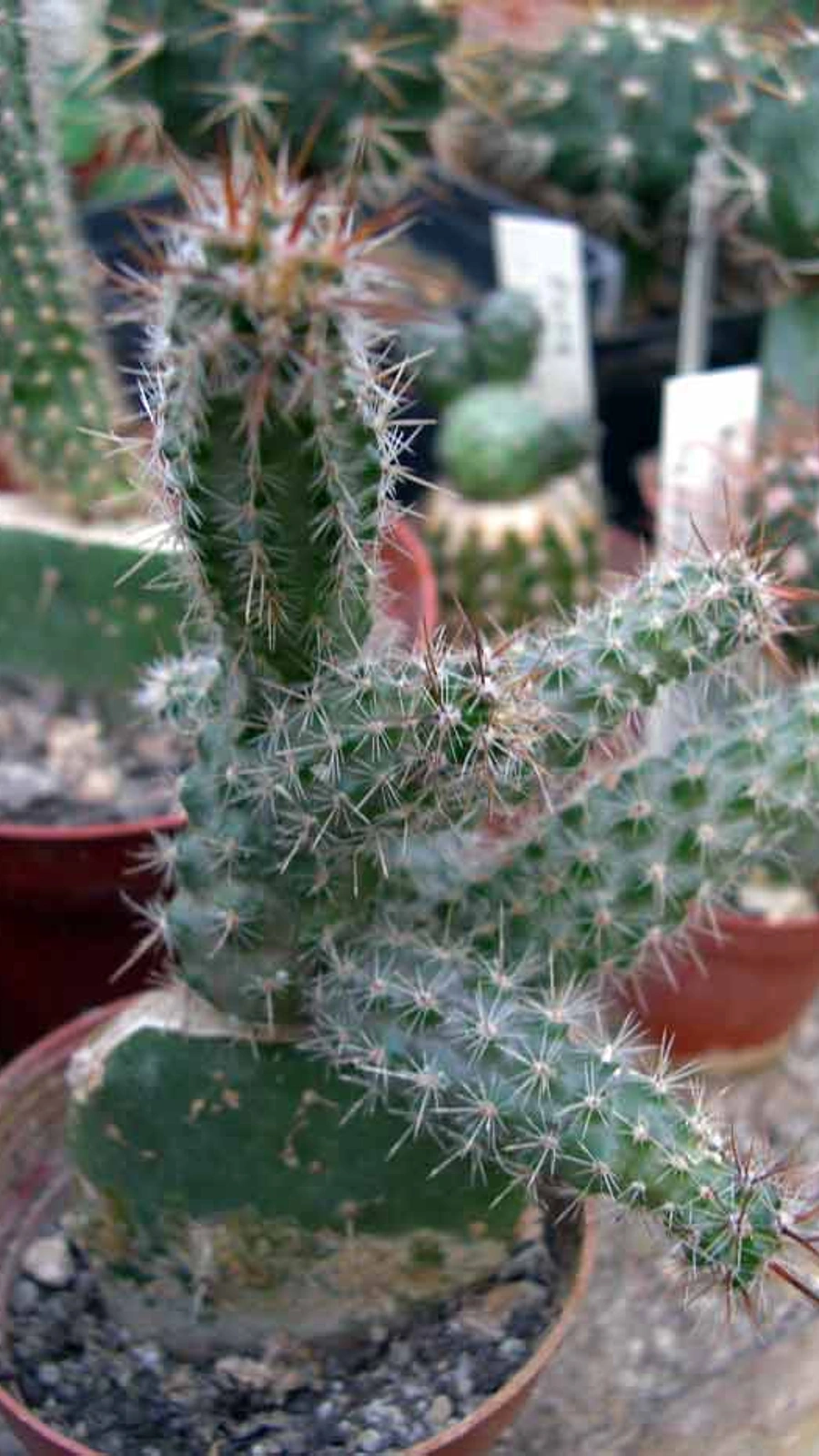 Reference image
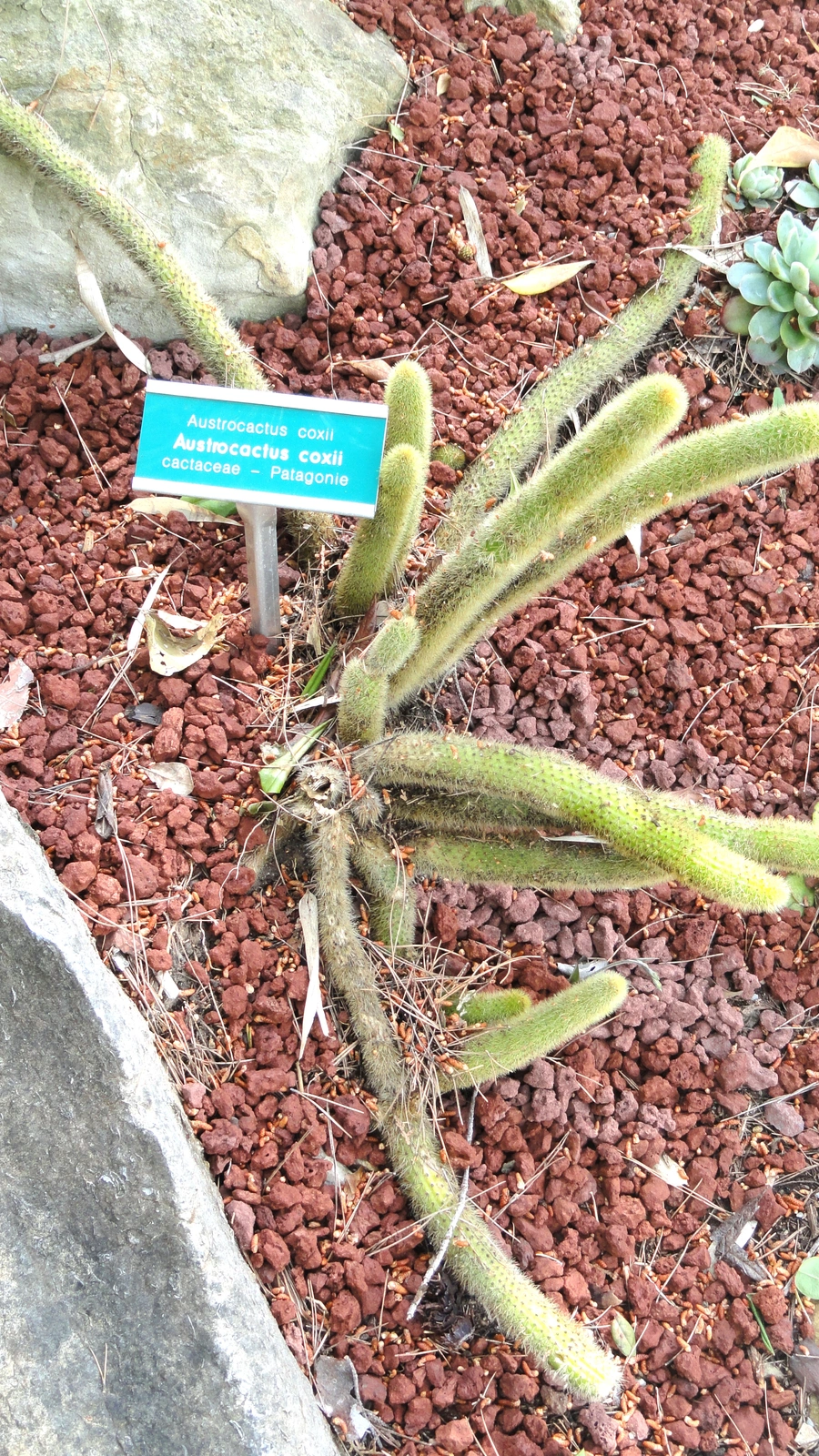 Reference image
Cox's Southern Cactus
Austrocactus coxii is a cold-hardy, succulent subshrub belonging to the Cactaceae family, native to the rugged and windswept landscapes of Patagonia in Southern South America 1. It is highly valued by collectors for its ability to withstand sub-zero temperatures.
Originally described under the genus Echinocactus, it was later combined into Austrocactus to align with other southern South American cacti. The species epithet 'coxii' honors an early explorer of the Patagonian region 2.
This species is native to southern Argentina and Chile, particularly across provinces like Neuquén and Río Negro 1. It thrives in volcanic soils, rocky outcrops, and scree slopes at high altitudes within temperate, semi-arid steppe environments.
It features cylindrical, pale green to grayish-green stems that can grow upright or decumbent. The ribs are prominent, adorned with dense areoles bearing stiff, brownish, often hooked central spines. In late spring, it produces attractive funnel-shaped flowers ranging in color from pale yellow to coppery orange 2.
In cultivation, Austrocactus coxii requires exceptional drainage to emulate its native volcanic substrate. It is extremely cold-tolerant if kept dry during winter, making it suitable for cold greenhouse cultivation in temperate zones.
The most critical mistake is overwatering during its winter dormancy or using organic-heavy soils, which inevitably leads to root rot. Lack of strong light causes the stems to stretch and weaken.
Requires bright light with some direct sun; benefits from light shading during intense summer afternoons.
Water moderately in summer when dry. Keep completely dry in winter to prevent rot.
Highly mineral substrate containing pumice, gravel, and minimal organic matter.
Features sharp, hooked spines. Keep away from pets and children to avoid injuries.
Moderate. Requires careful watering control and cool winter temperatures to thrive.
Native to the cold, dry steppes and volcanic mountain slopes of Patagonia, spanning southern Argentina and Chile.
