
Light
Filtered Sun
Filtered bright light or partial sun; tolerates direct morning sun but requires protection from scorching afternoon rays.
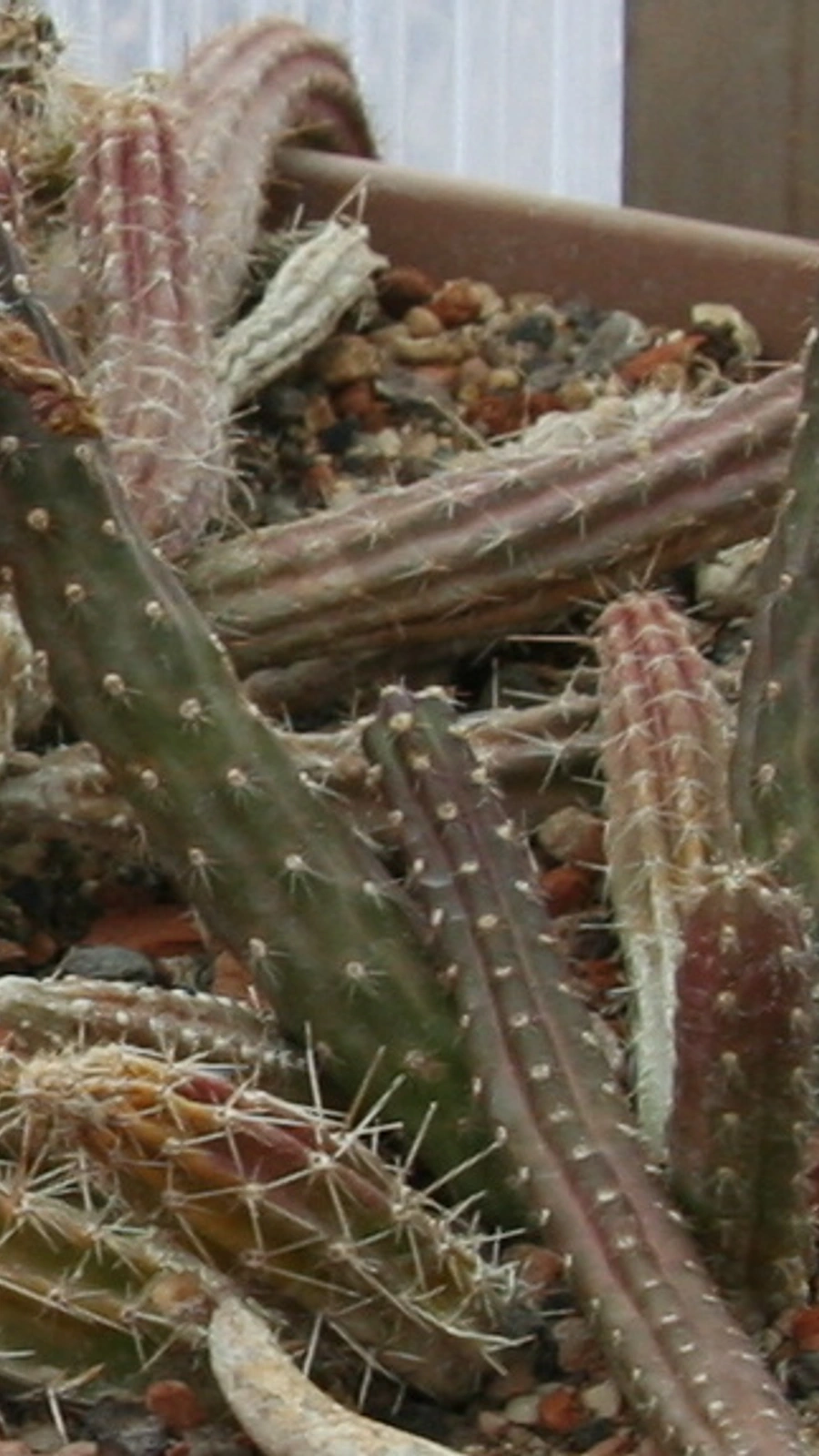 Reference image
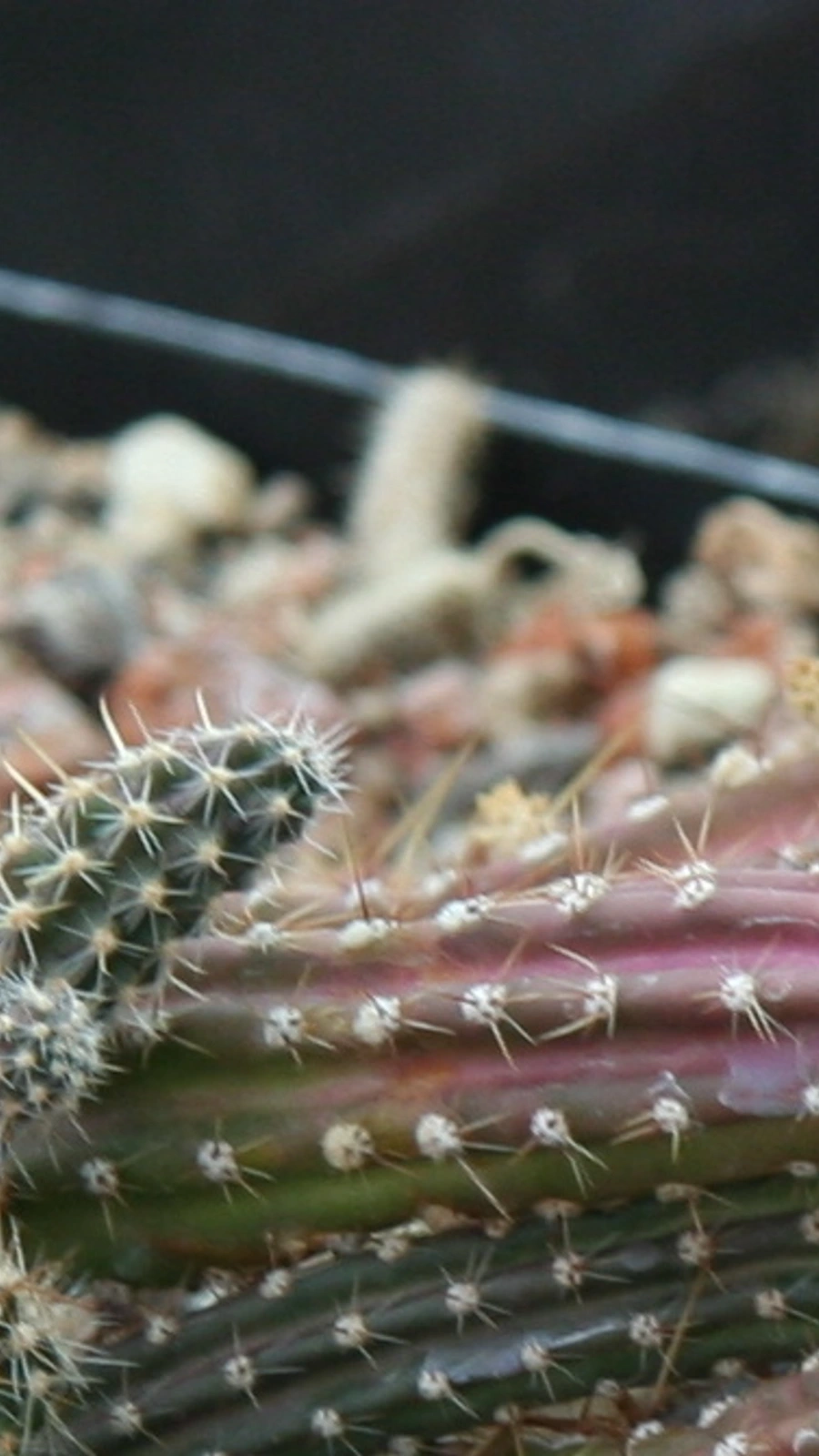 Reference image
Spiny-Flowered Austrocactus
Austrocactus spiniflorus is a unique, semi-prostrate succulent subshrub belonging to the Cactaceae family, highly adapted to the harsh montane environments of South America 1. It is highly prized by alpine cactus enthusiasts for its fierce spination and resilient nature.
Originally described by Rudolf Amandus Philippi, the species was later reassigned to the genus Austrocactus by Friedrich Ritter 2. The specific epithet spiniflorus translates from Latin to mean "spiny-flowered," referring to the small spine-bearing scales located on the flower's receptacle tube.
This species is native to the central Andean ranges of Chile, thriving on rocky, scree-covered slopes at high elevations 1. These habitats experience freezing, snow-covered winters and intensely sunny, arid summers with rapidly draining mineral soils.
The stems of Austrocactus spiniflorus are cylindrical, often creeping or semi-erect, and feature distinct ribs. The aeroles carry dense, rigid, grayish-to-brownish spines that shield the green stem. In summer, it produces pale yellow, cream, or pale pink flowers characterized by spiny scales on their outer petals.
Successful cultivation requires mimicking its alpine habitat by providing superb drainage and ample fresh air circulation 2. A completely dry, cold winter dormancy period is essential to prevent rot and to trigger flowering in the subsequent spring. Water only when the substrate is thoroughly dry during the active summer growing season.
The most frequent error is watering during the winter dormancy period when the plant is kept cool, which inevitably leads to root rot. Additionally, growing it in stuffy, humid, unventilated spaces can encourage red spider mite infestations and fungal pathogens.
Filtered bright light or partial sun; tolerates direct morning sun but requires protection from scorching afternoon rays.
Water thoroughly in summer after the soil dries completely. Keep completely dry throughout the winter months.
Requires highly porous mineral substrate mixed with pumice, lava grit, and coarse sand for rapid drainage.
Equipped with sharp, rigid spines. Handle with thick gloves and keep out of reach of pets and children.
Classified as moderate, as it demands precise control over winter watering and high air circulation.
Native to the high-altitude rocky slopes of the central Andes in Chile, where it survives in dry, cold alpine climates.
