
Light
Filtered Sun
The live operational enum remains `filtered_sun`; strong filtered light and gradual direct-light acclimation are suitable.
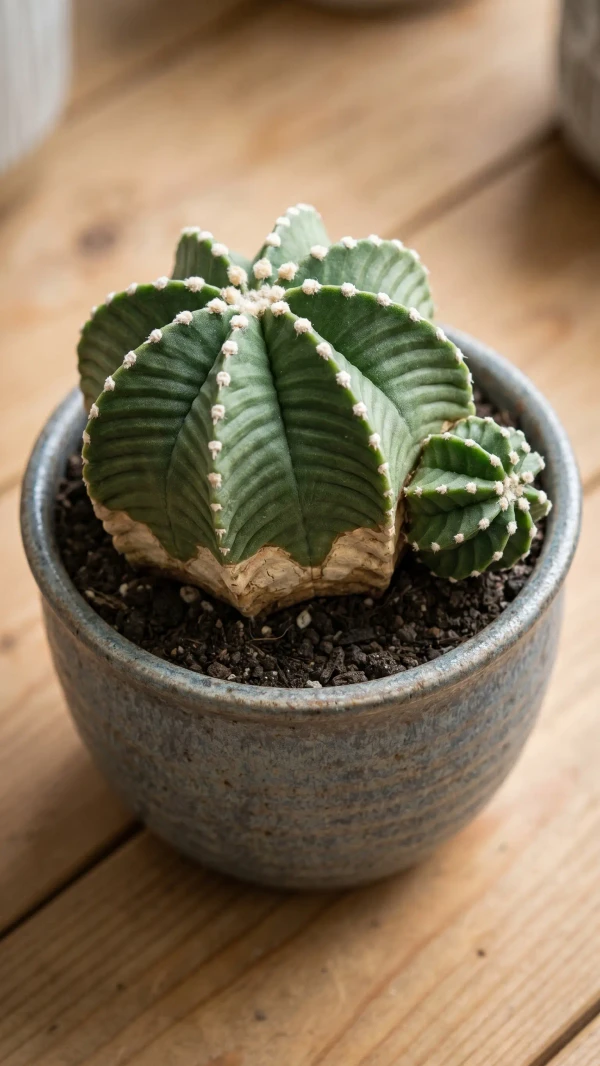
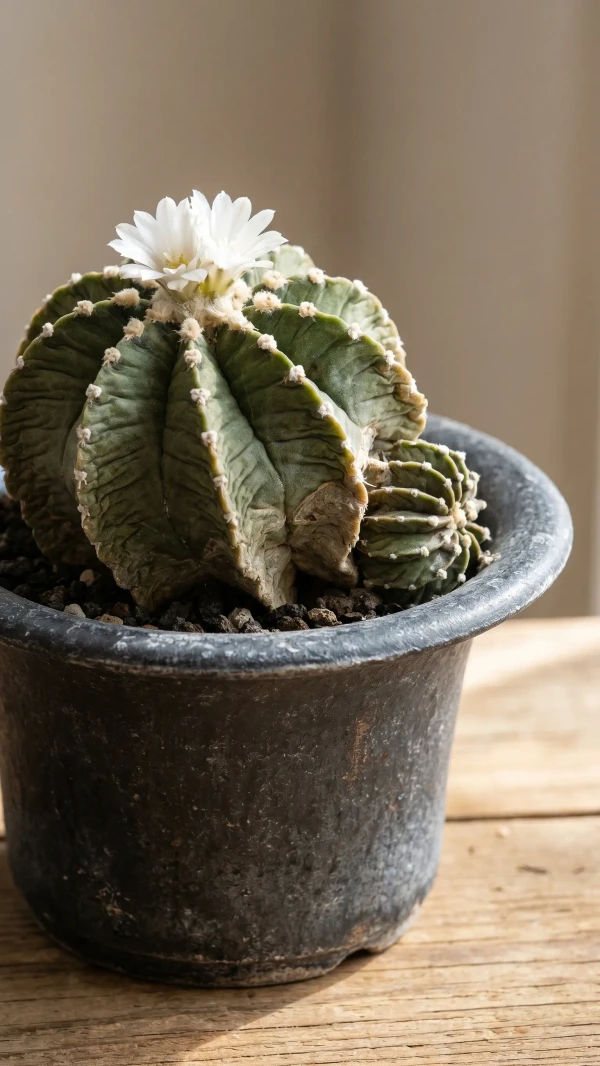
Valdez's Aztekium
Aztekium valdezii is a small Aztekium capable of extremely slow growth in rocky, arid habitat. A very small body, fine rib arrangement, transverse rib markings and central areoles are evaluated together for identification. Its compact appearance does not imply a need for continuous moisture; the native context combines mineral surfaces, strong but sometimes filtered light, airflow and the absence of prolonged water around the roots.1
Use a stable, free-draining pot that suits the root system and resists compaction. Use a mineral-forward mix with coarse pumice, lava or comparable particles that resists compaction and prolonged moisture around the roots. A dry-looking surface is insufficient; the centre of the mix and root zone should also dry. After repotting, allow injured roots time to dry and callus.
Do not use a fixed-day calendar. During active growth, water in a controlled, thorough cycle only after complete drying and leave no standing water. Drying takes longer in cool, low-light or resting conditions, so watering becomes less frequent. Never test cold tolerance with wet roots or place a tiny body in an excessively oversized pot.
The live filtered_sun class is not changed in this taxonomy batch. Provide strong filtered light, gradual morning sun and strong airflow. Sudden increases in sun can damage the epidermis, while stagnant hot glass can cause overheating. Gradual acclimation over several weeks, morning light and strong airflow are safer. Grafting can change growth speed and body proportions; identification still depends on scion morphology and documented provenance.
Kew maintains this as a separately accepted species and lists no source-backed synonym. Treatment under A. ritteri in an alternative opinion is not a synonym row in the canonical Kew backbone. A former combination, variety or product label does not create a new taxonomy route. Product-image matching belongs to a separate media workflow.
Prevent pot instability, root rot and unknown chemical exposure; restrict access for children and pets. This taxonomy batch does not reinterpret the live toxicity enum as a new toxicology finding and only carries the exact value forward.
The conservation record is NE.1 No species-level official IUCN assessment was identified, so NE is retained without inference. Documented legal nursery provenance should be preferred, and wild collection should not be encouraged.
The live operational enum remains `filtered_sun`; strong filtered light and gradual direct-light acclimation are suitable.
No fixed calendar; water in a controlled cycle after complete drying and reduce in cool periods.
A coarse, low-organic, airy, fast-draining mix that does not retain prolonged moisture around the roots.
The live toxicity enum was not reclassified in this taxonomy batch. Conservation record: NE.
Extremely slow growth, a small body and root-rot risk require careful observation; fixed watering schedules are unsuitable.
Mexico: central Nuevo León.[^1] [^1]: Plants of the World Online. Accessed: 2026-08-05. https://powo.science.kew.org/taxon/urn%3Alsid%3Aipni.org%3Anames%3A77131602-1
