
Light
Direct Sun
Requires full sun to maintain its healthy blue-green hue and rigid form.
Bolivian Torch Cactus
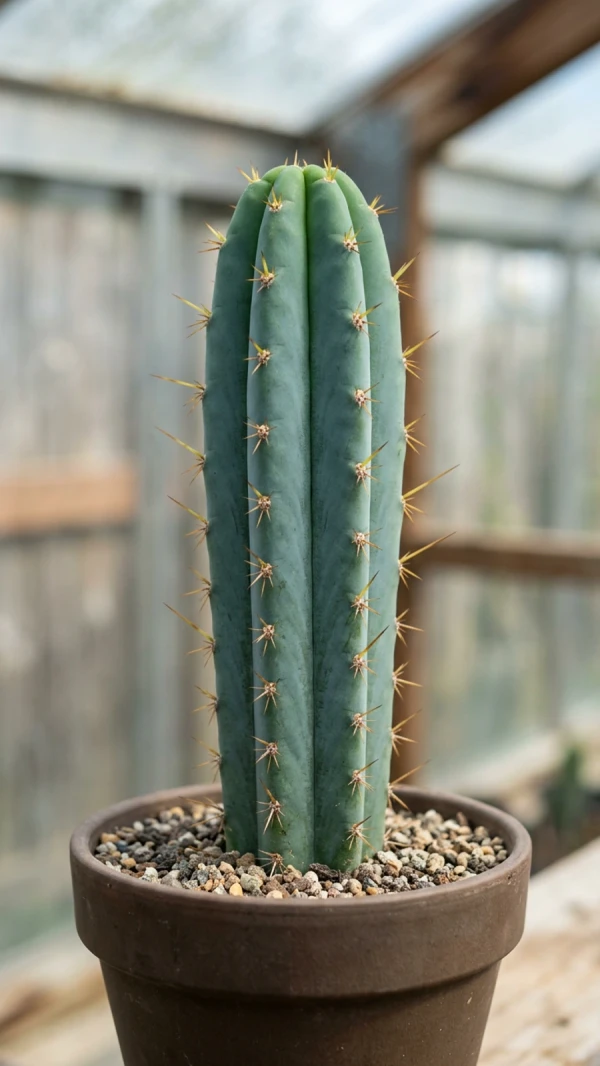
Echinopsis lageniformis (syn. Trichocereus bridgesii), commonly known as the Bolivian Torch Cactus, is a fast-growing columnar cactus native to the high-altitude deserts of Bolivia. It holds a significant place in traditional Andean ethnobotany and is widely cultivated worldwide for its architectural form and striking appearance.
Originally described by Friedrich Anton Wilhelm Miquel in 1850, the species has been subject to various taxonomic revisions, shifting between Trichocereus and Echinopsis 1. The specific epithet lageniformis refers to its bottle-like stem shapes during certain growth phases.
This species is native to the dry valleys and high plains of Bolivia, typically growing at elevations of 1,000 to 3,000 meters above sea level 2. It thrives in arid shrublands, rocky slopes, and nutrient-poor, highly drained mineral soils.
It forms tall, branching columnar stems of a beautiful glaucous blue-green color, capable of reaching heights up to 5 meters. Stems generally feature 4 to 8 prominent ribs with sparse areoles housing long, honey-colored spines. Large, nocturnal, white flowers that are highly fragrant bloom during mid-summer.
In cultivation, it requires a very bright spot with direct sun and highly porous soil. Water thoroughly during the growing season only when the substrate has dried out completely. During winter dormancy, it should be kept dry and in a cool environment to encourage future flowering.
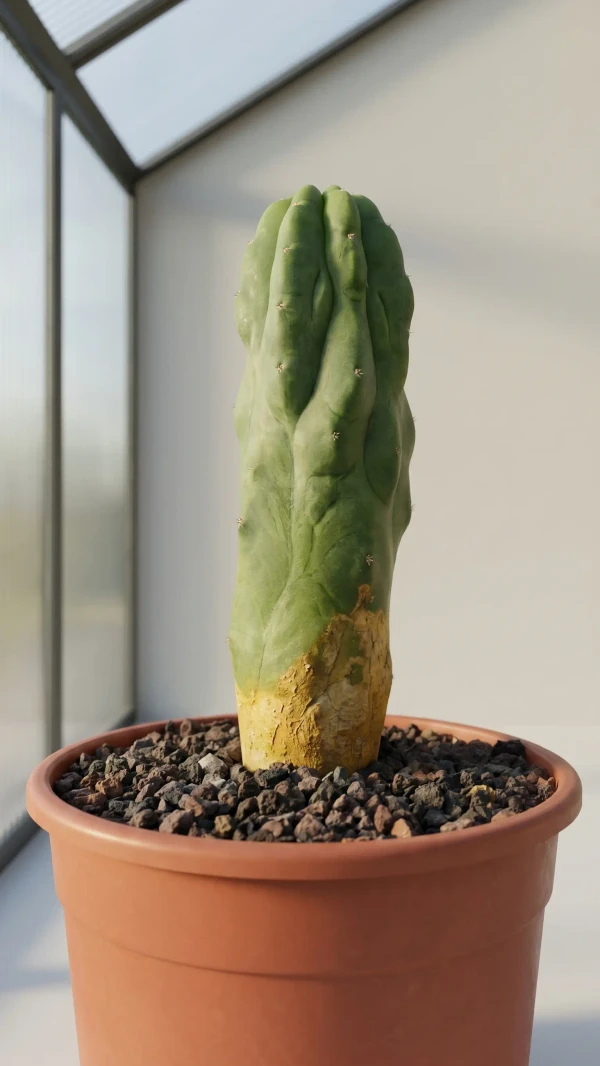
Overwatering in compacted, clay-heavy soils is the primary cause of root rot. Inadequate light exposure leads to etiolation, causing the stems to grow thin, pale, and structurally weak.
Requires full sun to maintain its healthy blue-green hue and rigid form.
Water deeply only after the soil is bone dry. Suspend watering in winter.
Mineral-heavy cactus soil mixed with plenty of pumice or perlite.
Equipped with long, sharp spines; contains alkaloids toxic to pets if ingested.
Very easy and forgiving, making it perfect for beginners and collectors alike.
Native to the high-elevation Andean regions of Bolivia, where it grows in arid valleys and rocky terrains. It is well-adapted to drastic temperature drops at night and intense solar radiation during the day.
