
Light
Bright Indirect Light
Requires bright indirect light or filtered sun; avoid harsh midday sun.
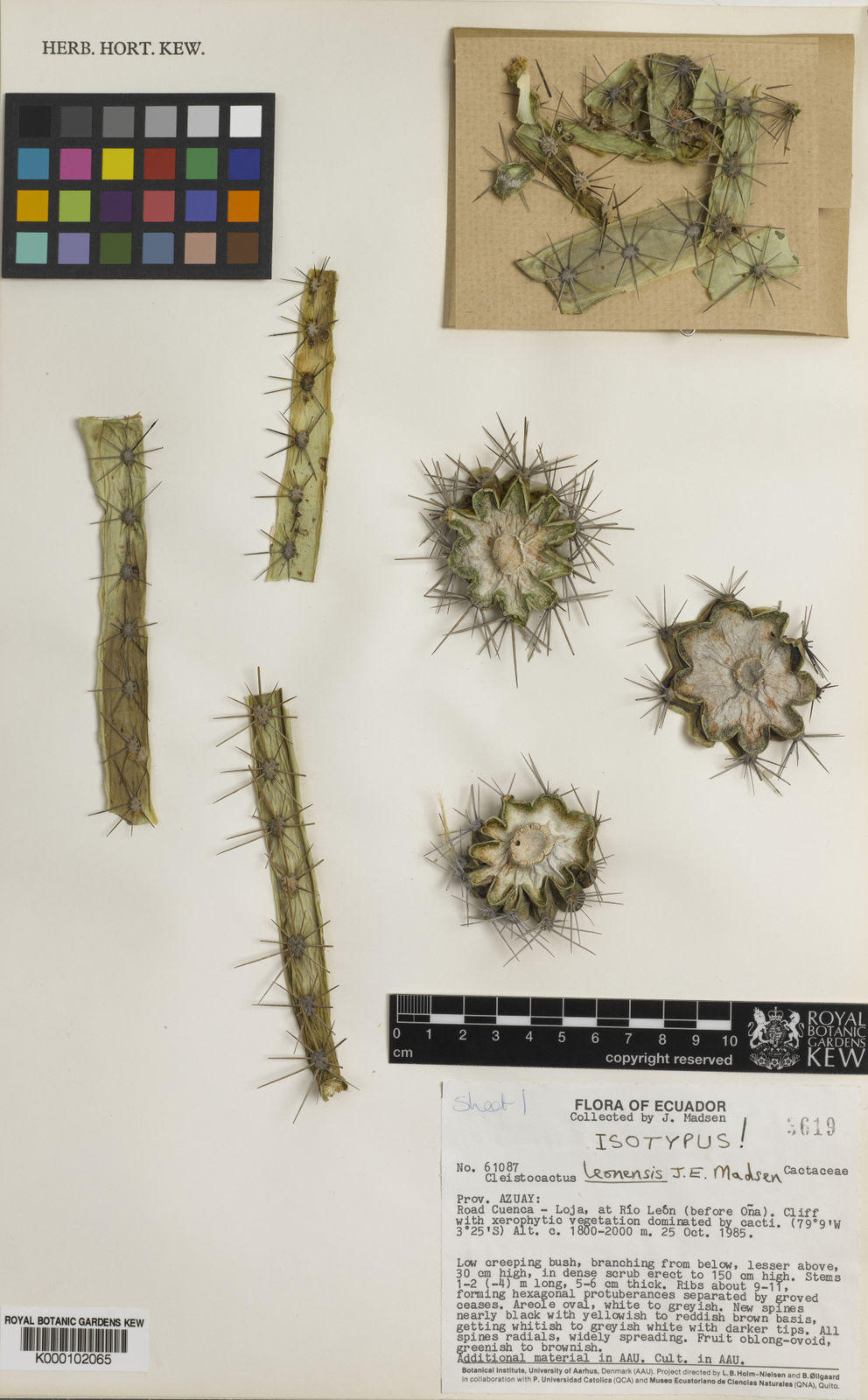 Reference image
Leon's Borzicactus
Borzicactus leonensis is an elegant, semi-erect or scrambling succulent shrub belonging to the Cactaceae family. Known for its tubular red flowers and resilient nature, it makes an excellent specimen for collectors of Andean cacti.
Originally described and later grouped under the genus Cleistocactus as Cleistocactus leonensis, modern phylogenetic analyses supported by the Royal Botanic Gardens, Kew (POWO) have reinstated the species to the genus Borzicactus 1.
This species is native to Western South America, specifically endemic to the dry inter-Andean valleys of Ecuador (mainly Loja province). It thrives in seasonally dry tropical biomes, clinging to steep, rocky, or gravelly slopes 2.
Borzicactus leonensis forms branching subshrubs or shrubs up to 1.5 meters tall. The cylindrical green stems are segmented with distinct ribs covered in golden-brown spines. Its striking orange-red flowers are tubular, adapted for pollination by hummingbirds.
In cultivation, it requires a coarse, mineral-rich, and extremely free-draining substrate. Unlike many desert cacti, it prefers bright, filtered sunlight or light afternoon shade. Watering should be thorough but infrequent, limited to the active growing season.
The most frequent mistakes include using heavy peat-based soils and overwatering during the cold winter dormancy, which quickly triggers root rot. Insufficient light leads to unsightly stem etiolation.
Requires bright indirect light or filtered sun; avoid harsh midday sun.
Water only when the substrate is fully dry; restrict watering in winter.
Use a well-draining mineral mix containing high amounts of pumice and sand.
Armed with sharp spines; keep out of reach of children and pets.
Moderate; highly dependent on proper drainage and avoiding winter overwatering.
Native to the steep, arid inter-Andean valleys of southern Ecuador, where it adapts to rocky slopes and gravelly terrains under seasonally dry tropical conditions.
