
Light
Full Sun
Requires full sun; at least 6 hours of direct sunlight daily to maintain compact growth and robust spine density.
 Reference image
 Reference image
Oblique-Mouth Borzicactus
Borzicactus plagiostoma is a rare, columnar cactus species native to the arid valleys of South America 1. Notable for its dense spination and uniquely asymmetric flowers, it is highly valued by succulent collectors and desert plant enthusiasts alike.
Originally described under the genus Cleistocactus as Cleistocactus plagiostoma, taxonomic revisions have placed it within the genus Borzicactus 2. The specific epithet 'plagiostoma' originates from Greek terms meaning 'oblique mouth', referring to the characteristic slanted opening of its tubular flowers.
This species is endemic to northern Peru, particularly restricted to the Cajamarca region 1. It thrives in dry, rocky shrublands and steep canyon walls at elevations ranging from 1000 to 2200 meters above sea level, where air circulation is high and soil moisture is scarce.
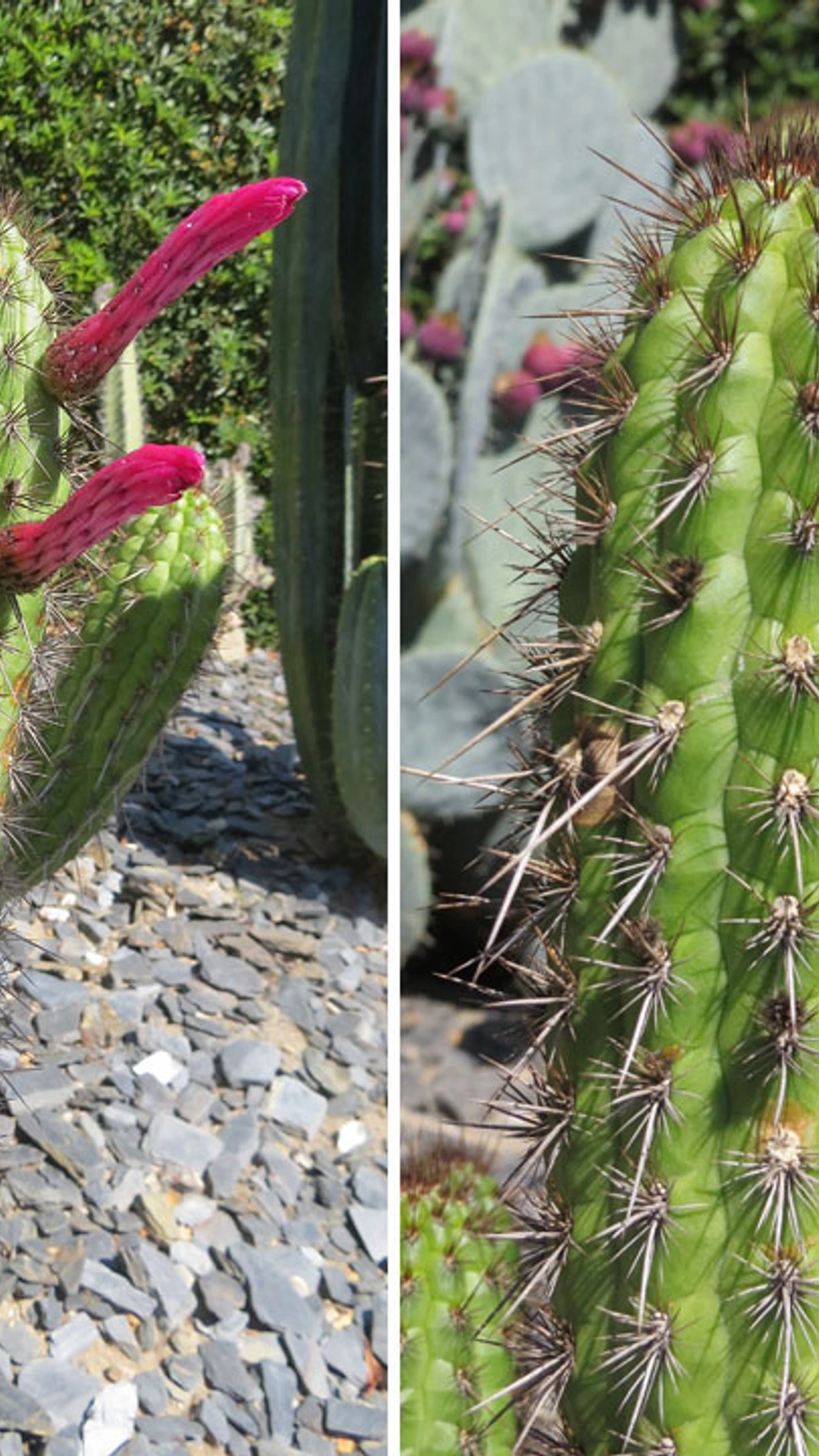
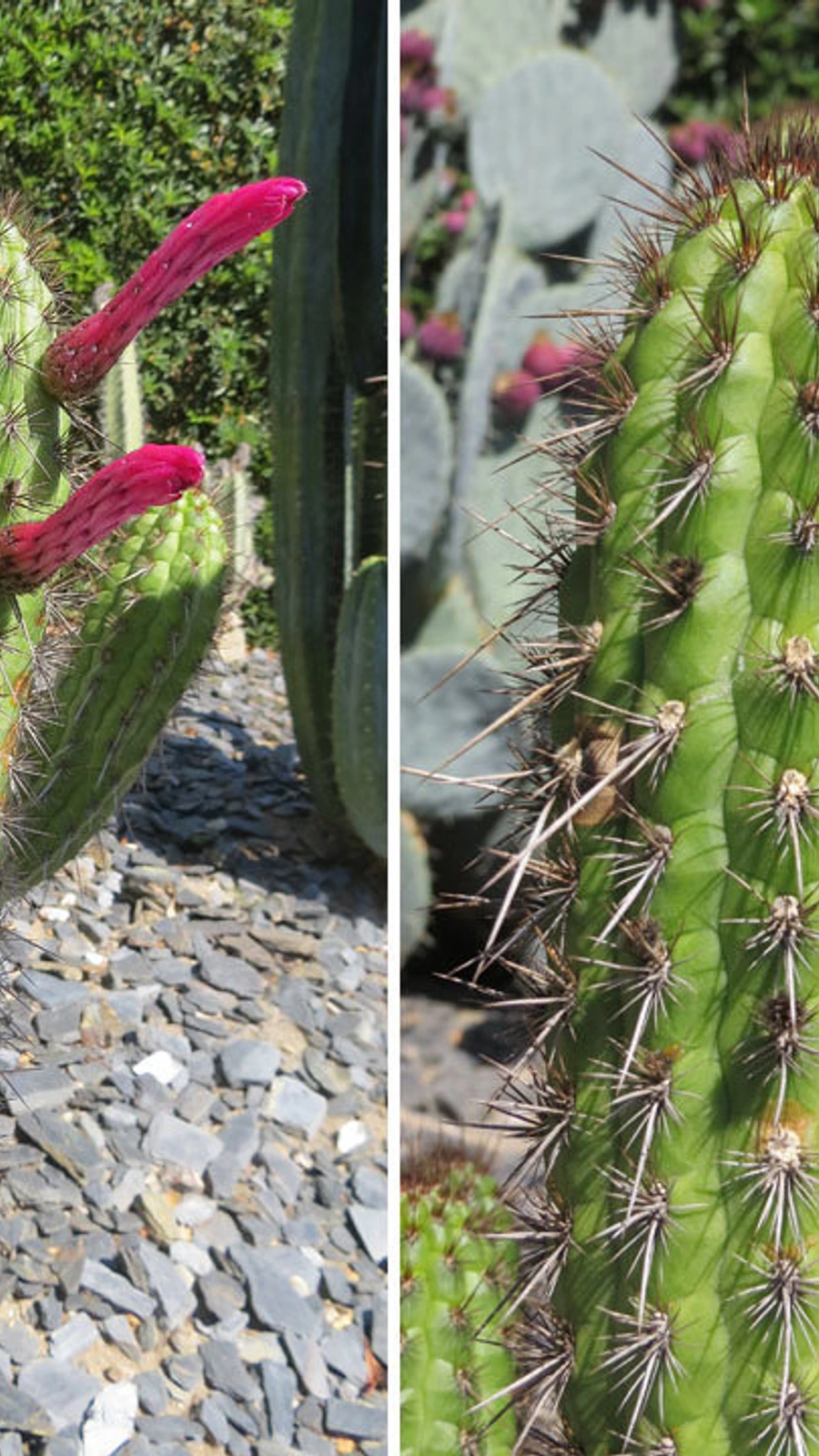
It features cylindrical, green stems that can grow up to 1 meter tall, either erect or sprawling. The stems possess 10 to 15 distinct ribs covered in greyish felted areoles. The spines are dense, sharp, and vary in color from golden yellow to dark brown. The tubular flowers are deep red or purplish, displaying a distinctive tilted or oblique rim 2.
In cultivation, Borzicactus plagiostoma requires maximum sunlight and exceptionally well-draining mineral soil. Water thoroughly during the hot spring and summer months only after the substrate has completely dried out. In winter, keep the plant dry and cool to encourage dormancy.
Overwatering and placing the plant in heavy, clay-rich soil are the most common causes of root rot 1. Lack of adequate sunlight will cause the stems to stretch abnormally and lose their dense golden spination.
Requires full sun; at least 6 hours of direct sunlight daily to maintain compact growth and robust spine density.
Soak thoroughly when the soil is completely dry in spring and summer. Keep almost completely dry in winter.
Coarse, porous mineral mix containing pumice, perlite, and coarse sand with very little organic matter.
Armed with very sharp, dense spines. Keep out of reach of children and domestic pets.
Moderate. Easy to care for if kept dry and sunny, but very sensitive to stagnant wet soil.
Endemic to the dry inter-Andean valleys of northern Peru. It grows in rocky cliffs and gravelly slopes under intense solar radiation and minimal rainfall.
