
Light
Direct Sun
Requires full, direct sun. Indoors, place in a south-facing window.
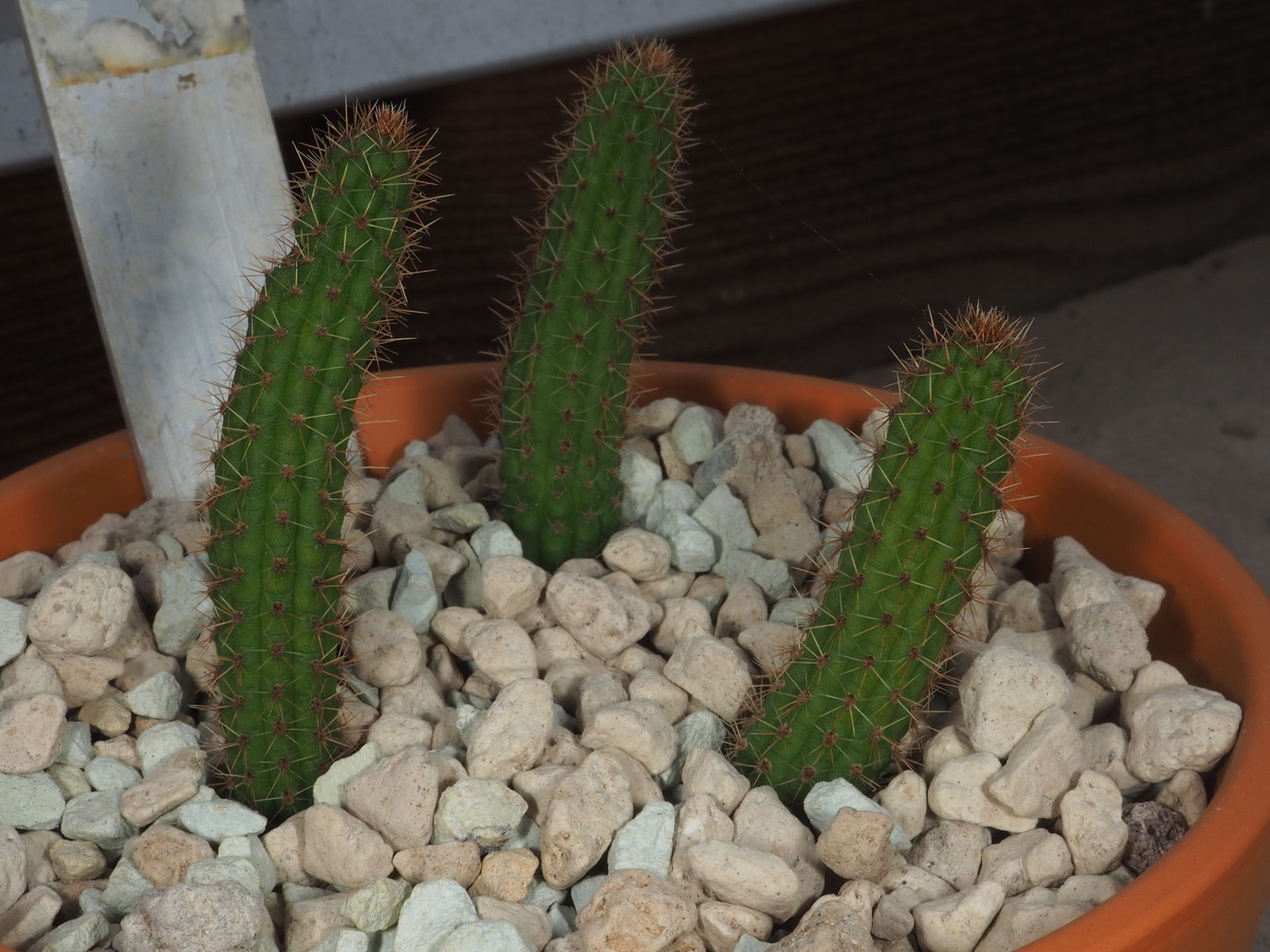 Reference image
Borzicactus sepium is a shrubby, columnar cactus species belonging to the Cactaceae family. Known for its erect to sprawling stems and vibrant reddish-orange flowers, it is a highly resilient and attractive plant suitable for dry gardens, rockeries, and container culture 1.
Originally described as Cactus sepium in 1823 by Humboldt, Bonpland, and Kunth, the species was later moved to the genus Borzicactus by Alwin Berger. Synonyms include Cleistocactus sepium and Loxanthocereus sepium 2.
This species is native to the Andean regions of Ecuador and Colombia. It typically grows on steep, rocky slopes, dry valleys, and seasonally dry tropical shrublands at elevations ranging from 1500 to 3000 meters above sea level 1.
The stems are cylindrical, light to medium green, reaching up to 1.5 meters in height and about 10 cm in diameter. It possesses 8 to 11 distinct ribs lined with felted areoles that bear sharp, yellowish-brown spines. The striking tubular flowers are bright red to orange-red and measure up to 8 cm in length 2.
In cultivation, it requires full sun exposure to maintain its compact spination and to trigger blooming. A highly porous mineral substrate is essential. Water thoroughly during the active spring and summer growing season, allowing the soil to dry out completely in between 3.
Overwatering and poorly draining soil are the leading causes of root and stem rot. Lack of adequate sunlight leads to etiolation, where the plant grows thin, pale, and structurally weak.
Requires full, direct sun. Indoors, place in a south-facing window.
Allow soil to dry out completely between waterings. Keep dry in winter.
Mineral-rich, gritty mix with high pumice and sand content.
Features sharp, sturdy spines. Place away from high-traffic areas and pets.
Very easy to care for, making it excellent for beginners.
Inhabits high-elevation Andean valleys on dry, rocky slopes where it thrives under intense solar radiation and seasonal dry cycles.
