
Light
Bright Indirect Light
Thrives in bright, indirect light; protect from intense midday summer sun to prevent scorching.
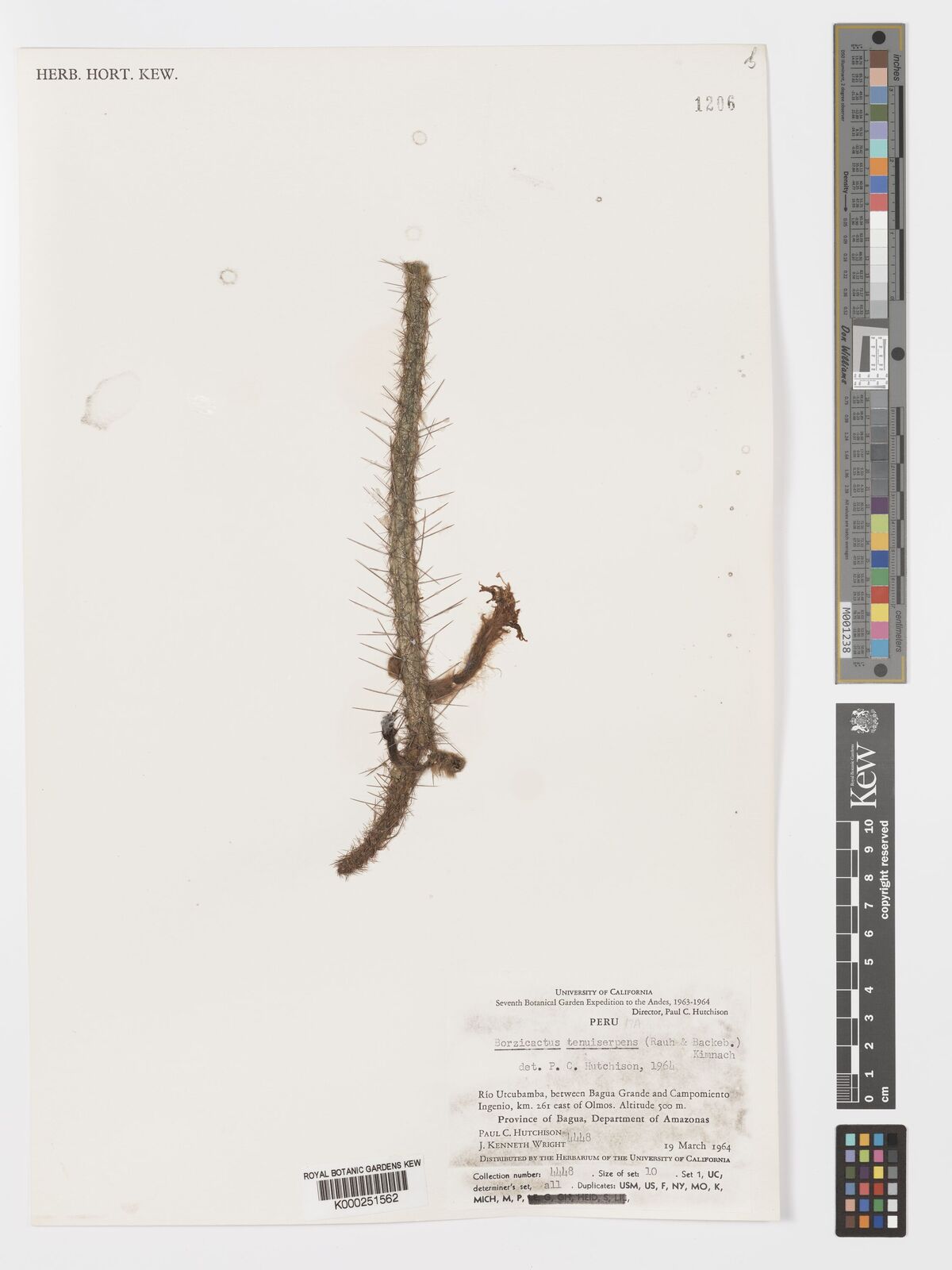 Reference image
Slender Borzicactus
Borzicactus tenuiserpens is a unique, trailing member of the Cactaceae family. Characterized by its thin, elongated stems, it is a highly prized collectors' plant representing the diverse flora of arid South America.
The species was formally described by the German botanist Friedrich Ritter. The genus name honors Italian botanist Antonino Borzì 1, while the specific epithet tenuiserpens translates from Latin to mean 'slender snake,' describing the plant's growth form.
It is native to the dry river valleys and arid shrublands of Peru 2. It grows on steep, rocky slopes where water drains instantly and humidity levels remain minimal throughout the year.
The stems are cylindrical, slender, and often sprawling or hanging over rocks. They are densely set with small areoles bearing fine, yellowish-brown spines. The tubular, bright red-to-orange flowers are adapted for hummingbird pollination.
In cultivation, it requires bright, filtered sunlight and excellent air circulation. Watering should be done thoroughly but only when the potting substrate has dried out completely. Winter months require a strict dry rest.
Overwatering is the single greatest threat, quickly leading to root and stem rot. Lack of adequate light will cause etiolation, leading to weak, spindly stems that lose their natural color and density.
Thrives in bright, indirect light; protect from intense midday summer sun to prevent scorching.
Allow soil to dry out 100% between waterings. Reduce watering to a bare minimum in winter.
Highly porous, fast-draining cactus mix amended with pumice, perlite, or coarse sand.
Non-toxic to pets, but has sharp spines that can cause mechanical injury. Keep out of reach.
Moderately easy for growers who can manage moisture levels and avoid overwatering.
Naturally distributed across the steep, rocky slopes and arid river valleys of Peru, where it thrives in well-drained volcanic soils and desert conditions.
