
Light
Bright Indirect Light
Requires bright, indirect sunlight with protection from the harshest afternoon rays.
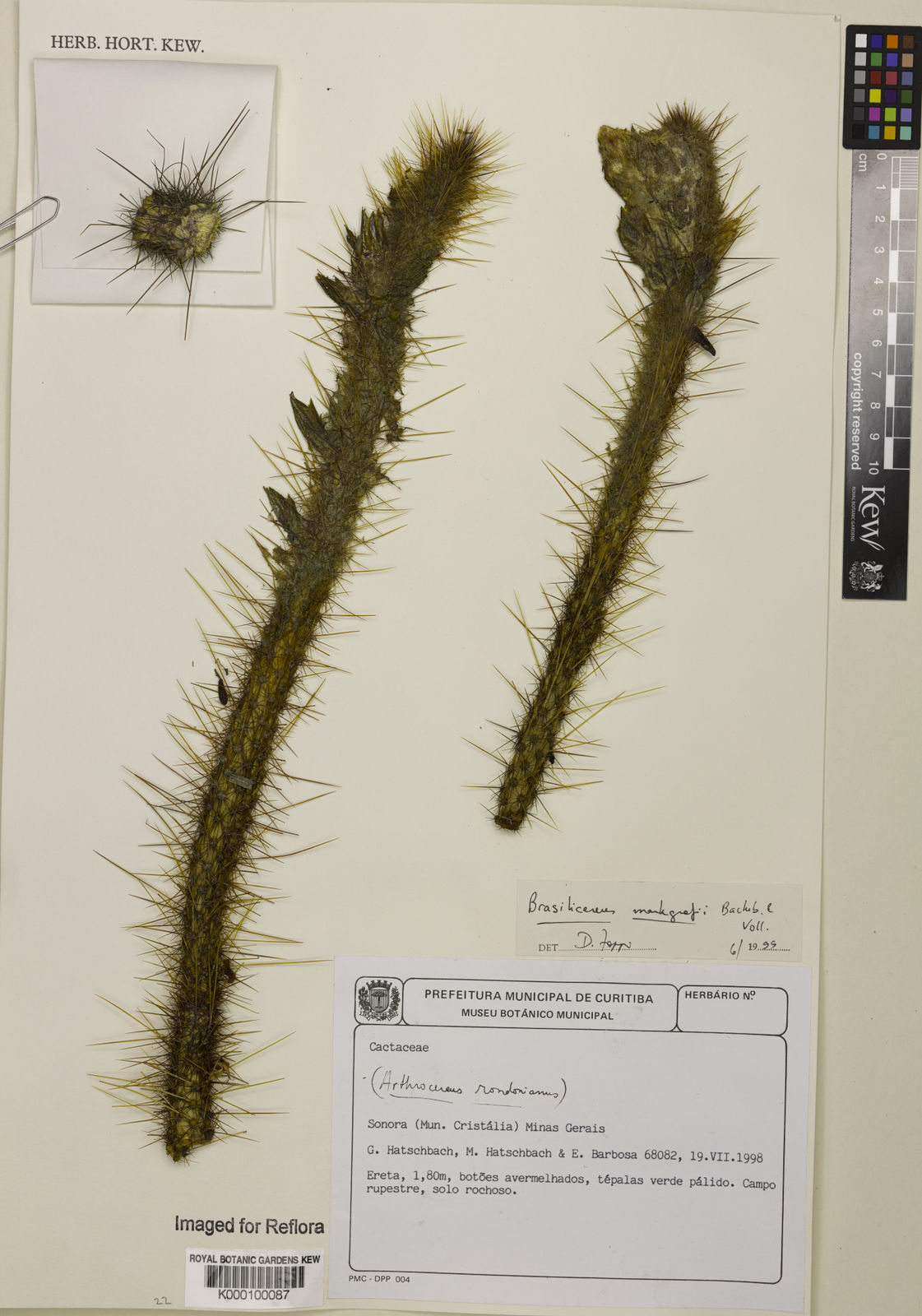 Reference image
Markgraf's Columnar Cactus
Brasilicereus markgrafii is an endangered, slender columnar cactus belonging to the family Cactaceae. Named in honor of the renowned German botanist Friedrich Markgraf, this species is highly valued by collectors for its elegant form and nocturnal blooms 1.
Described in the late 20th century, the genus Brasilicereus contains only a few species. Brasilicereus markgrafii is distinguished by its thin, erect branches and specific spine patterns 2. It is occasionally referenced under the synonym Coleocephalocereus markgrafii in older literature.
This species is endemic to Minas Gerais, Brazil, occurring in seasonally dry tropical biomes 1. It typically grows on rocky outcrops, sandy soils rich in quartzite, and in the unique shrubby vegetation known as campos rupestres. Habitat loss has placed this species on the IUCN endangered list.
It is a shrubby, semi-erect cactus reaching up to 1.5 meters in height. The stems are greyish-green with 5 to 8 ribs, covered in needle-like golden-brown spines. The nocturnal flowers are tube-shaped, whitish-cream, adapted for pollination by bats or moths.
Requires a highly mineral, gritty substrate with excellent drainage. Water thoroughly during the active spring and summer growing seasons, allowing the soil to dry completely between sessions. Keep virtually dry in winter.
Overwatering in low-temperature conditions is the primary cause of root rot. Lack of adequate airflow and low light levels will lead to etiolation (stretching of stems).
Requires bright, indirect sunlight with protection from the harshest afternoon rays.
Allow the potting medium to dry out completely before watering thoroughly.
Requires a highly mineral, well-draining cactus mix rich in pumice and coarse sand.
Features sharp spines; handle with gloves and keep away from pets and children.
Moderate care level, requiring strict watering control to avoid stem rot.
Endemic to the quartzite rocky slopes and dry shrublands of Minas Gerais, Brazil, adapting to poor, sandy soils and seasonal droughts.
