
Light
Full Sun
Requires full sun or very bright indirect light for at least 6 hours daily to prevent etiolation.
 Reference image
 Reference image
Tall Browningia
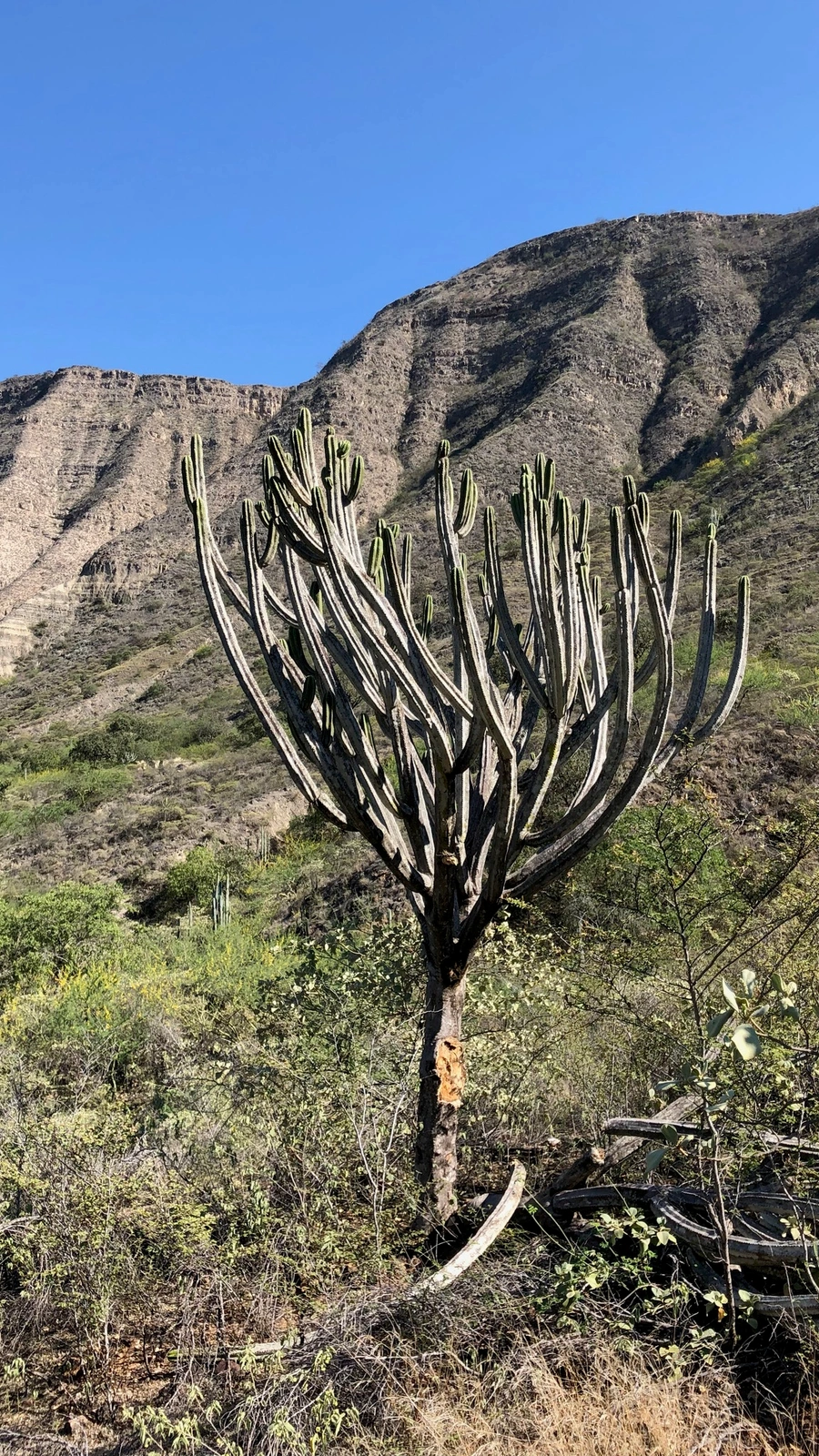
Browningia altissima is an impressive, giant columnar cactus species native to Peru. Reaching a tree-like stature in its natural habitat, this species is highly sought after by cactus enthusiasts for its majestic form, prominent ribbing, and formidable spination 1. It is a key ecological component of dry shrublands and rocky valley slopes.
Belonging to the family Cactaceae and the genus Browningia, this species is taxonomically verified as Browningia altissima 2. The specific epithet 'altissima' is derived from Latin, meaning 'tallest', which directly references the immense height this tree-like cactus can achieve over many decades.
This species is endemic to Peru, specifically restricted to the dry inter-Andean valleys of the Marañón River basin 1. It thrives at elevations between 500 and 1500 meters above sea level, growing on steep rocky slopes and in deciduous dry forest formations.
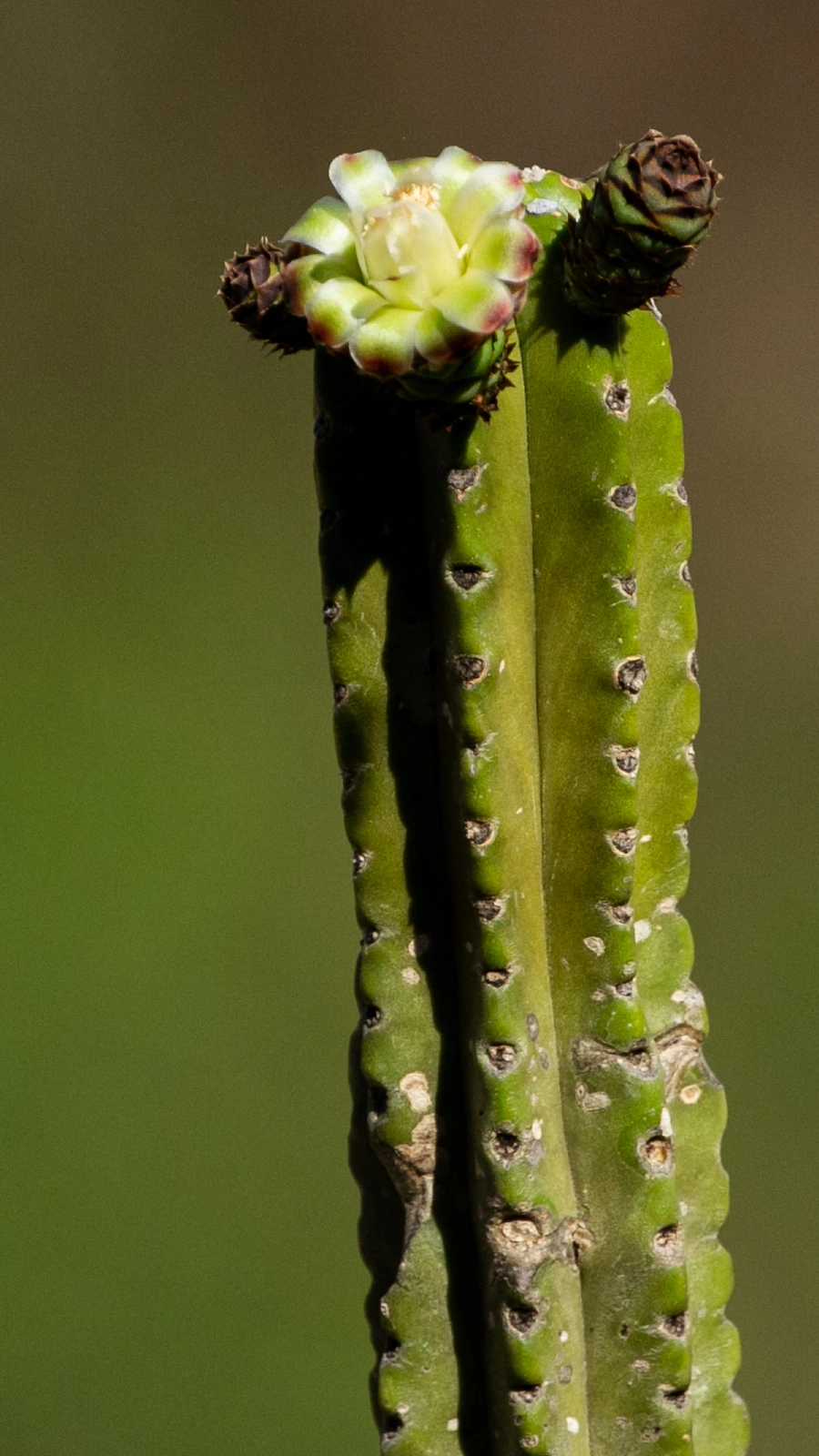
Browningia altissima is a branching, arborescent cactus that can reach heights of 5 to 10 meters. The main trunk is robust, giving rise to numerous blue-green to grayish-green branches. It features well-defined ribs lined with large areoles that bear stout, yellowish-grey spines. Nocturnal, funnel-shaped white to cream flowers bloom near the branch tips.
In cultivation, it requires full sun and extremely well-draining mineral soil. Water thoroughly during the active spring and summer growth phases, allowing the substrate to dry out completely between waterings. Winter watering should be virtually non-existent. It is cold-sensitive and should be protected from freezing temperatures.
Overwatering and the use of heavy, clay-rich soils are the primary causes of root rot and stem decay. Insufficient light exposure leads to etiolation, causing the stems to grow thin, weak, and pale.
Requires full sun or very bright indirect light for at least 6 hours daily to prevent etiolation.
Water deeply but infrequently in summer; keep completely dry in winter to prevent root rot.
Use a highly porous mineral mix containing pumice, coarse sand, and minimal organic matter.
Features extremely sharp, rigid spines. Place away from high-traffic areas and out of reach of pets.
Moderate. It demands strict watering discipline and adequate winter temperature management.
Endemic to the dry, rain-shadowed river valleys of Northern Peru, where it grows on rocky slopes under arid climate conditions.
