
Light
Direct Sun
Requires full, direct sun. Insufficient light leads to weak, stretched growth.
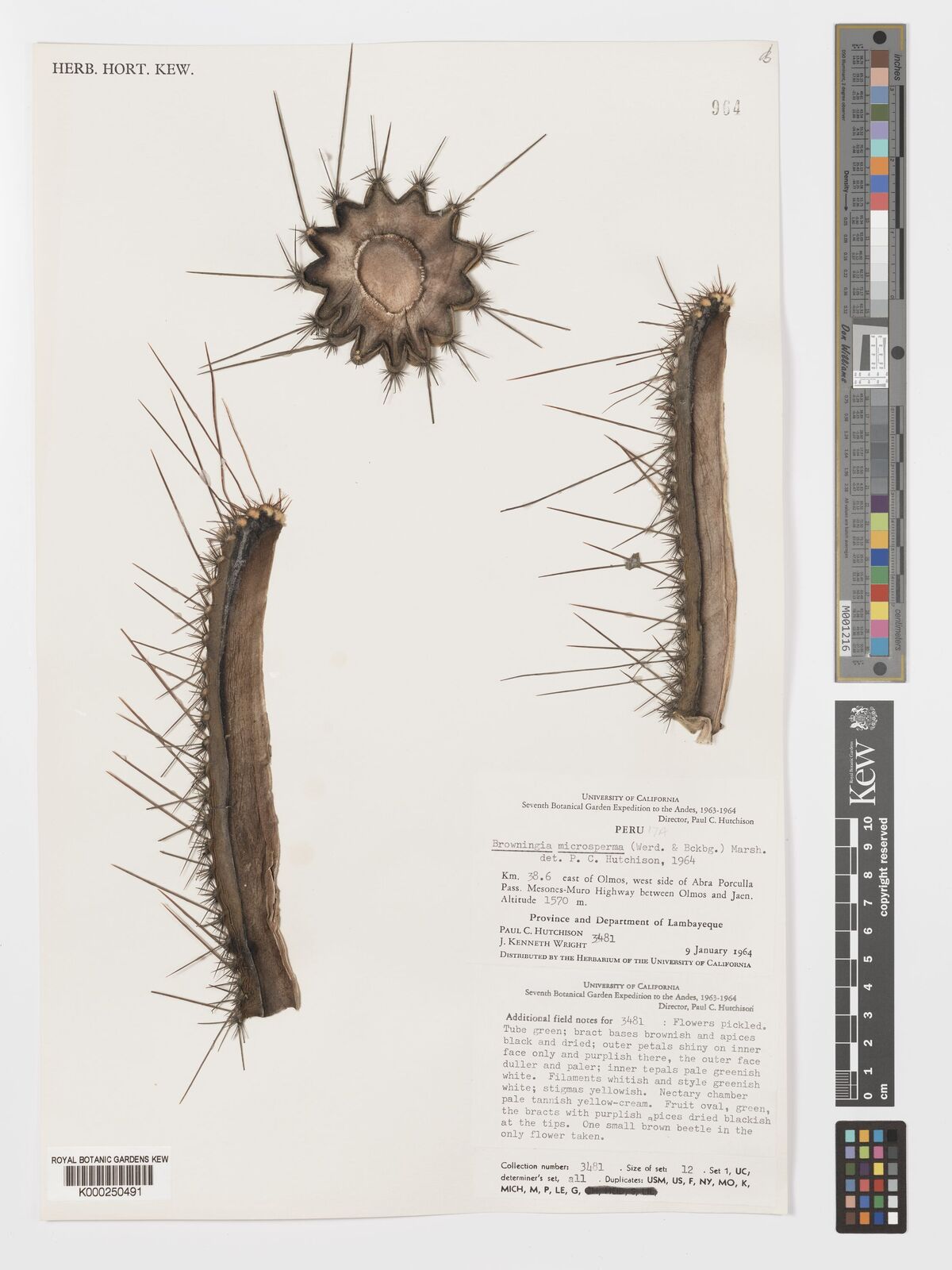 Reference image
Small-seeded Browningia
Browningia microsperma is a column-like, shrubby succulent cactus belonging to the Cactaceae family. Known for its drought-tolerant properties and striking appearance, it represents the resilient flora of arid South American regions 1.
Classified under the genus Browningia, the specific epithet microsperma translates to "small-seeded" in Latin, highlighting a key seed morphology of the species. Taxonomic studies have defined its evolutionary placement near other columnar Andean cacti 2.
Native to Western South America, particularly restricted regions of Peru, this species thrives in dry shrublands and deserts. It is adapted to shallow soils on rocky slopes, where it experiences high solar radiation and minimal rainfall.
This succulent shrub features upright, ribbed, light-green to grayish stems decorated with robust, sharp spines clustered on distinct areoles. It produces nocturnal, white flowers suited for specialized desert pollinators, followed by dry fruits containing very tiny seeds.
In cultivation, it requires bright, direct sunlight to maintain its structural integrity and avoid etiolation. Watering must be strictly limited to when the soil is completely dry. A highly porous mineral substrate is crucial to mimic its natural hillside habitat.
Overwatering is the primary cause of failure. Inadequate drainage traps moisture around the root system, quickly leading to root rot. Keeping the cactus in damp, cold environments during winter can also prove fatal.
Requires full, direct sun. Insufficient light leads to weak, stretched growth.
Water thoroughly only when the soil is 100% dry. Keep dry in winter.
Needs highly mineral, well-draining cactus soil with plenty of pumice and sand.
Armed with sharp spines; keep out of reach of pets and children. Non-toxic.
Moderate. Easy if provided with enough direct sun and protected from overwatering.
Found naturally on dry, rocky slopes and canyon walls in Peru, growing under intense sunlight in highly draining soils amidst dry shrubland biomes.
