
Light
Bright Indirect Light
Bright indirect light or filtered sun is best to prevent scorching.
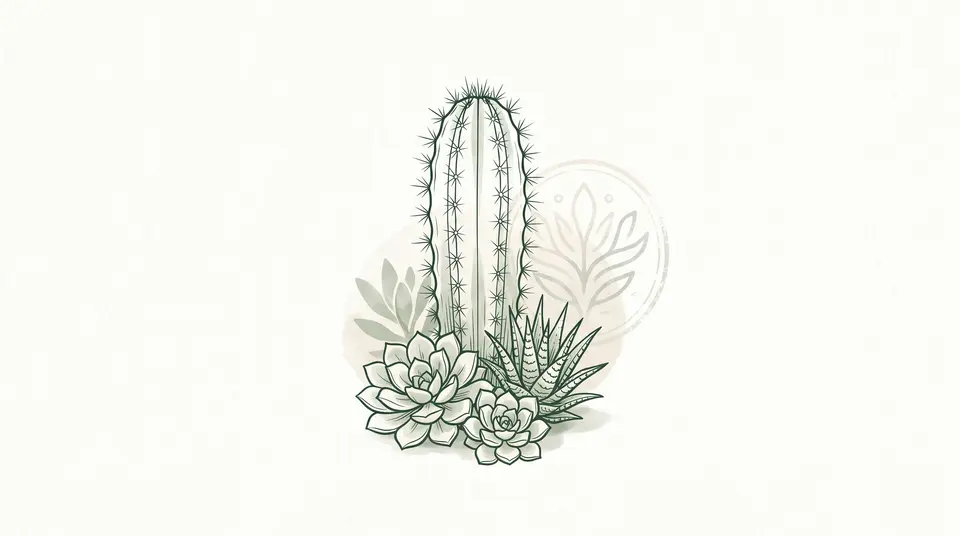 Reference image
Alternatus Cactus
Cactus alternatus is an intriguing and historically elusive taxon within the Cactaceae family. Often associated with early botanical classifications, this slow-growing succulent represents a unique specimen sought after by specialist collectors 1.
The genus Cactus was historically used in a broad sense by early botanists like Carl Linnaeus. Over time, most species were reassigned to modern genera. The specific epithet alternatus refers to the alternating pattern of its ribs or spine clusters along the stem 2.
While its precise contemporary natural range remains poorly documented, it is assumed to share the habitat preferences of similar historical Cactaceae, thriving in arid to semi-arid rocky slopes of the Americas where mineral-rich, porous soils dominate 1.
This cactus typically exhibits a globose to slightly cylindrical green stem with distinct ribs. Prominent areoles run along these ribs, bearing rigid, grey-to-brownish spines. Under optimal conditions, small funnel-shaped flowers may emerge from the apical meristem.
It requires a highly porous potting medium mixed with pumice, perlite, and coarse sand. Watering must be strictly limited to the active growing season and only performed when the substrate has dried out completely. Winter requires a cool, dry dormancy period.
The most frequent cultivation error is overwatering, especially in heavy soils or non-draining pots, which rapidly induces root and stem rot. Lack of a dry winter dormancy also prevents healthy growth and flowering.
Bright indirect light or filtered sun is best to prevent scorching.
Allow soil to dry out completely between waterings. Reduce to a minimum in winter.
Excellent drainage is mandatory; use coarse sand and pumice-heavy mix.
Sharp spines can cause physical injury. May be toxic to pets if chewed.
Moderate difficulty due to strict watering and drainage requirements.
Believed to be native to the rocky terrains and dry shrublands of the Americas, where it adapted to grow in gravelly soils under intense light.
