
Light
Bright Indirect Light
Requires bright, indirect sunlight. Avoid sudden exposure to scorching, unfiltered afternoon sun.
 Reference image
Haworth's Cactus
Cactus haworthianus is a historically intriguing and taxonomically complex succulent species belonging to the family Cactaceae. Named in honor of the eminent British botanist Adrian Hardy Haworth, this taxon represents a classic era of early succulent classification and remains a subject of study among botanical historians.
The species was introduced into early botanical catalogs when the genus Cactus was broadly applied to almost all succulent-like spiny plants 1. Over time, as modern taxonomy split the genus into more precise groupings, the status of Cactus haworthianus became unresolved, often associated with historical synonyms of other globular cactus species.
While its precise natural distribution remains obscure in primary modern databases, its evolutionary lineage points to the semi-arid, rocky terrains of the Americas 2. It thrives in gravelly, low-nutrient soils on sun-exposed slopes with low annual precipitation.
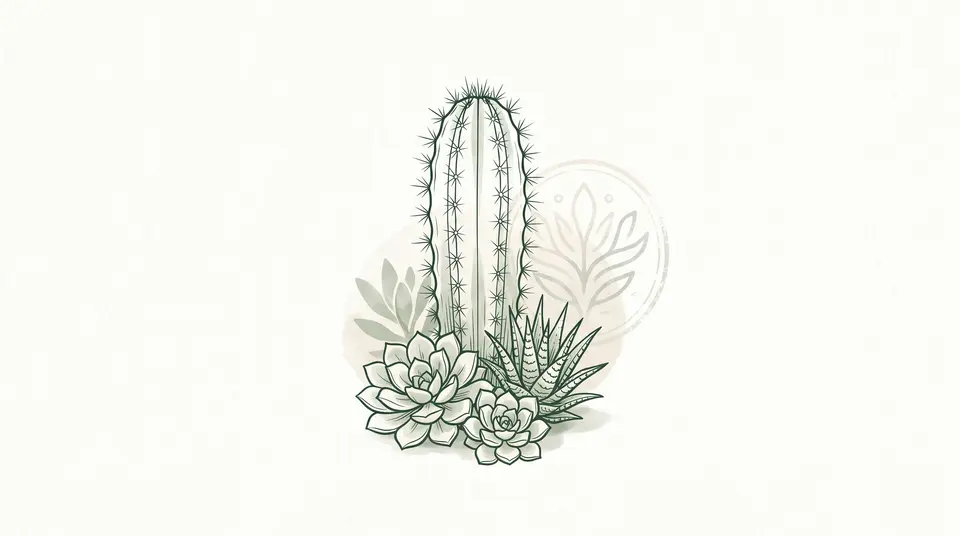
Typically characterized by a small, solitary, globular to slightly cylindrical stem. The epidermis displays a dull grayish-green color, adorned with well-defined areoles from which sharp radial spines emerge. The delicate flowers, when produced, emerge from the upper apex and exhibit pale yellow or pinkish hues.
In cultivation, it requires conditions mimicking its natural arid habitat. It demands a highly porous, gritty mineral substrate, excellent ventilation, and bright, filtered sunlight to retain its compact form and vibrant spine coloration.
The most frequent error is overwatering, which quickly causes root rot. Placing the plant in dark, poorly lit corners leads to etiolation (stretching), weakening the plant's overall structural integrity.
Requires bright, indirect sunlight. Avoid sudden exposure to scorching, unfiltered afternoon sun.
Water thoroughly only when the substrate is completely dry. Keep strictly dry in winter.
Use a specialized fast-draining cactus mix containing high amounts of pumice, sand, and gravel.
Sharp spines can cause physical injury; keep away from pets and curious children.
Moderate. It is forgiving of neglect but highly sensitive to overwatering and low-light environments.
This plant trace leads to the arid microclimates of the American continent, where it adapted to rocky crevice conditions with high mineral levels and dry, windy weather.
