
Light
Full Sun
Requires at least 6 hours of direct sunlight daily; insufficient light causes weak, etiolated growth.
 Reference image
Neglected Cactus
Cactus neglectus is a historical species designation with a complex standing in the taxonomic history of the cactus family (Cactaceae). In modern botany, it is largely treated as an unresolved name or a historical synonym 1. As the epithet "neglectus" suggests, this taxon was frequently overlooked or misclassified during early botanical expeditions.
Historically, the genus Cactus was established by Carl Linnaeus to encompass all known cacti under a single group 2. As botanical science progressed, the family was split into numerous genera. Cactus neglectus appears in vintage literature, often suspected to be a synonym of certain Melocactus or Mammillaria species, remaining today as a historical nomenclatural record.
While its precise natural range remains officially undocumented due to historical confusion, members of this alliance are native to the arid and semi-arid regions of the Americas 1. They typically inhabit rocky slopes, gravelly plains, and canyons with high solar exposure and extremely well-draining mineral soils.
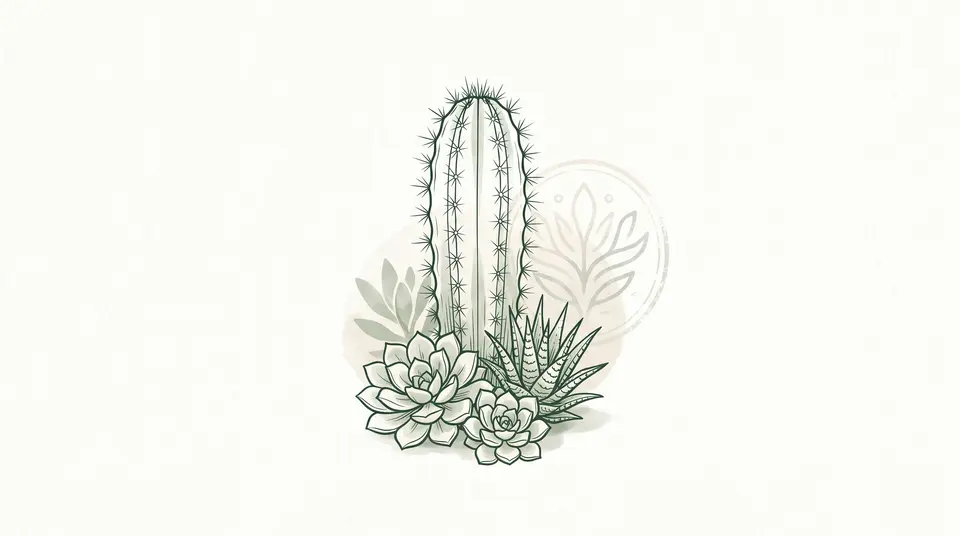
Historical accounts describe Cactus neglectus as displaying a globose to short-cylindrical green stem with prominent ribs. The areoles are armed with sturdy, grayish-brown radial and central spines that protect the plant from intense sunlight and herbivores.
In cultivation, this plant requires standard xerophytic care. High light levels, low atmospheric humidity, and a highly porous substrate are crucial for avoiding root decline 2. Watering should be strictly dry-phase oriented.
The most prevalent issue is overwatering during the winter dormancy period, which rapidly triggers fungal rot and stem collapse.
Requires at least 6 hours of direct sunlight daily; insufficient light causes weak, etiolated growth.
Water deeply in summer once soil is dry; reduce to once a month or less during winter dormancy.
Use a highly porous mineral substrate containing pumice, perlite, and coarse river sand.
Features sharp spines; handle with thick gloves and keep out of reach of pets and children.
Easy to moderate; highly resilient provided it is never allowed to sit in standing water.
Aligned with the broader distribution of the Cactaceae family, originating from dry, sunny, and rocky habitats across the American continents.
