
Light
Full Sun
Ideal for bright, south-facing windows or outdoor areas with direct sunlight.
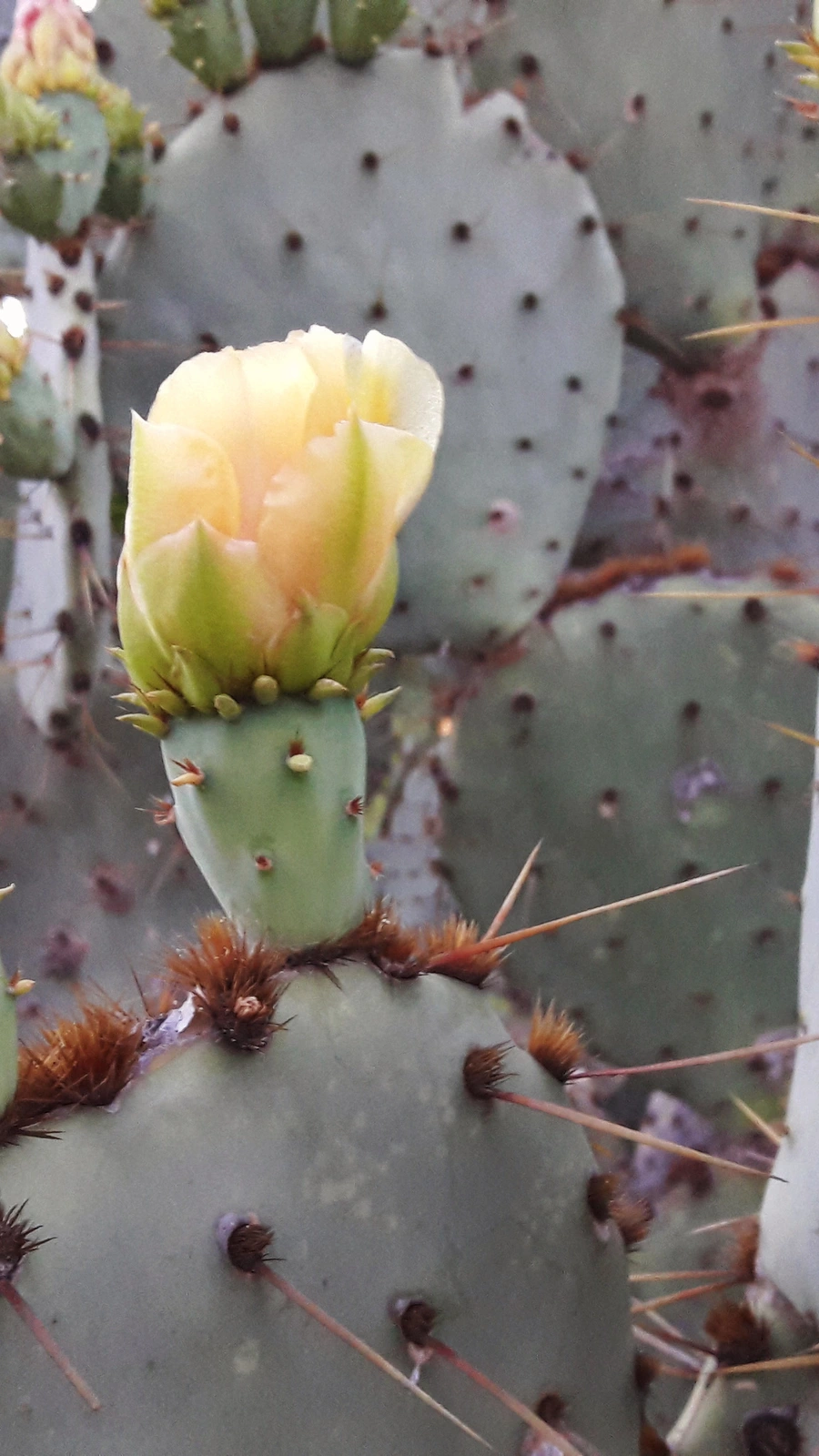 Reference image
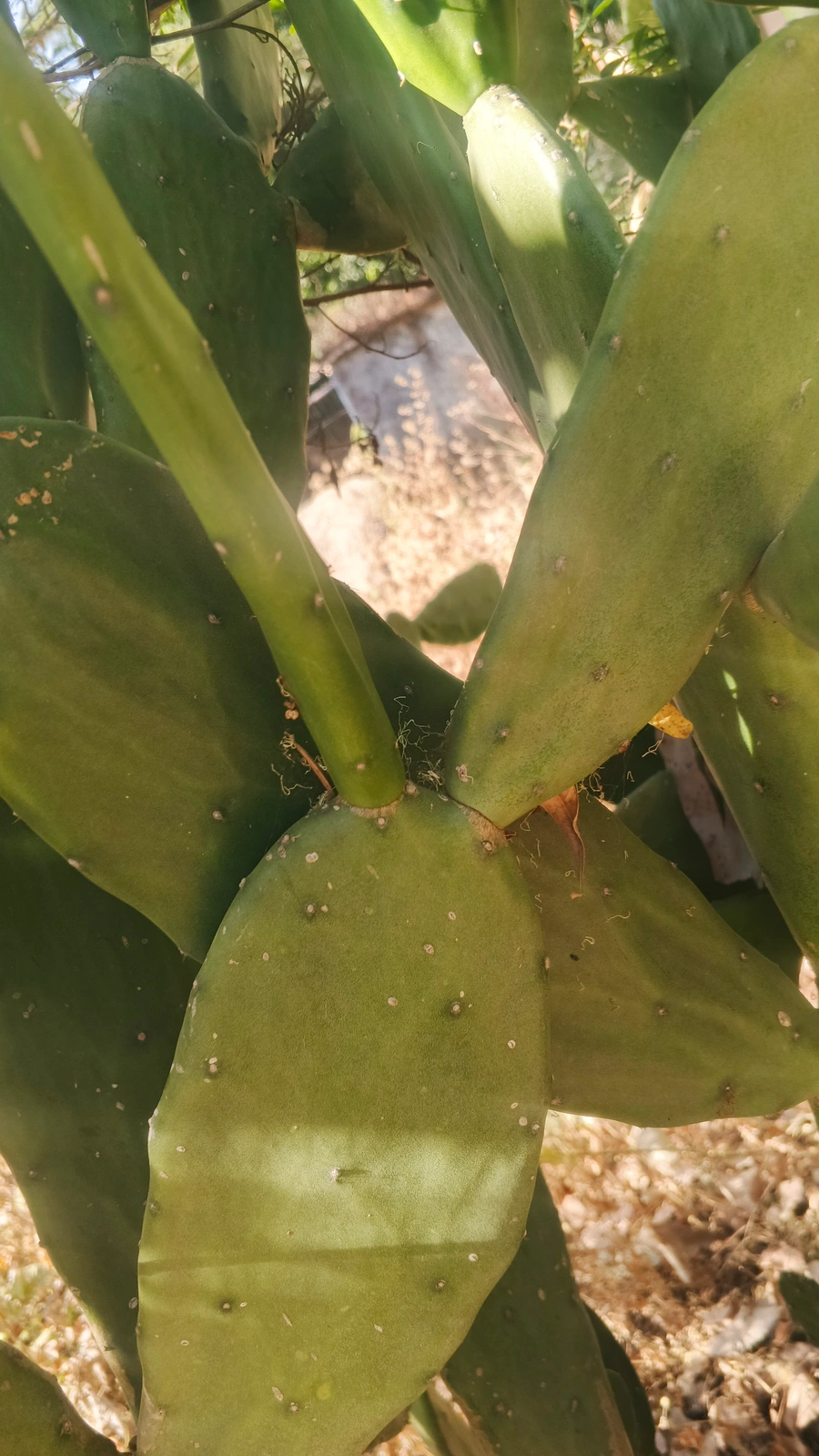 Reference image
Nopal Cactus
The Nopal cactus (Opuntia ficus-indica) is one of the most prominent, culturally rich, and economically significant species within the Cactaceae family. Renowned for its edible flat stems (cladodes) and sweet fruit, it plays an important role in arid agriculture globally 1.
Originally described by Carl Linnaeus under the basionym Cactus ficus-indica, it was later reassigned to the genus Opuntia 2. Commonly known as the prickly pear, nopal, or Indian fig, it represents a highly resilient succulent lineage adapted to harsh environmental conditions.
Native to the semi-arid, volcanic regions of Mexico, this species has successfully naturalized across Mediterranean basins, South Africa, the Middle East, and parts of Australia 1. It thrives in nutrient-poor, rocky, and volcanic soils with minimal moisture.
The plant is characterized by large, flattened, paddle-like stems called cladodes, which function as water-storage organs and photosynthetic sites. These pads bear specialized structures called areoles, hosting both sharp spines and tiny, irritating bristles known as glochids 2. Vibrant yellow, orange, or red flowers emerge in late spring, followed by edible colorful fruits.
Cultivation requires maximum sun exposure and a highly porous, well-draining substrate. Incorporating coarse sand, perlit, and pumice into the soil mix is vital for indoor specimens. Watering should be infrequent, allowing the soil to dry out completely between cycles. During winter, it requires cold but frost-free conditions and minimal water.
Overwatering is the primary cause of root rot and plant decline. Insufficient light exposure leads to etiolation, where new pads grow thin, weak, and pale. Continuing regular watering during winter dormancy also weakens the root system.
Ideal for bright, south-facing windows or outdoor areas with direct sunlight.
Water only when the soil is completely dry; reduce watering to almost none in winter.
Prefer fast-draining, porous cactus mixes high in pumice and coarse sand.
Non-toxic, but tiny hair-like spines (glochids) can cause skin irritation.
An excellent cactus for beginners due to its extremely low maintenance needs.
Native to Mexico, it has widely naturalized across arid and semi-arid regions globally, especially in the Mediterranean basin.
