
Light
Bright Indirect Light
Requires at least 5 to 6 hours of bright, filtered sunlight daily to prevent etiolation and maintain its spiral shape.
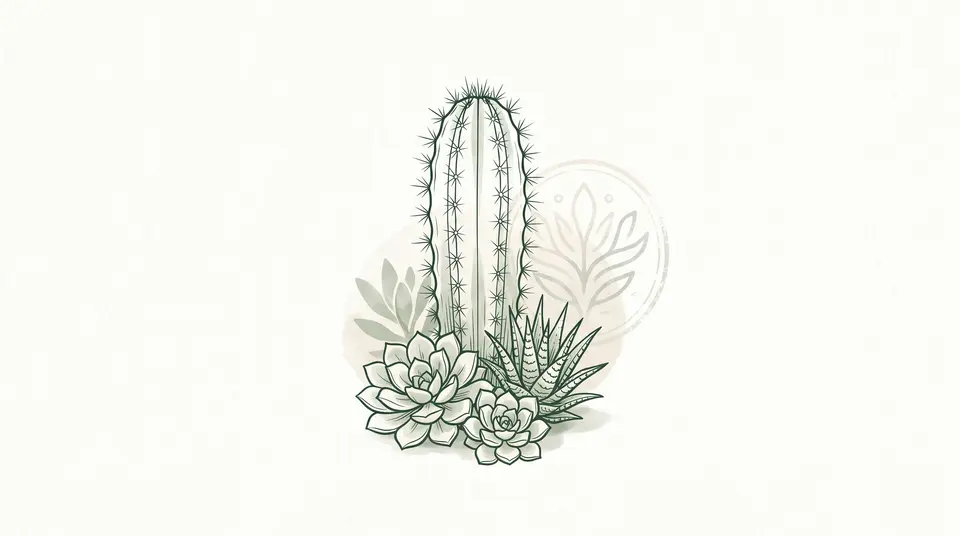 Reference image
Spiral Cactus
Cactus spiriformis is a historically classified taxon within the Cactaceae family, renowned for its striking stem morphology characterized by ribs that twist in a spiral or helical pattern 1. While often regarded in modern botany as a cultivar or mutation of genera like Cereus, it remains a highly sought-after botanical curiosity.
Historically documented under the broad genus Cactus used by early taxonomists, its specific epithet spiriformis refers directly to its winding growth habit 2. Today, it is largely studied as a morphological variation rather than an isolated, distinct species.
Historical records trace its origins to the arid and semi-arid regions of South America, particularly along rocky slopes and gravelly soils in Argentina and Brazil 1. It thrives in high-altitude environments with intense solar radiation.
The plant features a cylindrical, upright stem with prominent ribs twisting clockwise or counter-clockwise. Areoles are distributed along the spiral ridges, bearing sharp, defensive spines. When mature, it can produce nocturnal funnel-shaped white or light pink flowers.
This cactus requires exceptional drainage and an abundance of light. In container culture, a mineral-rich, porous soil is crucial. Watering should follow the 'soak and dry' method, with near-total dryness maintained during winter dormancy 2.
Overwatering is the primary cause of failure, quickly leading to root and stem rot. Insufficient lighting causes etiolation, where the stem stretches unnaturally and loses its signature spiral symmetry.
Requires at least 5 to 6 hours of bright, filtered sunlight daily to prevent etiolation and maintain its spiral shape.
Water only when the substrate is fully dry. Cease or drastically reduce watering during the cold winter months.
Best grown in a porous mineral mix consisting of pumice, coarse sand, and minimal organic matter.
While non-toxic, its sharp spines can cause physical injury, so keep it out of reach of pets and children.
A moderately easy cactus to care for, provided its drainage and sunlight needs are adequately met.
Native to the dry slopes, rocky terrains, and semi-arid valleys of South American regions, thriving under intense sun and minimal rain.
