
Light
Full Sun
Requires full, direct sun all day long. Insufficient light leads to weak, thin growth.
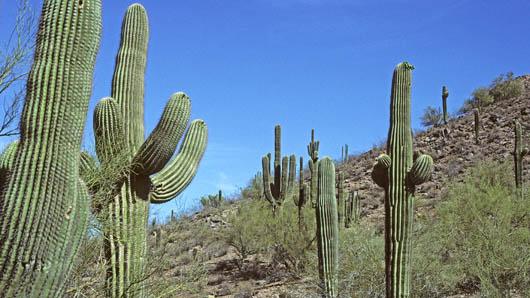 Reference image
Saguaro Cactus
The Saguaro (Carnegiea gigantea) is one of the most iconic columnar cactus species in the world. This massive, extremely slow-growing succulent tree is a true symbol of the desert landscape, capable of living for well over a century.
Saguaro is the sole member of the monotypic genus Carnegiea within the Cactaceae family 1. The specific epithet gigantea directly refers to its majestic and giant proportions. It was first scientifically described in the mid-19th century.
Its native range is strictly confined to the Sonoran Desert, spanning southern Arizona in the United States and Sonora in Mexico 2. It thrives in arid desert plains, rocky slopes, and dry shrublands.
The Saguaro is a tree-like columnar cactus that can reach heights of 12 to 18 meters when fully mature. It typically takes 50 to 75 years to develop its first branches or 'arms'. In late spring, creamy white flowers bloom at the tips of the stems, pollinated by bats, birds, and insects.
In cultivation, the Saguaro requires immense patience. It demands full sun, exceptionally well-draining sandy/gravelly soil, and highly restricted watering. Irrigation must be virtually suspended during the winter.
The most frequent mistake is overwatering in poorly draining clay soils, which rapidly leads to root rot and loss of the plant. Lack of direct, intense sunlight inside homes also causes etiolation.
Requires full, direct sun all day long. Insufficient light leads to weak, thin growth.
Water only when the soil is completely dry. Keep dry in winter.
Highly porous, sandy, and gritty cactus mix with excellent drainage is mandatory.
Armed with sharp spines. Keep away from high-traffic areas. Non-toxic but can cause physical injury.
Moderately easy if you do not overwater, but its extremely slow growth rate requires patience.
The Saguaro is native to the Sonoran Desert of southern Arizona and northern Sonora, Mexico. It is adapted to survive severe droughts and rocky, dry desert slopes under harsh, sun-drenched environments.
