
Light
Full Sun
Requires full, direct, unfiltered sunlight to stimulate the development of its intense blue waxy coating.
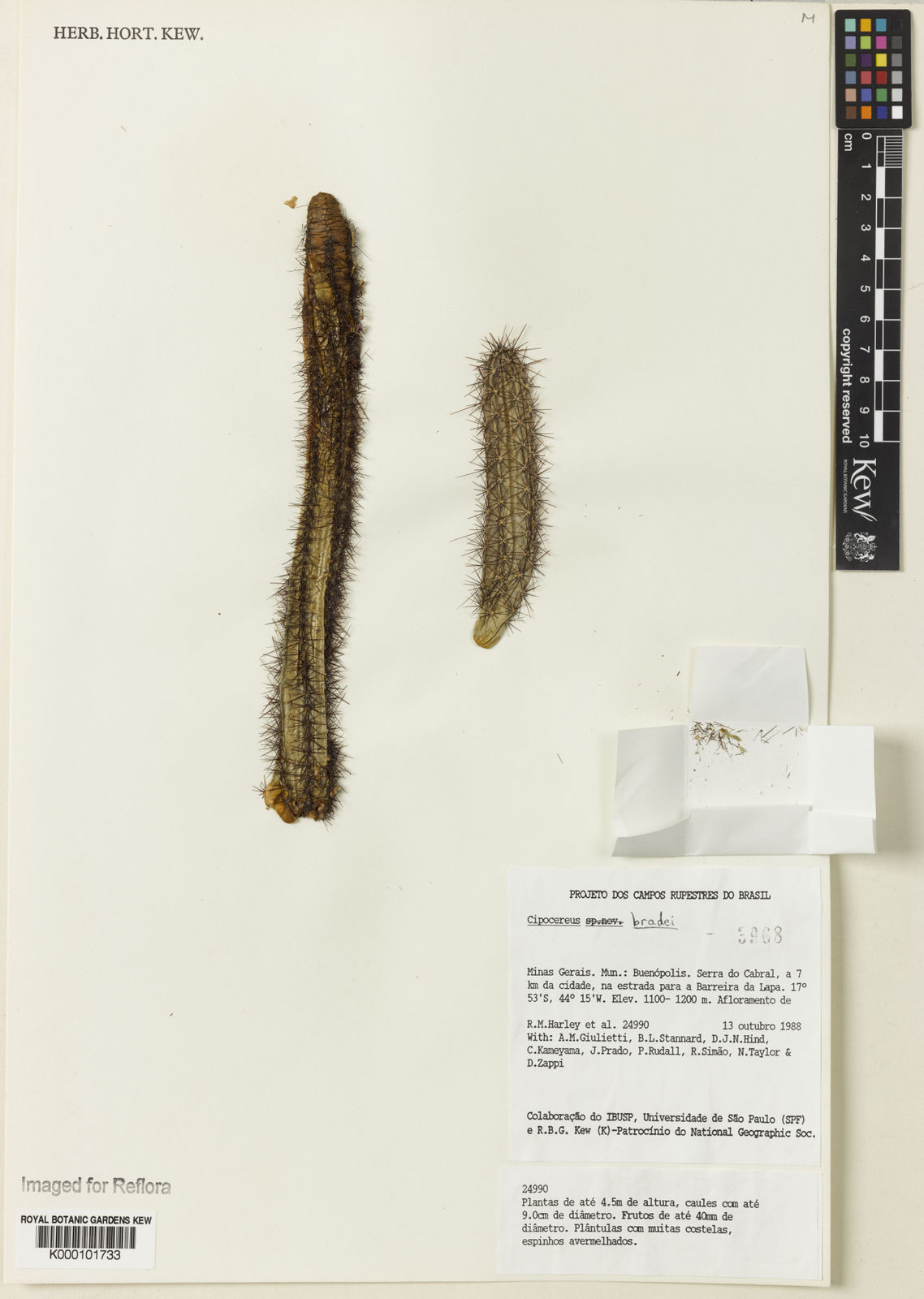 Reference image
Blue Columnar Cactus
Cipocereus bradei is a highly sought-after, rare columnar cactus species celebrated for its distinctive intense blue-pruinose stems 1. It is a prized specimen among succulent collectors worldwide.
The species is named in honor of Alexander Curt Brade, a prominent botanist who dedicated much of his life to studying Brazilian flora 2. The genus Cipocereus represents species endemic to Minas Gerais, famous for their waxy blue epidermal layers.
This species is restricted to the rocky, high-altitude quartzite outcrops of the Serra do Espinhaço range in Minas Gerais, Brazil, a region characterized by Campo Rupestre vegetation and seasonally dry tropical climates 1.
Cipocereus bradei forms a semi-shrubby structure reaching 1 to 3 meters in height. The stems are deeply ribbed and covered in a thick, glaucous waxy layer that protects them from intense UV radiation. The dark areoles bear a few sparse but strong, blackish-brown spines 2. Nocturnal, tubular cream-white flowers emerge during summer, adapted for pollination by bats and insects.
To thrive, it requires full, direct sun and an exclusively mineral-based, fast-draining substrate. Watering should be deep but infrequent, only applied when the soil is completely bone-dry. During winter, keeping the plant cold and dry triggers dormancy.
Overwatering is the primary cause of failure, quickly leading to root and stem rot. Insufficient sunlight will cause the plant to lose its vibrant blue coating and undergo etiolation, stretching out weakly.
Requires full, direct, unfiltered sunlight to stimulate the development of its intense blue waxy coating.
Water thoroughly only when the substrate is completely dry. Keep almost entirely dry in winter.
Strictly mineral mix with low organic material, high in pumice, coarse sand, and volcanic rock.
Non-toxic to pets and humans, but equipped with sharp spines that require careful handling.
Moderate difficulty due to susceptibility to rot if overwatered and high solar radiation requirements.
Endemic to the elevated quartzite stony hills of Minas Gerais in southeastern Brazil, thriving in harsh, sunny, and nutrient-poor tropical environments.
