
Light
Bright Indirect Light
Prefers full sun to bright, indirect sunlight for healthy stem growth.
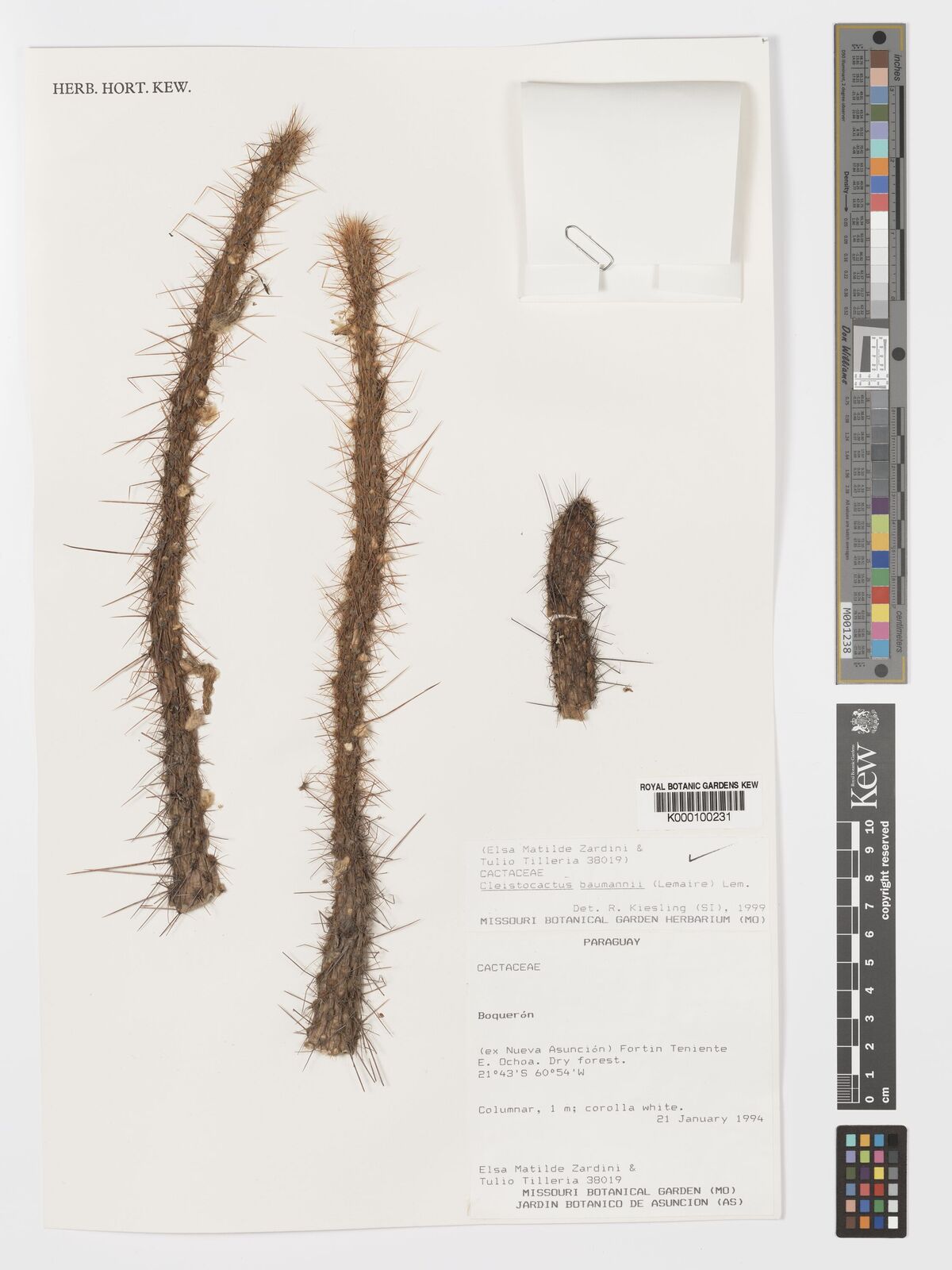 Reference image
Scarlet Bugler Cactus
Cleistocactus baumannii, commonly known as the Scarlet Bugler, is an erect, multi-stemmed column-like cactus belonging to the family Cactaceae. It is highly valued in horticulture for its vibrant, tubular scarlet flowers that bloom intermittently throughout the warm season 1.
The genus name Cleistocactus is derived from the Greek 'kleistos', meaning closed, referring to the characteristic flowers that rarely fully open. The specific epithet honors Charles Baumann, a 19th-century plant collector 2.
Native to a vast range in South America, including Argentina, Bolivia, Paraguay, and Uruguay, this species thrives in seasonally dry tropical biomes, often clinging to rocky slopes or sandy scrublands 1.
The slender, yellowish-green stems can grow up to 1-2 meters tall and are covered in numerous small ribs with dense, brownish-yellow spines. The highlight of the plant is its brightly colored, zygomorphic (bilaterally symmetrical) flowers, which are tubular, slightly curved upwards, and predominantly red or deep orange.
This cactus prefers bright, indirect light to full sun and well-drained soil. Water thoroughly during the active summer growing phase, ensuring the substrate dries out completely between waterings. Protect it from freezing temperatures in winter.
Overwatering is the primary cause of failure, leading to root and stem rot 2. Insufficient light will result in etiolation, causing the stems to grow thin, weak, and lose their natural golden-spined appearance.
Prefers full sun to bright, indirect sunlight for healthy stem growth.
Allow the soil to dry out fully between waterings; reduce significantly in winter.
Requires highly porous, gritty cactus soil mixed with pumice and sand.
Spiny stems can cause physical injury. Keep away from pets and small children.
Very easy to maintain, making it ideal for novice succulent collectors.
Native to the dry tropical forests and rocky grasslands of Argentina, Bolivia, Paraguay, and Uruguay.
