
Light
Bright Indirect Light
Thrives in full sun to bright, intense indirect light environments.
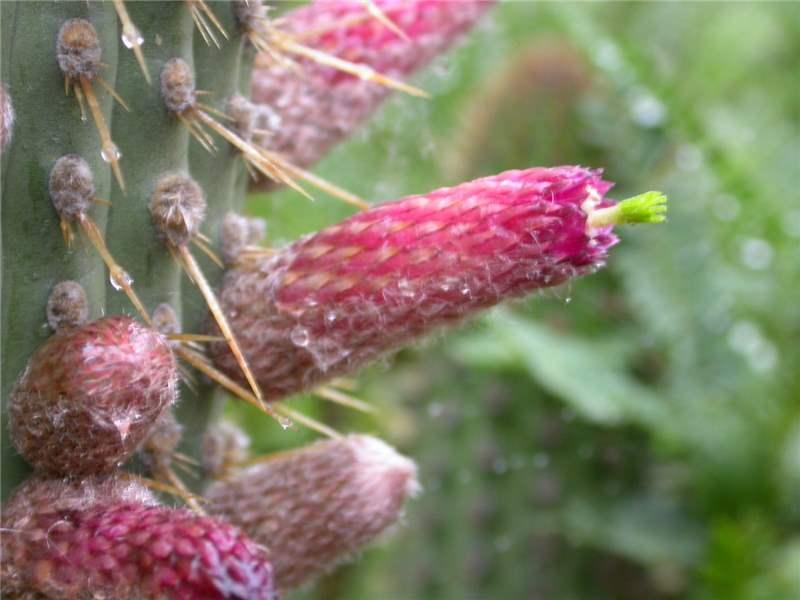 Reference image
Candelilla Cleistocactus
Cleistocactus candelilla is a stunning, perennial, shrubby succulent species belonging to the Cactaceae (Cactus) family. Characterized by its slender, erect stems and vibrant tubular flowers, it is highly favored in xeriscaping and indoor succulent collections 1.
The genus name Cleistocactus derives from the Greek 'kleistos', meaning closed, referring to the characteristic flowers that barely open during anthesis. The specific epithet candelilla translates to 'little candle' in Spanish, alluding to the upright, candelabra-like growth pattern of its branching columns 2.
This species is endemic to Bolivia, particularly in the dry valleys and rocky slopes of the Santa Cruz and Cochabamba departments 1. It typically thrives in semi-arid shrublands and rocky soils at elevations between 1,000 and 2,500 meters above sea level.
It forms dense clumps of erect or sprawling stems, branching from the base, reaching heights of 1 to 2 meters. Stems are green to grayish-green, 2 to 5 cm in diameter, with 10 to 15 shallow ribs. Spines arising from the close-set areoles are yellowish-brown. The highlight of this cactus is its tubular, bright red to purplish-red flowers with greenish-yellow tips 2.
It prefers bright, direct sunlight or very strong indirect light. Watering should follow the 'soak and dry' method during the active growing season (spring and summer) and be severely restricted in winter. A gritty, mineral-based substrate is crucial for healthy root development.
Overwatering and using heavy, organic-rich soils that retain moisture are the primary causes of root rot. Inadequate light will lead to etiolation (stretching) and a lack of flowers.
Thrives in full sun to bright, intense indirect light environments.
Allow the soil mix to dry out 100% between waterings. Drastically reduce in winter.
Highly porous cactus soil enriched with pumice, perlite, and coarse sand.
Spines are sharp and can easily irritate the skin. Keep away from pets and kids. Non-toxic.
Very hardy and low-maintenance if provided with enough light and kept dry.
Native to the dry, stony valleys and slopes of the Bolivian Andes, growing amongst scrub and xerophytic vegetation in high-drainage terrains.
