
Light
Bright Indirect Light
Thrives in bright indirect light or filtered sun; protect from scorching midday rays.
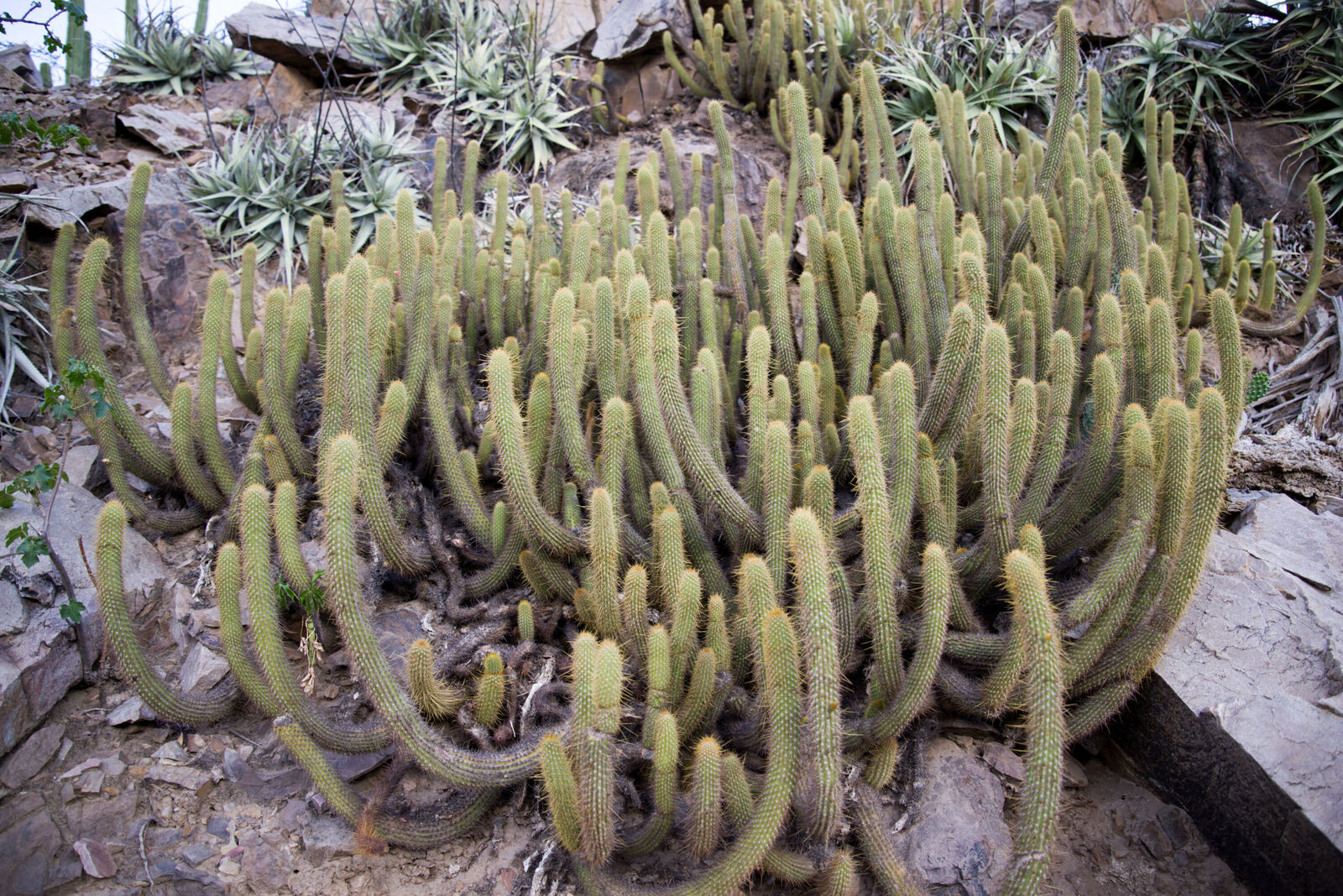 Reference image
Capadala Cleistocactus
Cleistocactus capadalensis is a columnar, semi-shrubby cactus species belonging to the Cactaceae family, native to the arid valleys of Bolivia 1. Known for its slender stems covered in dense, fine spines, it is a highly resilient succulent shrub that adds architectural structure to any succulent collection.
Belonging to the genus Cleistocactus, the plant's generic name originates from the Greek 'kleistos', meaning closed, referring to the characteristic tubular flowers that rarely open fully 2. It is well-documented within the Cactaceae taxonomic frameworks.
This species is native to Southern America, specifically Bolivia and western parts of South America 1. It thrives in desert or dry shrubland biomes, inhabiting rocky slopes and well-draining soils under intense sunlight, where it tolerates prolonged dry periods.
It forms upright, columnar stems that branch from the base over time. The ribs are numerous and lined with closely spaced areoles carrying pale yellow to brownish spines. The flowers are tubular, brightly colored, and specifically adapted for hummingbird pollination.
In cultivation, Cleistocactus capadalensis requires excellent drainage and a mineral-rich soil mix. Watering should be thorough but infrequent, allowing the substrate to dry out completely. While it appreciates bright light, protection from the harshest afternoon sun prevents scarring.
The most frequent mistake is overwatering or using heavy, clay-rich soil that retains moisture. Combining low winter temperatures with damp soil is almost always fatal due to root rot.
Thrives in bright indirect light or filtered sun; protect from scorching midday rays.
Allow soil to dry out completely between waterings. Minimize in winter.
Requires highly porous, gritty cactus compost with excellent drainage.
Non-toxic, but features sharp spines that can cause mechanical injury to pets.
Very easy to care for if overwatering and poor drainage are avoided.
Native to the dry, high-elevation rocky valleys and desert shrublands of Bolivia in Western South America.
