
Light
Bright Indirect Light
Thrives in bright indirect light; shield from intense, scorching afternoon sun in high summer.
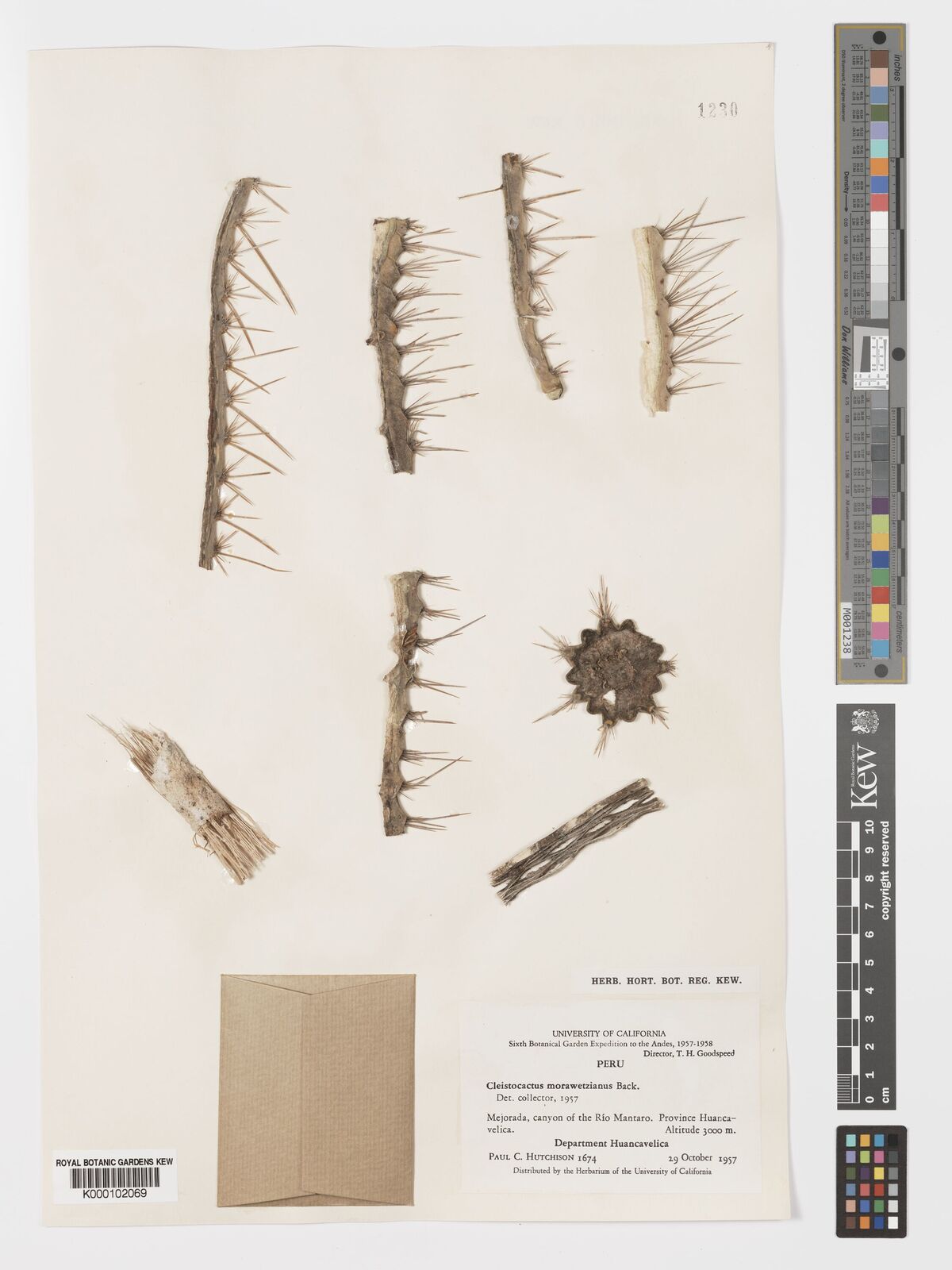 Reference image
Morawetz's Cleistocactus
Cleistocactus morawetzianus is a shrubby, columnar cactus species in the family Cactaceae, native to the arid valleys of Peru 1. It is highly appreciated by succulent enthusiasts for its shimmering silvery spines and distinctive tubular flowers.
Described initially by Curt Backeberg, the species is named in honor of the cactus supporter Morawetz 2. The genus name Cleistocactus derives from the Greek word 'kleistos', meaning closed, referring to the characteristic tubular flowers that rarely open fully.
This species is endemic to southern and western parts of South America, specifically the Andean inter-mountain valleys of Peru. It thrives in dry shrublands and desert biomes, usually clinging to rocky slopes with exceptional water drainage 1.
It forms upright, columnar stems reaching up to 2 meters in height, branching freely from the base. Stems have 10 to 14 ribs dense with areoles. Its spines are stiff, radial, and predominantly white to pale yellow, giving the plant a frosted, silver appearance. Flowers are tubular, greenish-white to pale pink, projecting horizontally from the stems 2.
It prefers bright, indirect sunlight to full sun. Water thoroughly during the growing season only when the soil has dried completely. Ensure a cool, dry winter rest to stimulate bud formation in spring. Use highly mineralized, quick-draining substrate.
Overwatering is the primary cause of root rot. Keeping the cactus in poorly ventilated, high-humidity spots, or neglecting the dry winter rest period will prevent blooming and cause weak, etiolated growth.
Thrives in bright indirect light; shield from intense, scorching afternoon sun in high summer.
Water deeply but infrequently, only after the soil has completely dried out.
Requires highly porous gritty mix consisting of pumice, coarse sand, and minimal organic matter.
Features sharp spines; handle with thick gloves and keep away from curious pets.
Very easy and forgiving as long as soggy soil conditions are strictly avoided.
Naturally occurs in the dry valley gorges and steep gravelly slopes of the Peruvian Andes.
