
Light
Full Sun
Prefers south or west-facing windows or outdoor positions with at least 6 hours of daily direct sunlight.
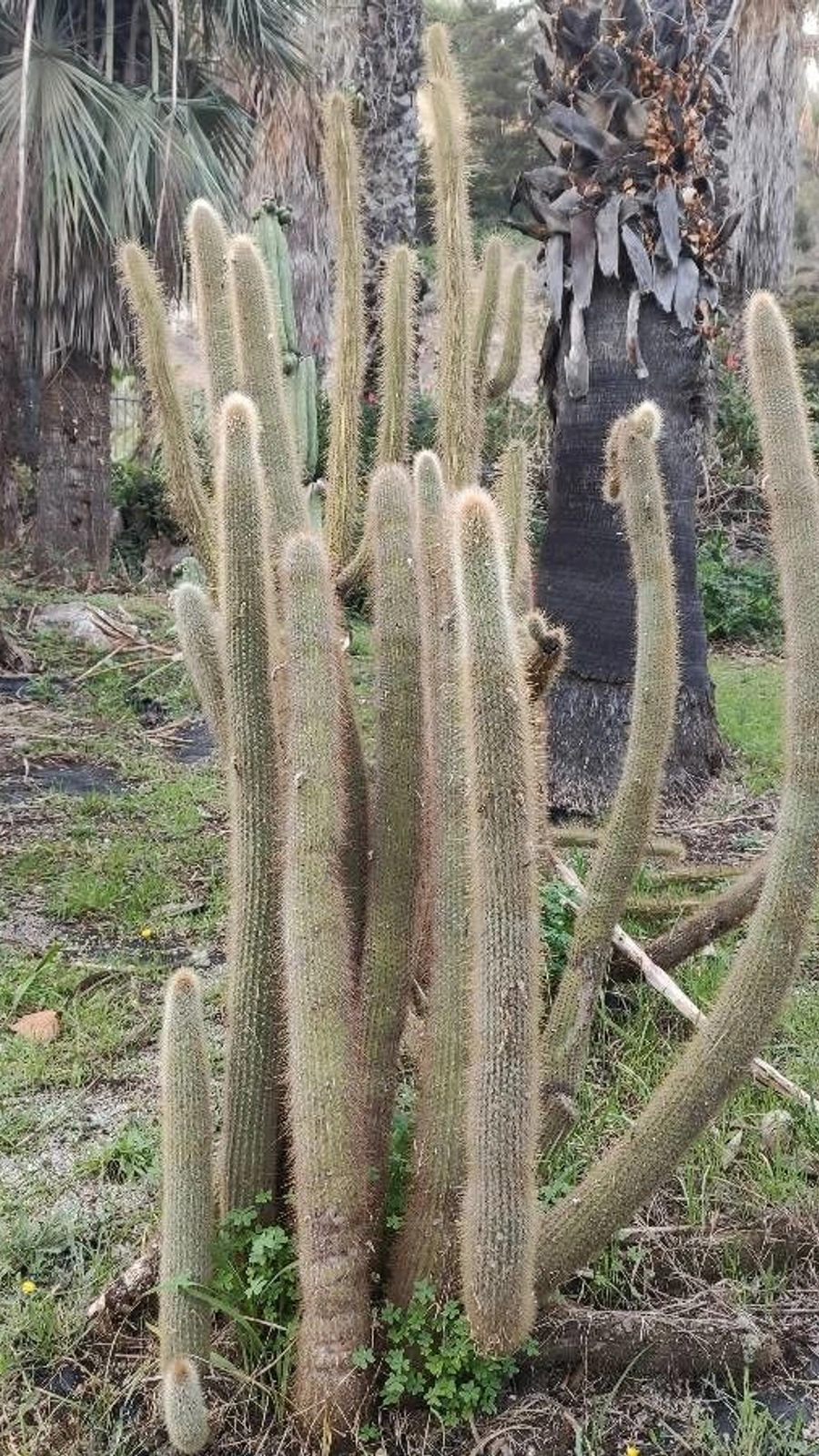 Reference image
Orthogonal Cleistocactus
Cleistocactus orthogonus is a columnar, perennial, and succulent shrubby cactus belonging to the genus Cleistocactus within the Cactaceae family. It is known for its distinct rib structure and showy tubular flowers adapted to arid habitats.
Scientifically described from Bolivian populations, its species epithet 'orthogonus' refers to the straight and orthogonal arrangement of its stem ribs 1. It shares key characteristics with other columnar cacti but stands out due to its specific spination and floral morphology 2.
This species is native to Bolivia, particularly in rocky, semi-desert mountainous regions at elevations between 1500 and 2500 meters 1. It thrives in gravelly soils, steep slopes, and dry shrublands under intense solar radiation.
The stems are erect or basally branching, forming dense clusters of gray-green columns. The ribs are prominent, carrying closely spaced areoles with fine, needle-like, yellowish-brown spines. Its tubular flowers are reddish or orange, remaining mostly closed (cleistogamous tendency), which is typical for bird-pollinated species in this genus.
It requires full sun exposure and a well-ventilated location. Water thoroughly during the spring and summer active growth phase, allowing the potting medium to dry out completely between waterings. In winter, maintain dry conditions to prevent cold-induced rot.
Overwatering in heavy, clay-based soil and placing the plant in low-light environments are the primary causes of stem etiolation and root rot 2.
Prefers south or west-facing windows or outdoor positions with at least 6 hours of daily direct sunlight.
Let the soil dry completely before watering during active growth; keep dry in winter.
Use a specialized cactus mix enriched with pumice, perlite, and coarse sand for rapid drainage.
Non-toxic, but the sharp and dense needle spines can cause physical injury, so handle with care.
A moderately easy cactus to maintain, provided it receives sufficient sunlight and is protected from overwatering.
Endemic to the dry, high-altitude valleys and rocky slopes of Bolivia, where it grows in nutrient-poor but highly permeable mineral soils under full sun.
