
Light
Bright Indirect Light
Requires bright, indirect sunlight or partial direct sun to maintain rich spine color.
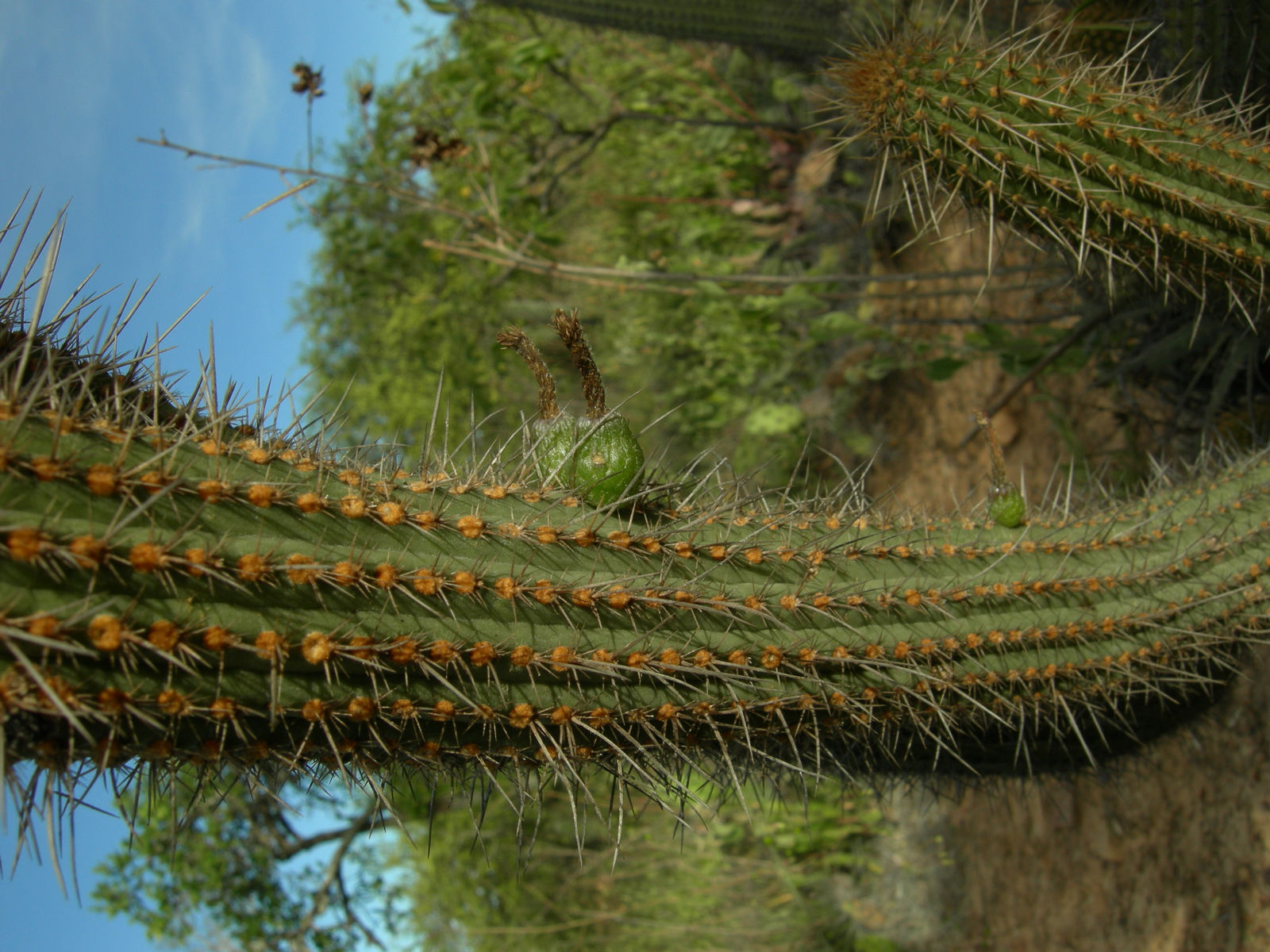 Reference image
Small-flowered Cleistocactus
Cleistocactus parviflorus is an upright, columnar cactus species belonging to the family Cactaceae 1. Characterized by its slender stems and dense spination, this succulent shrub is well-suited to dry, arid environments.
The species was classified within the genus Cleistocactus, which is known for its tubular, closed flowers (cleistogamy-like structure). The specific epithet parviflorus is derived from Latin, translating to 'small-flowered', pointing to its slender, modest floral displays 2.
This species is native to Western South America, particularly endemic to the dry valleys and arid shrublands of Bolivia 1. It thrives in well-drained, rocky soils on sunny mountain slopes under typical desert or dry shrubland climates.
Cleistocactus parviflorus forms multi-stemmed, shrubby clumps. The columnar stems are bright green with numerous shallow ribs, densely covered in radial and central spines ranging from yellow to greyish-white. The tubular flowers are bright red to orange, designed specifically for pollination by hummingbirds.
In cultivation, it is highly valued for its resilience. It demands bright, filtered light or partial direct sun to maintain its compact spine density and encourage blooming 2. Watering should follow a soak-and-dry cycle during spring and summer.
Overwatering and placing the plant in heavy, moisture-retaining soil are the leading causes of root rot. Lack of light results in thin, stretched growth (etiolation).
Requires bright, indirect sunlight or partial direct sun to maintain rich spine color.
Water thoroughly only when the soil is completely dry. Keep dry in winter.
Requires a highly porous, gritty substrate with high mineral content and fast drainage.
Non-toxic to pets, but the sharp spines can cause physical injury. Handle with care.
Very easy to care for, making it ideal for beginners who can avoid overwatering.
Naturally distributed across the arid valleys and Andean foothills of Bolivia, growing alongside dry shrubs on steep rocky slopes.
