
Light
Bright Indirect Light
Requires abundant bright, indirect light; some filtered morning sun promotes healthy blooming.
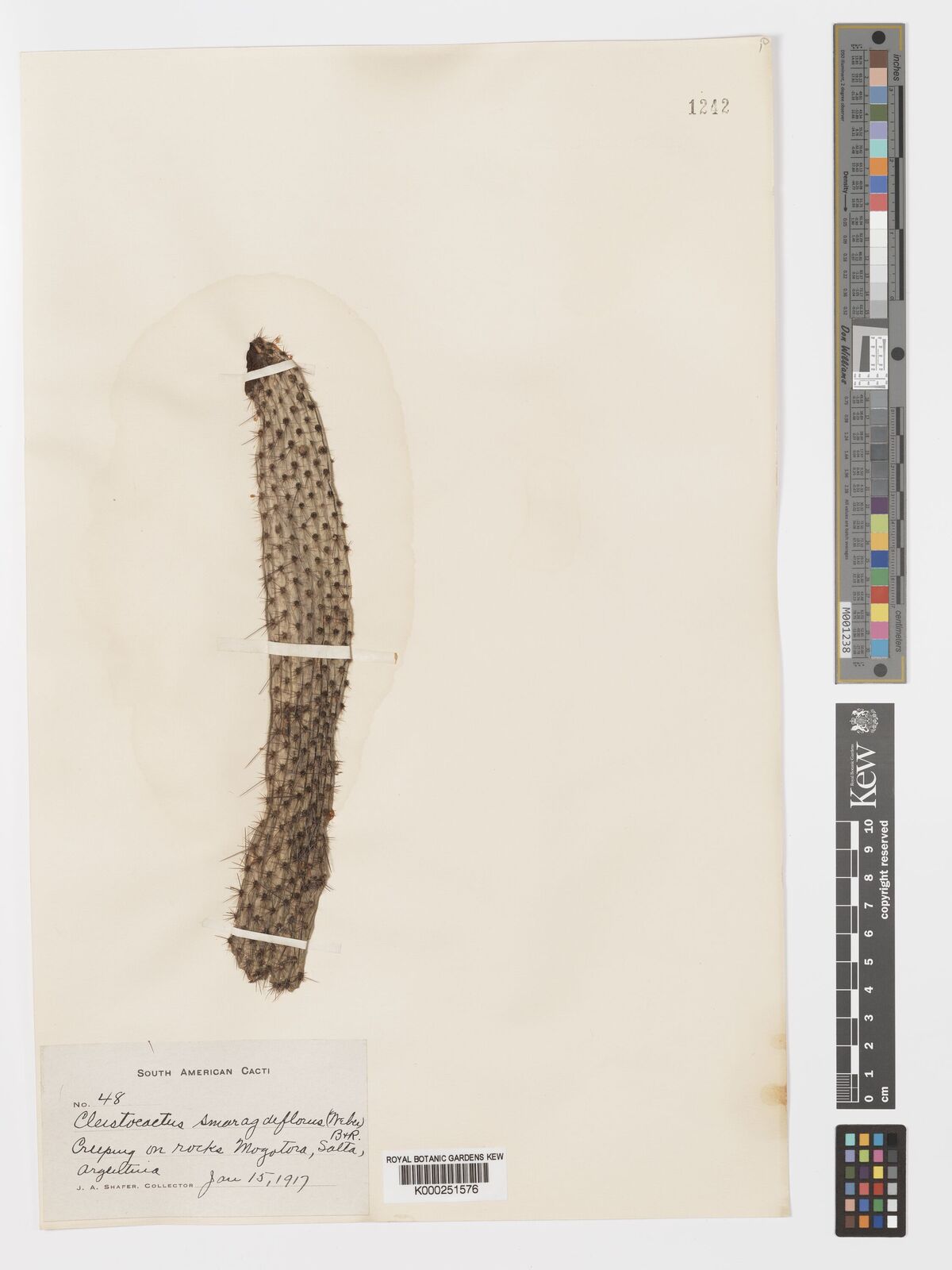 Reference image
Emerald Flower Cleistocactus
Cleistocactus smaragdiflorus is an attractive, slender-stemmed cactus belonging to the family Cactaceae. It is highly valued in succulent collections for its unique, tubular red-orange flowers tipped with a striking emerald-green margin 1.
Described in the 19th century, this species represents the classic traits of the genus Cleistocactus. The specific epithet smaragdiflorus translates from Latin as 'emerald-flowered', referring directly to the bright green coloration at the apex of its blossoms 2.
This species is native to Western South America, predominantly found in northern and western Argentina (including Salta, Tucumán, and Catamarca) and parts of Bolivia 1. It thrives in dry, gravelly slopes and arid shrublands within rocky terrains.
It is a perennial, clumping, subshrubby cactus that branches from the base. The stems can grow semi-erect or arching, reaching up to 1-2 meters in length and 3-5 cm in diameter. Stems feature 12 to 14 shallow ribs covered in dense, needle-like yellowish-brown spines. Its most definitive feature is the tubular, hummingbird-pollinated flowers, measuring about 5 cm long, showcasing a bi-colored red and emerald-green pattern 2.
It prefers bright, indirect sunlight or light partial shade. In domestic cultivation, a highly porous, gritty cactus mix is essential. Water thoroughly during the active growing season (spring and summer) only after the substrate has completely dried out, and keep the plant dry during winter dormancy.
Overwatering and poorly draining pots are the primary causes of root rot. Inadequate light exposure leads to weak, elongated growth (etiolation) and inhibits flowering.
Requires abundant bright, indirect light; some filtered morning sun promotes healthy blooming.
Water thoroughly once the soil dries in summer; keep nearly dry in winter.
Thrives in a highly porous, sandy, and gritty cactus soil mix.
Possesses sharp, fine spines. Handle with care and keep away from curious pets and children.
Easy to grow. An excellent choice for beginners provided overwatering is strictly avoided.
Native to the dry valleys and rocky, arid slopes of northern Argentina and Bolivia, adapted to high-drainage terrains.
