
Light
Bright Indirect Light
Requires at least 4-6 hours of bright indirect light or filtered direct sun daily.
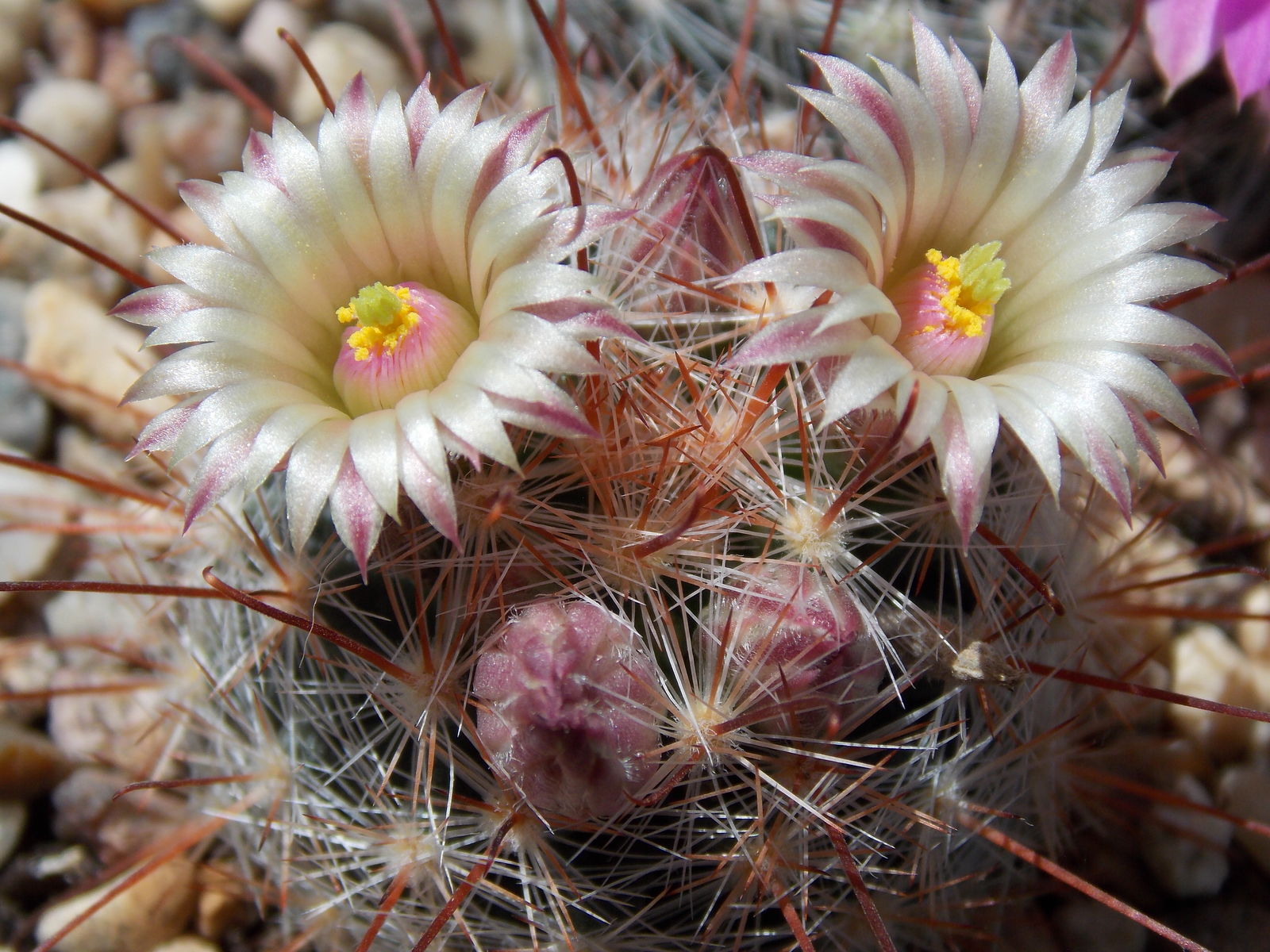 Reference image
Bearded Cochemiea
Cochemiea barbata (formerly known as Mammillaria barbata) is a small, clustering, globose succulent subshrub belonging to the family Cactaceae. In its native habitats, it has adapted perfectly to survive in harsh arid conditions 1. It is popular among succulent collectors for its hooked central spines and delicate fringed flowers.
Originally described by Engelmann as Mammillaria barbata, modern phylogenetic studies have integrated this species into the expanded genus Cochemiea 2. The specific epithet barbata derives from Latin, meaning "bearded," referring to the dense, fine, hair-like radial spines that cover the plant's stem.
This species is native to Northern America, specifically northern and central Mexico, including the states of Chihuahua, Durango, Zacatecas, and Coahuila 1. It typically grows on rocky slopes, semi-arid desert grasslands, and in the openings of oak-pine woodlands at higher elevations.
The stems are globose to slightly cylindrical, often clustering from the base to form low mounds. Its most distinctive feature is the presence of 15-20 white, hair-like radial spines per areole, contrasted by one or more reddish-brown, strongly hooked central spines. The flowers are typically pinkish-orange, yellowish, or cream-colored, featuring uniquely fringed petal margins 2.
It requires plenty of sunlight, excellent ventilation, and highly porous soil. Watering should only be done when the potting medium has dried out completely. During the winter dormancy, keeping the plant dry allows it to tolerate light frosts down to -5°C.
Overwatering and insufficient light are the primary causes of failure with Cochemiea barbata. Excess moisture quickly leads to root and stem rot, while low light levels cause the plant to stretch (etiolate) and lose its dense spination.
Requires at least 4-6 hours of bright indirect light or filtered direct sun daily.
Water thoroughly only when the soil is dry. Minimize watering during the winter months.
Use a specialized, fast-draining cactus mix with high pumice or perlite content.
Spines are hooked and can catch easily on fur or skin; non-toxic but handle with care.
Very easy to care for if overwatering is avoided and bright light is provided.
Naturally distributed throughout the dry, rocky highlands and desert scrublands of northern and central Mexico, particularly across Chihuahua, Durango, and neighboring regions.
