
Light
Bright Indirect Light
Prefers bright indirect light or morning sun; shield from intense afternoon direct sunlight in high summer.
 Reference image
Pink-flowered Cochemiea
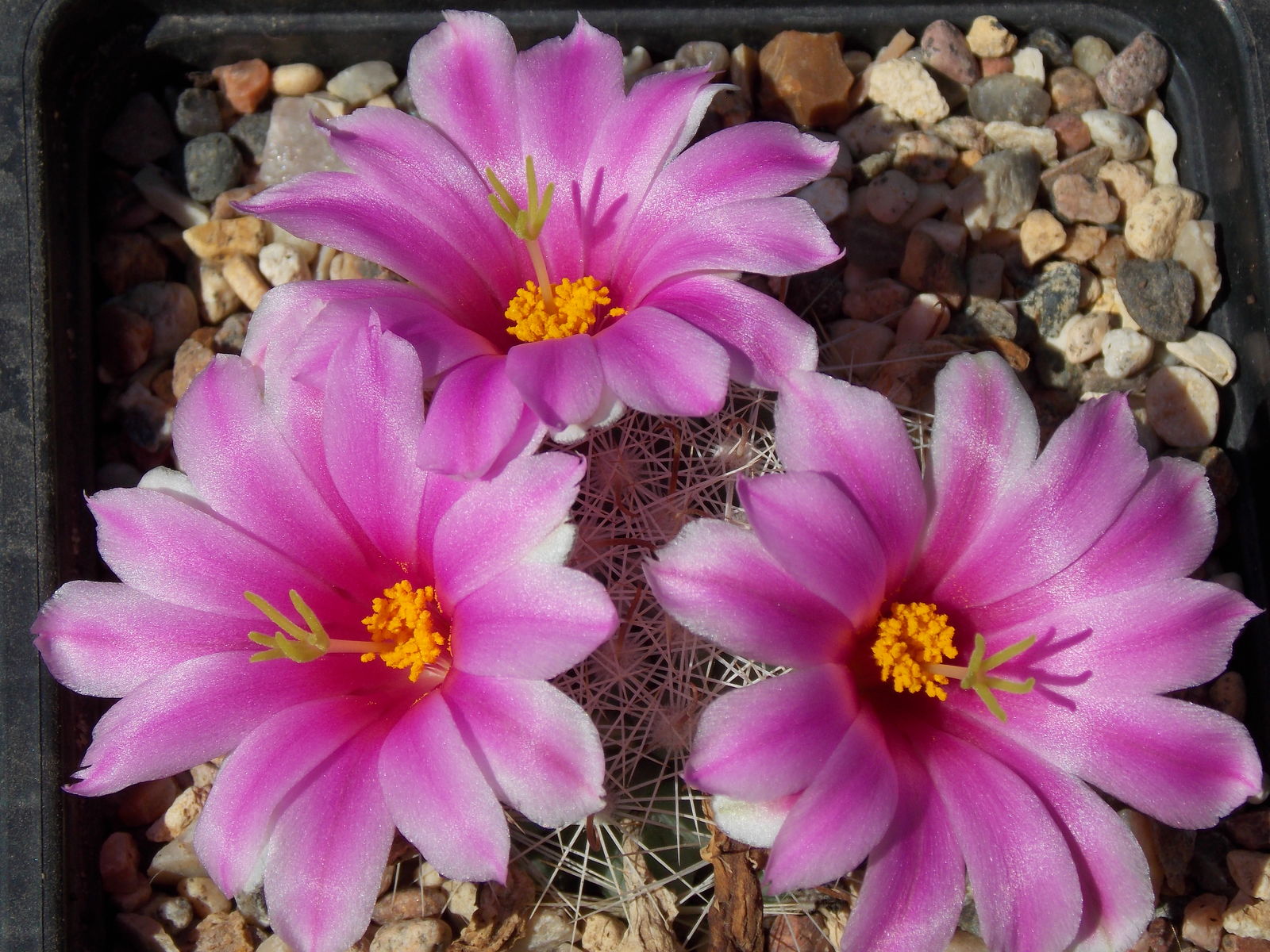
Cochemiea boolii (formerly known as Mammillaria boolii) is a slow-growing, highly sought-after cactus species prized among succulent enthusiasts for its stunning, large trumpet-shaped pink flowers and delicate hooked spines. It exhibits a succulent subshrub growth habit, typically remaining solitary but occasionally offsetting around the base with age 1.
Belonging to the family Cactaceae, this species was originally described by George Lindsay in 1953 as Mammillaria boolii. Recent molecular phylogenetic revisions have reinstated and expanded the genus Cochemiea, transferring several Hooked-spine Mammillaria species—including this one—into it 2. The specific epithet honors H.W. Bool, who discovered the plant during an expedition.
This species is endemic to the coastal regions of Sonora (particularly near Guaymas and San Carlos) and parts of Baja California in Mexico. It thrives in desert or dry shrubland biomes, growing on steep volcanic rocky hillsides and gravelly cliffs near the sea, showing excellent tolerance to saline coastal breezes.
The stem is globose to shortly cylindrical, gray-green to blue-green, reaching up to 8-10 cm in height. Areoles bear a prominent, strongly hooked yellowish-brown central spine surrounded by many fine, needle-like white radial spines. The summer-blooming flowers are remarkably large relative to the plant body, measuring up to 4 cm across, showcasing a beautiful lavender-pink hue.
In cultivation, Cochemiea boolii requires exceptional drainage and high light levels. During the active spring and summer growing season, water only when the substrate is completely dry. In winter, maintain a cool, dry dormancy to promote longevity and flower bud initiation.
Overwatering is the primary cause of failure, as the plant is highly susceptible to root rot in dense, organic soils. Lack of light leads to unsightly etiolation and weak spine development.
Prefers bright indirect light or morning sun; shield from intense afternoon direct sunlight in high summer.
Allow the potting mix to dry out entirely between waterings. Keep completely dry in winter.
Requires a highly mineral, gritty substrate with pumice and volcanic rock; minimize organic peat content.
Non-toxic, but the sharply hooked central spines can easily snag skin, clothing, and pet fur.
Moderate difficulty. Requires strict self-control with watering and a high-drainage mineral substrate.
Native to the coastal volcanic cliffs and gravelly slopes along the Gulf of California in northwestern Mexico, adapted to dry desert air and marine influences.
