
Light
Full Sun
Requires full sun or bright direct sunlight for at least 6 hours daily to maintain its compact form.
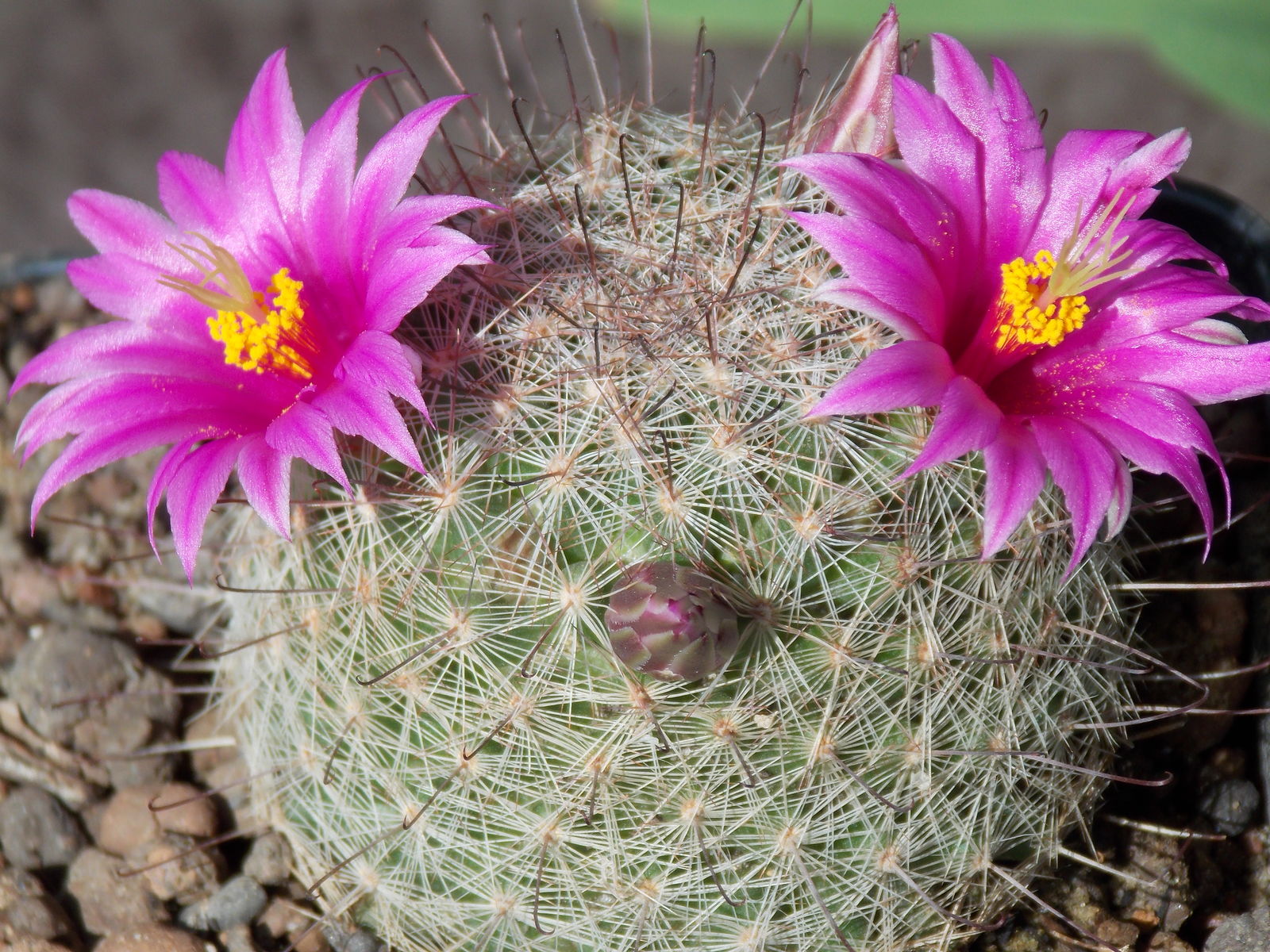 Reference image
Graham's Nipple Cactus
Cochemiea grahamii (formerly known as Mammillaria grahamii) is an iconic desert cactus renowned for its sharply hooked central spines and vibrant pink blossoms 1.
Belonging to the family Cactaceae, this species was historically classified under the genus Mammillaria. Recent molecular and phylogenetic studies have repositioned it within the genus Cochemiea 2. The specific epithet honors James Duncan Graham, an American military topographer.
This resilient succulent subshrub is native to the southwestern United States (Arizona, New Mexico, Texas) and northern Mexico (Sonora, Chihuahua) 1. It thrives in gravelly desert soils, rocky slopes, and under the protective canopy of desert shrubs.
Typically growing as single stems or forming small clusters, the cylindrical to globose stems reach 7-15 cm in height. The most distinctive feature is the cluster of reddish-brown central spines, with at least one strongly hooked spine per areole. In late spring and summer, it produces funnel-formed, bright pink to lavender-pink flowers near the crown, followed by small red fruits 2.
It requires maximum sunlight and highly porous, mineral-rich soil. Watering must follow the "soak and dry" method, allowing the substrate to completely dry out between watering sessions.
Overwatering and compacted soils are the primary causes of root rot. Lack of adequate direct sunlight leads to weak, elongated growth (etiolation).
Requires full sun or bright direct sunlight for at least 6 hours daily to maintain its compact form.
Water thoroughly only when the soil is completely dry. Keep almost completely dry in winter.
Prefers mineral-based, gritty cactus mix with plenty of pumice, perlite, and coarse sand.
The hooked spines can easily catch on skin or clothing; handle with tongs. Non-toxic to pets.
Very easy to care for, provided it is not overwatered and receives sufficient light.
Naturally distributed across the arid deserts and shrublands of Arizona, New Mexico, Texas, and northern Mexican states like Sonora and Chihuahua, often nestled among rocks.
