
Light
Bright Indirect Light
Bright, indirect or filtered sunlight. Avoid intense, scorching afternoon sun.
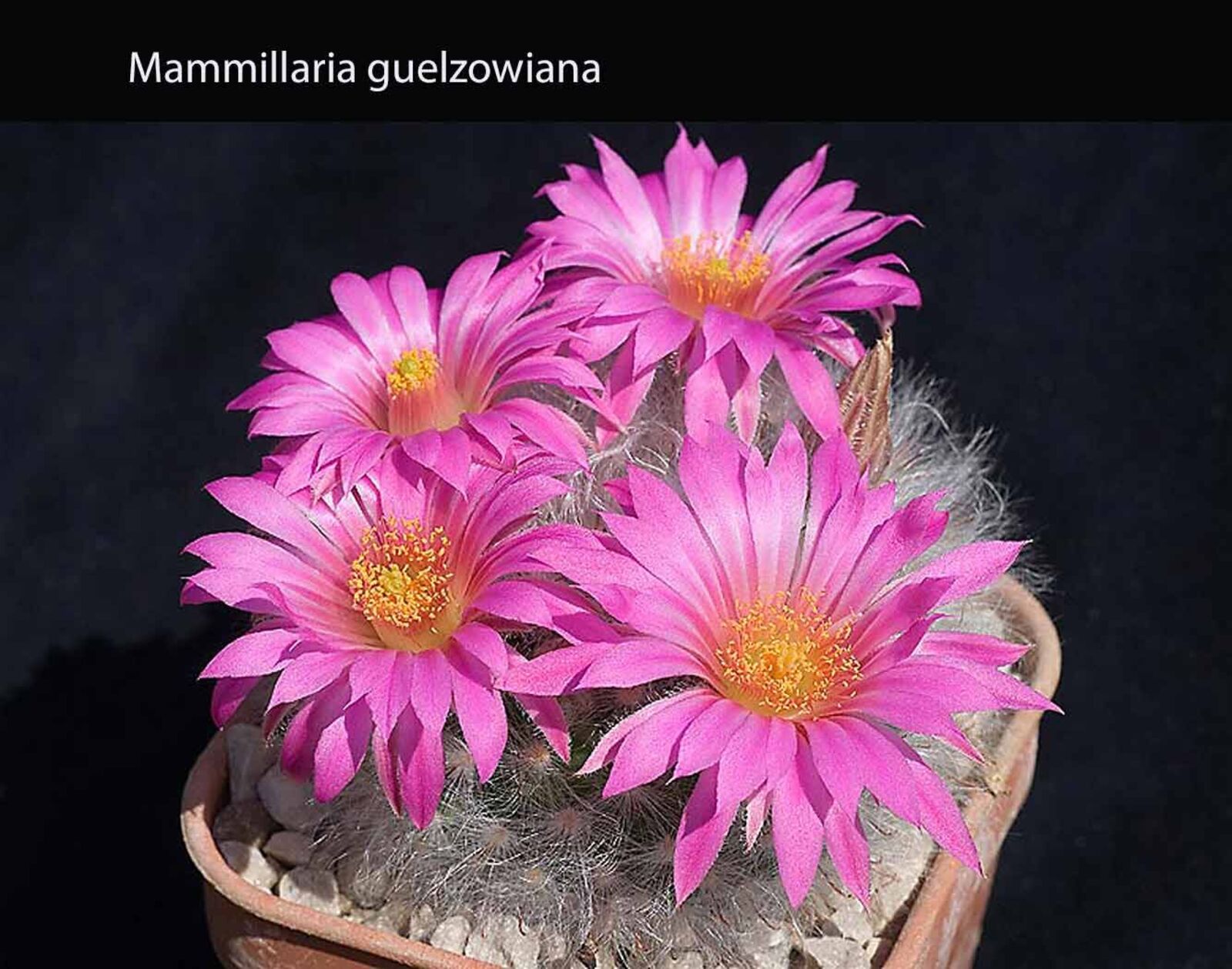 Reference image
Guelzow's Pincushion Cactus
Cochemiea guelzowiana (formerly classified under the genus Mammillaria) is an exquisite, globose cactus species from the Cactaceae family. Renowned for its dense covering of soft, hair-like white spines and disproportionately large, brilliant pink flowers, it is highly prized yet challenging to cultivate.
Originally described by Erich Werdermann as Mammillaria guelzowiana, recent molecular studies and Kew's Plants of the World Online database have placed this species in the resurrected genus Cochemiea 1. The specific epithet honors Robert Gülzow, a dedicated German cactus enthusiast.
This species is narrowly endemic to the state of Durango in Mexico 2. It primarily thrives at elevations of 1,400 to 1,700 meters above sea level. Its natural microhabitat consists of steep, rocky volcanic slopes and gravelly semi-shaded ledges within dry deciduous shrublands.
The plant features spherical stems that become slightly cylindrical over time. The stem is hidden under a dense mat of soft, white, hair-like radial spines. Centrally, it produces reddish or yellow needle-like spines that are hook-tipped. In late spring, it produces magnificent, bell-shaped, deep pinkish-red flowers.
Cochemiea guelzowiana requires bright, filtered sunlight and exceptionally porous, mineral-based potting substrate. Water must be applied only when the substrate is bone dry. During the winter dormancy, the plant should be kept completely dry in a cool environment to stimulate blooming.
The most frequent cultural error is overwatering, especially during winter or when potted in organic-rich soils. Due to its extremely delicate root system, excessive moisture quickly triggers fatal root rot.
Bright, indirect or filtered sunlight. Avoid intense, scorching afternoon sun.
Water only when the medium is completely dry. Keep strictly dry during winter dormancy.
Extremely porous mineral mix rich in pumice, gravel, and perlite with very low organic matter.
Its central spines are sharply hooked and can easily snag on skin, clothing, or pet fur.
Moderate to hard. Requires careful watering discipline due to its highly rot-prone root system.
Endemic to high-elevation volcanic rock crevices and stony river banks in Durango, Mexico, where it grows sheltered under low-lying desert scrub.
