
Light
Bright Indirect Light
Needs abundant, filtered sunlight to maintain its compact shape and promote summer blooming.
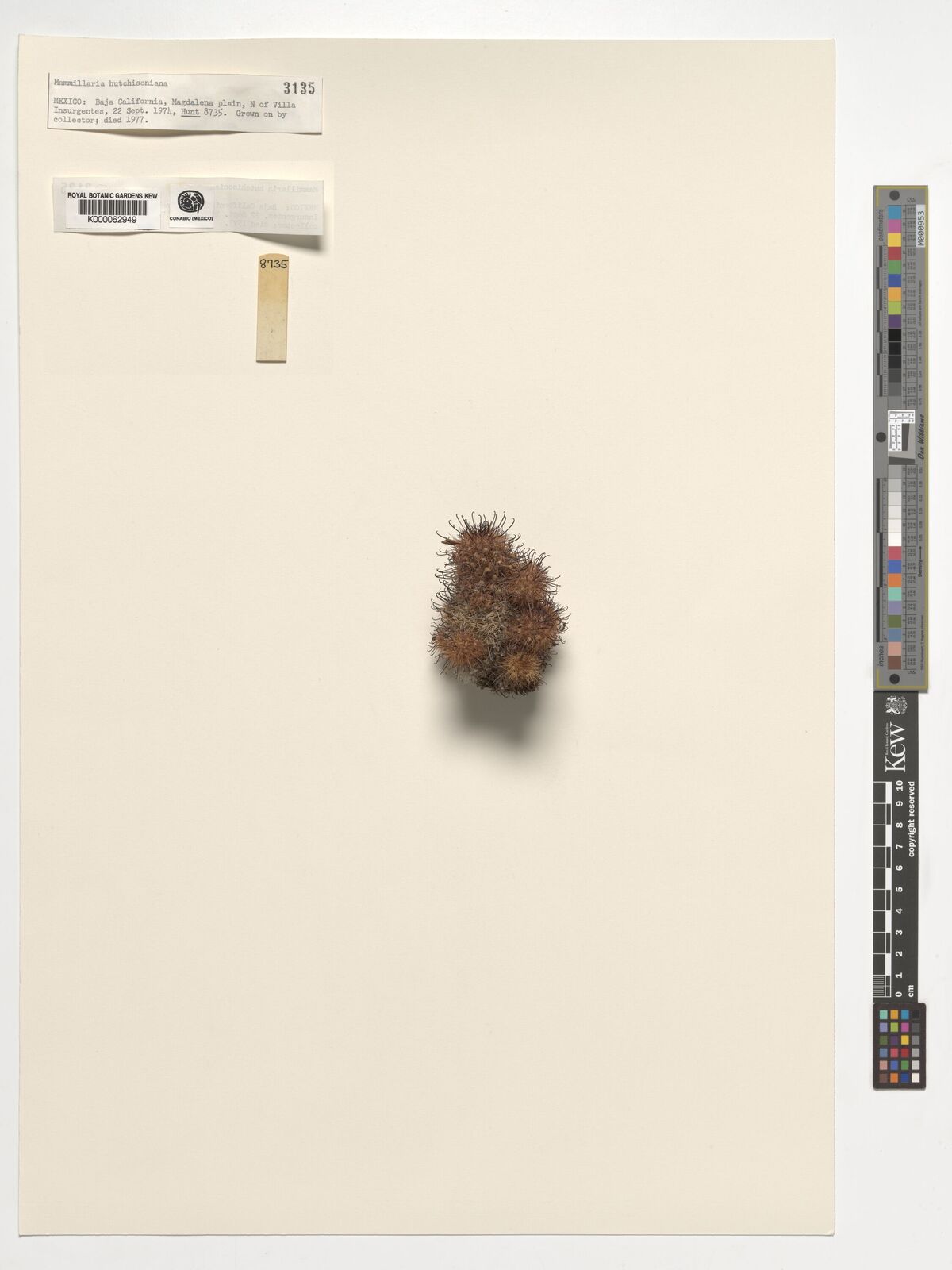 Reference image
Hutchison's Hooked Cactus
Cochemiea hutchisoniana is a rare and distinctive succulent subshrub in the family Cactaceae. Known for its cylindrical stems and prominent hooked spines, this resilient cactus is highly adapted to extreme desert environments, making it a highly sought-after specimen among succulent collectors.
Originally described under the genus Mammillaria as Mammillaria hutchisoniana, modern phylogenetic and morphological investigations have reassigned this species to the genus Cochemiea 1. The genus name pays tribute to the indigenous Cochimí people of the Baja California peninsula, while the specific epithet honors Theodore Hutchison, an accomplished American botanist and cactus enthusiast.
This species is endemic to the Mexican states of Baja California and Baja California Sur 2. It is characteristically found growing in dry coastal plains, sandy-gravelly hillsides, and desert shrublands. It thrives in arid conditions at elevations ranging from sea level up to approximately 200 meters.
Cochemiea hutchisoniana produces cylindrical, light-green stems that branch from the base to form small, clustered groups. Individual stems can grow up to 15 centimeters tall and 3-5 centimeters in diameter. The areoles carry sharp radial spines and a central spine that is distinctively hooked. During late spring and summer, it produces small, funnel-shaped, cream-white to pale pink flowers near the stem tips, which later develop into bright red, fleshy ornamental fruits.
In cultivation, this cactus requires excellent drainage and a mineral-rich, low-organic soil mix. It thrives in bright, indirect sunlight or filtered sun. Water thoroughly during the active growing season only when the soil is dry, and keep the plant dry and cool during winter dormancy to prevent root rot.
The most frequent mistake is using water-retaining soils or pots without drainage holes, which quickly leads to root rot. Insufficient light exposure is another issue, causing etiolation, where the stems stretch and weaken.
Needs abundant, filtered sunlight to maintain its compact shape and promote summer blooming.
Allow the substrate to dry completely between waterings; keep almost bone dry in winter.
Highly porous mineral mix rich in pumice or perlite with minimal organic matter.
Features very sharp, hooked spines that can snag easily; handle with thick gloves.
Moderate difficulty due to its high sensitivity to overwatering and wet soil.
Endemic to the arid coastal plains and gravelly slopes of the Baja California peninsula in Mexico.
